

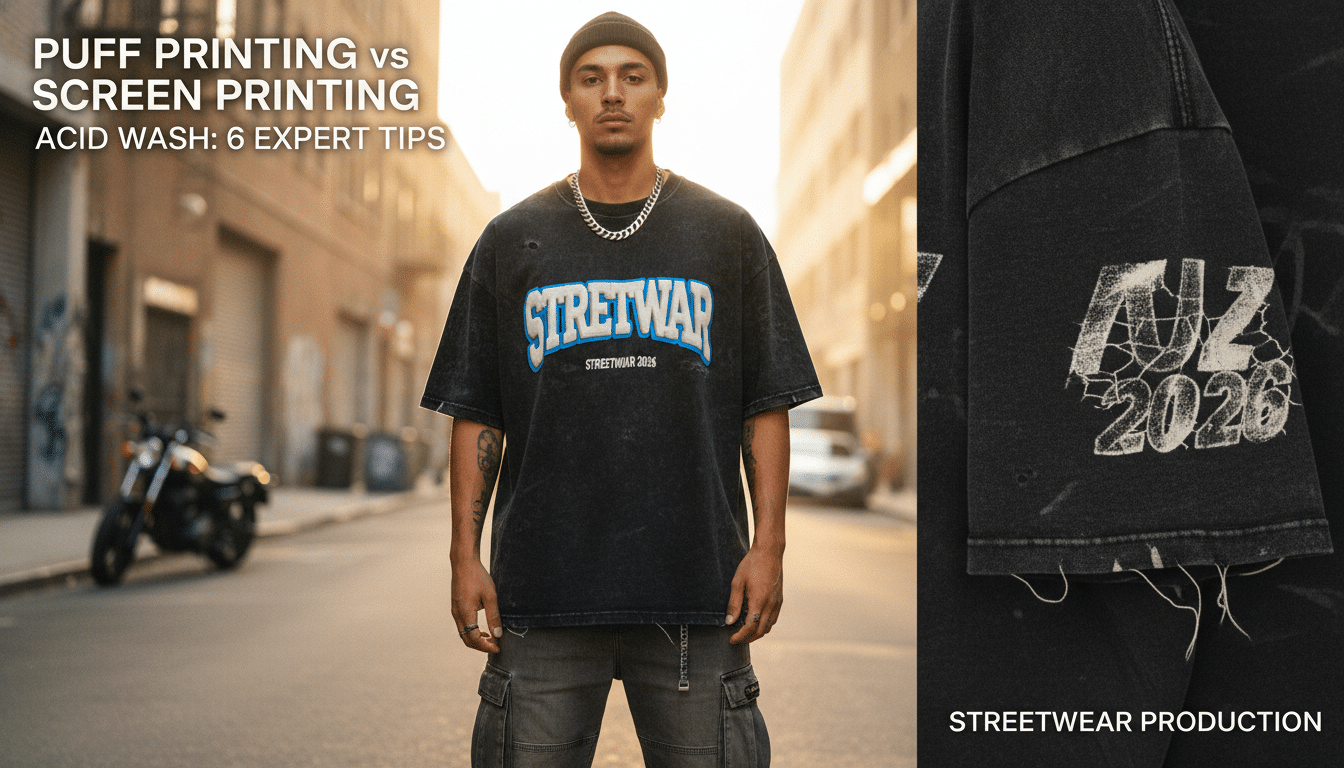
As a street brand manufacturing expert and clothing trend designer who has helmed OEM/ODM lines for dozens of EU and US independent brand owners, I’ve watched Puff printing, screen printing, and acid wash become the secret sauce behind viral drops on DTC e-commerce platforms. Whether you’re a fast-scaling online brand needing a reliable supply chain partner, a mature mid-tier label hunting for deep innovation, or a cross-industry newcomer requiring full-process hosting, mastering these techniques solves real pain points: achieving premium 3D texture without blowing budgets, ensuring wash durability on distressed fabrics, and hitting tight production timelines.
Today, we cut through the hype with actionable knowledge drawn from real factory floors. We’ll break down core differences, exact process sequencing, cost controls, and how to avoid common pitfalls—so your next collection stands out on shelves (or scrolls) while staying profitable.

Understanding Puff Printing vs Screen Printing: Core Differences That Impact Your Bottom Line
Both techniques fall under screen printing, but the ink formula and curing step create night-and-day results—critical for streetwear clothing manufacturers balancing aesthetics and scalability.
Screen printing (standard Plastisol or water-based inks) delivers flat, vibrant, multi-color graphics with razor-sharp details. It’s your go-to for complex logos, gradients, and high-volume runs. Production is lightning-fast: one pass per color, quick cure at 160°C, and you’re done. Cost per unit stays low at scale (under $1.50 for 500+ pieces on cotton blanks), and it laughs at repeated washes.
Puff printing upgrades the same screen process by adding a foaming agent to the ink. After printing, precise heat (around 170-180°C for 40-60 seconds) makes the design rise into soft, sponge-like 3D bubbles. The hand-feel is addictive—think velvet clouds with serious visual pop. Perfect for bold single-color text or simple icons on oversized hoodies or tees.
Practical tip for DTC brands: Choose screen printing when your design has fine lines under 2mm or 4+ colors—details stay crisp. Switch to puff for that “touch-me” street cred, but simplify artwork: expansion blurs tiny elements. From my ODM experience, puff adds 15-25% to ink cost yet boosts perceived value by 40%, letting you command higher retail prices.
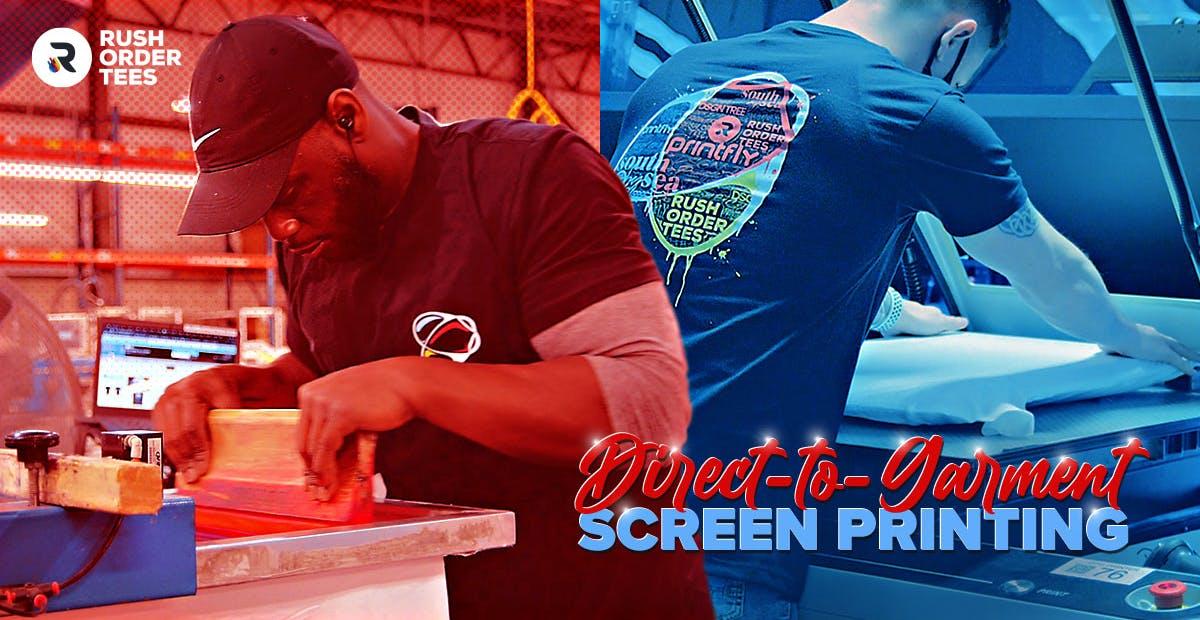
Digital Printing vs Screen Printing: Which is Better?
What Is Acid Wash and Why It Changes Everything for Vintage Streetwear
Acid wash isn’t printing—it’s a post-garment chemical + mechanical finish using potassium permanganate or bleach blends with stone/enzyme wash. Applied to finished blanks, it creates mottled, faded, “worn-for-years” patina that screams authentic vintage street style. Common on 240-500 GSM cotton tees and hoodies, it softens fabric by 20-30% while adding natural distressing.
Key cost control: Acid wash raises per-piece expense by $2-4 depending on intensity, but it turns basic blanks into premium drops without new fabric sourcing. For online DTC brands, pair it with heavier French terry or fleece to prevent excessive thinning.
The Critical Production Sequence: Get This Order Right or Risk Ruined Garments
Here’s the non-negotiable workflow I recommend to every independent brand owner partnering with us:
- Cut and sew blank garments (your chosen fabric and fit).
- Perform acid wash on the finished blanks—let chemistry do its distressed magic first.
- Apply screen printing or puff printing on the now-vintage surface.
- Cure precisely (extra attention for puff expansion).
- Final QC, pack, ship.
Why this order? Acid wash is aggressive chemistry. Printing first exposes inks to corrosion—colors fade, puff bubbles collapse. Post-wash printing ensures crisp, raised effects pop against the mottled background. In our OEM private label clothing manufacturer runs, this sequence delivers 95%+ customer satisfaction on wash tests.
Alternative (riskier) path for intentional vintage prints: Print and fully cure first, then light acid wash. This ages the graphic too, creating cracked, faded looks—but skip it for puff; the 3D structure crumbles.

Side-by-Side Comparison: Data-Driven Choices for Cost and Impact
To make decisions crystal clear, here’s the exact table we use in client briefings:
| Parameter | Screen Printing | Puff Printing | Best With Acid Wash? |
|---|---|---|---|
| Visual Effect | Flat, vibrant, multi-color | 3D raised, soft bubbles, bold single-color | Post-wash for max contrast |
| Hand Feel | Smooth, thin | Velvety, spongy, premium | Post-wash: puff stays plush |
| Durability (washes) | Excellent (50+ cycles) | Good (30+ with gentle care) | Post-wash: 40+ cycles typical |
| Cost per Piece (500 pcs) | $1.20–1.80 | $1.80–2.50 | Adds $0.30–0.50 total |
| Design Suitability | Fine details, gradients, logos | Simple text/graphics | Both excel post-distress |
| Applicable Scenes | Daily wear, complex drops | Trendy hype pieces, street drops | Vintage tees & hoodies |
This table alone has saved clients thousands in sampling errors. For mature brands, post-acid puff delivers the highest margin uplift.

Shaping The Future Of Manufacturing With 3D Printing Powerpoint Template and Google Slides Theme
Real-World Effects by Sequence and Pro Tips for Scaling Production
Recommended order (acid wash → print): Street-ready garments with soft, story-rich base fabric. Puff rises proudly like floating relief; screen colors stay saturated against fades. Hand feel: ultra-premium. Wash care: inside-out, cold, low spin—retains 80% puff height after 20 cycles.
Reverse order (print → acid wash): Full vintage “lived-in” aesthetic. Screen graphics develop intentional cracks; puff softens dramatically (use only if distressed look is intentional). Budget-friendly for testing trends.
Fabric selection tip: Stick to 280+ GSM ring-spun cotton or French terry. Blends with 5-10% spandex survive acid wash without excessive shrinkage. For cost control on DTC runs, negotiate bulk blanks pre-wash—saves 18% versus post-sew dyeing.
Small-batch advice for cross-border newbies: Always request 5-piece samples in your exact sequence. Our team tests puff foam level against your acid intensity to nail the perfect 3D pop.
FAQ: Answering Your Top Production Questions
Q: Can I combine multi-color screen with puff on one garment?
A: Yes—base with screen, accent with puff—but keep puff areas simple. Adds one extra station; cost +12%.
Q: How does acid wash affect print adhesion on different fabrics?
A: Heavy cotton holds best. Avoid lightweight jersey under 200 GSM—puff may peel after 15 washes.
Q: What’s the MOQ for testing puff + acid wash?
A: As low as 30 pieces with low MOQ China garment manufacturers like us—ideal for indie testing.
Q: Will puff survive international shipping and retail handling?
A: Absolutely when cured correctly and packaged flat. We add protective tissue in every box.
Q: Is this combo sustainable?
A: We now offer low-impact acid alternatives and water-based puff inks—cutting chemical use by 35%.
From Factory Floor to Your Drop: The Ultimate Production Advice
After overseeing thousands of streetwear manufacturing cycles, my final take from the production trenches at Hezi Apparel is this: the winning 2026 formula is “pre-acid puff on premium blanks.” It gives you that unbeatable 3D vintage contrast that photographs like fire on socials, retains softness through 40+ washes, and commands premium pricing—while keeping unit costs under control through smart sequencing and bulk sourcing.
Stop guessing on samples and wasted runs. Partner with a manufacturer that lives these processes daily. At Hezi Apparel, our OEM/ODM services handle the entire flow—from fabric sourcing and acid-wash perfection to precise puff curing—delivering consistent quality for DTC e-com brands, innovative collabs for mature labels, and full end-to-end hosting for cross-industry newcomers. Explore our custom acid-washed t-shirts or dive into streetwear manufacturing strategies to see real results.
Ready to turn your vision into a best-selling collection? Let’s lock in your next drop—contact our team today and watch the hype build. Your streetwear empire starts with the right production partner.