By Your Streetwear Manufacturing Expert
In the high-stakes world of streetwear, your graphic is your currency. Whether you are an independent designer launching your first drop or a brand founder scaling up production, the method you choose to transfer art onto fabric dictates your profit margins, your product quality, and your brand’s reputation.
The debate is eternal: DTG printing (Direct-to-Garment) versus traditional Screen Printing.
At Hezi Apparel, we see thousands of designs pass through our production lines. We know that the “best” method isn’t about which machine is newer; it’s about matching the technology to your specific design needs, volume, and budget. Today, we are stripping away the jargon to give you a clear, honest comparison so you can make the right call for your next collection.
1. The Heavyweight Champion: Screen Printing Explained
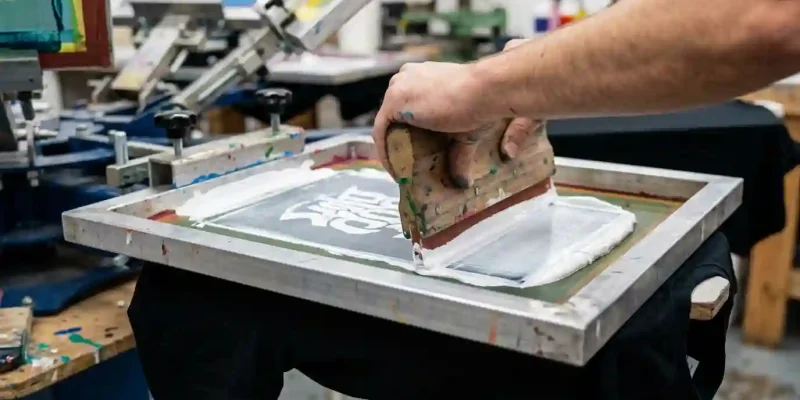
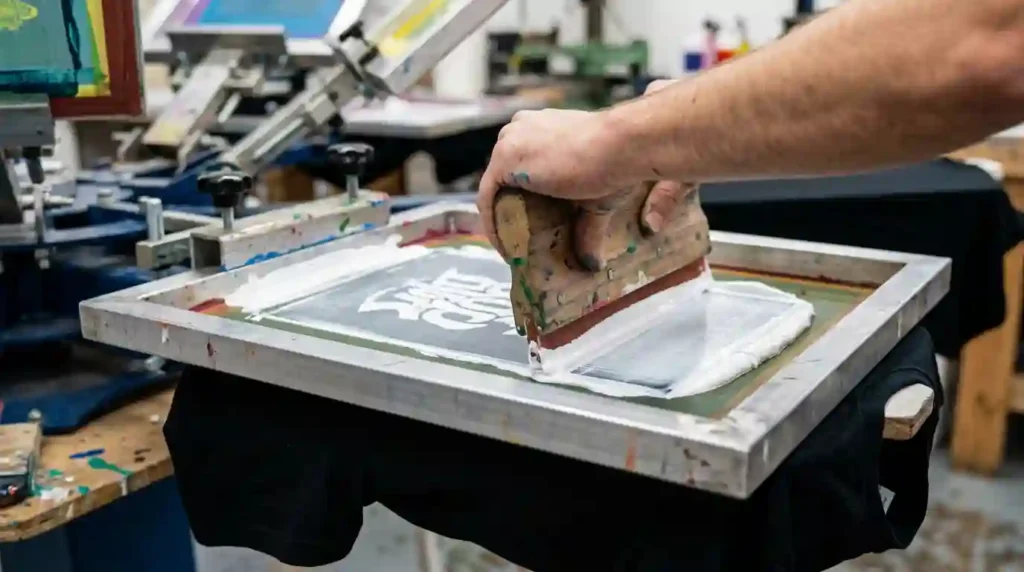
Screen printing (Silk Screen) is the grandfather of streetwear. From the original Stüssy tees to the latest Supreme box logo, this is the industry standard for a reason.
The Process:
We create a stencil (screen) for each color in your design. Ink is pushed through the mesh screen onto the fabric, layer by layer.
The Advantages:
- Vibrancy: Because the ink sits on top of the fabric, the colors are incredibly punchy and opaque, even on black hoodies.
- Durability: Screen prints withstand hundreds of washes without fading if cured correctly.
- Versatility: This is the only way to achieve specialty effects like Puff Print, Metallic, or Glow-in-the-Dark—essentials for modern streetwear.
- Volume Economics: Once the screens are made, the printing is fast. The more you print, the cheaper it gets.
The Downside:
If your design has 12 colors, we need 12 screens. The setup cost makes it prohibitively expensive for small runs (under 50 pieces).
For brands looking to produce classic logo tees or heavy graphics, checking our Custom T-Shirt Manufacturing options is the first step to understanding how screen printing can elevate your basics
2. The Digital Challenger: DTG Printing Explained
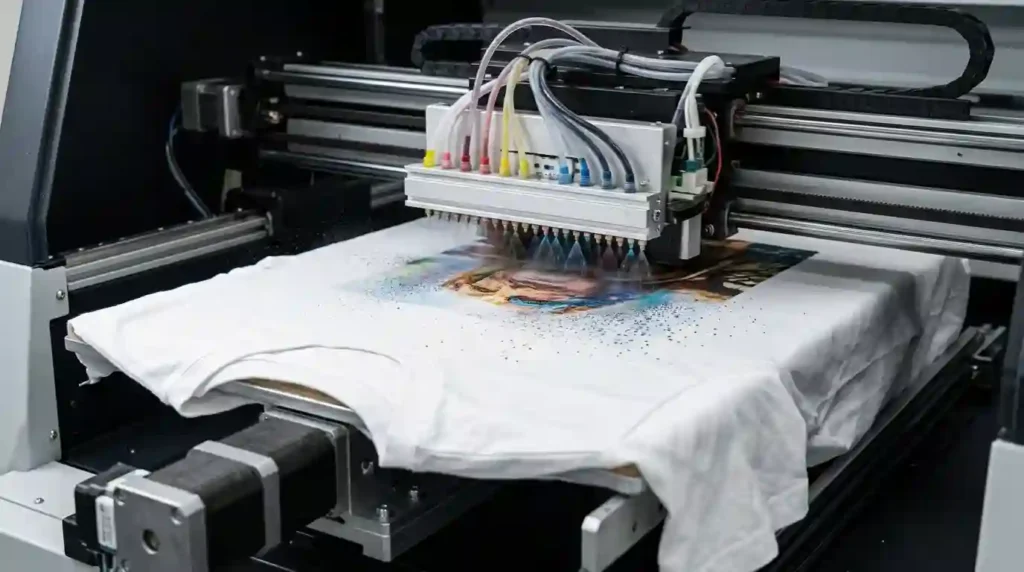
DTG printing operates like a giant inkjet printer for clothes. It sprays water-based inks directly into the fibers of the fabric.
The Advantages:
- Infinite Color: There is no “screen” limit. You can print a photograph, a complex gradient, or a design with 5,000 shades of blue.
- Detail: It captures fine lines and distressing that screen printing might miss.
- No Minimums: Because there is no setup time, printing one shirt costs the same unit price as printing 100. This is ideal for POD (Print on Demand) or sample testing.
- Soft Hand Feel: The ink soaks into the shirt, leaving virtually no texture. It breathes well.
The Downside:
- Placement Limits: DTG struggles with odd placements (like printing over seams or on the hood).
- Fabric Pickiness: It works best on 100% Cotton. It struggles with Polyester or blends often used in activewear.
3. The Showdown: Handling Complex Colors and Gradients
This is where the divergence happens.
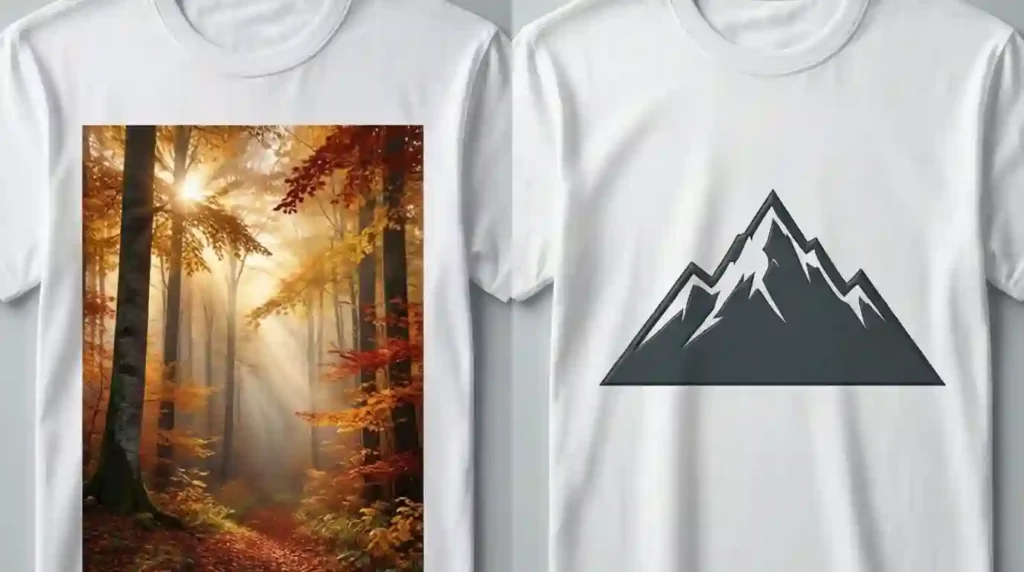
If you are a designer creating a “Bootleg Vintage” style graphic—featuring a collage of photos, fading edges, and smoke effects—DTG printing is your winner. Screen printing requires a technique called “Halftones” (tiny dots) to simulate gradients. While a master printer can pull this off, it is difficult and expensive to set up. DTG handles gradients natively and effortlessly.
However, if your design uses “Spot Colors” (solid blocks of specific colors, like a brand logo), Screen Printing is superior. We can mix the ink to match a specific Pantone code perfectly. DTG uses CMYK mixing, which can sometimes result in slightly duller reds and greens compared to the plastisol punch of screen ink.
4. Efficiency and Economics: How to Scale
For Purchasing Agents and Brand Founders, the math matters more than the art.
The “Tipping Point”
There is a specific volume where Screen Printing becomes cheaper than DTG. Usually, this is around 24 to 50 pieces.
- Scenario A (10 Shirts): Screen Printing requires $200 in setup fees + $5 per shirt. Total = $250 ($25/shirt). DTG is flat $15/shirt. Winner: DTG.
- Scenario B (300 Shirts): Screen setup is still $200, but printing drops to $2 per shirt. Total = $800 ($2.66/shirt). DTG is still $12-$15/shirt. Winner: Screen Printing.
If you are looking for a stable supply chain partner to handle these volume shifts, exploring Hezi Apparel’s OEM/ODM Services can help you navigate these cost structures effectively.
5. Technical Comparison: The Ultimate Data Sheet
To help you make a data-driven decision, we have compiled this parameter comparison based on our factory floor metrics.
| Feature | Screen Printing | DTG (Direct-to-Garment) |
|---|---|---|
| Best For | Bulk orders, Logos, Text, Special FX | Small runs, Photos, Complex Gradients |
| Setup Cost | High (Per color screen fees) | Low to None |
| Unit Cost (Low Vol) | Very High | Medium |
| Unit Cost (High Vol) | Lowest (Most Efficient) | High (Constant) |
| Color Vibrancy | High (Opaque, sits on top) | Medium (Soaks in, matte finish) |
| Durability | Excellent (50+ washes) | Good (20-40 washes) |
| Fabric Compatibility | All fabrics (Cotton, Poly, Nylon) | Mostly 100% Cotton |
| Texture (Hand Feel) | Thicker, plastic-like feel | Soft, almost non-existent |
6. FAQ: Common Manufacturing Questions
Q1: Which method implies “Higher Quality” to the consumer?
A: In the streetwear world, Screen Printing is often perceived as higher quality because of its weight and texture. A thick, durable print feels like “merch.” However, high-fashion brands utilizing complex art often prefer the soft touch of DTG.
Q2: Can I combine both?
A: Yes, this is called Hybrid Printing. We screen print a white underbase (to save money and create a smooth surface) and then use a digital head to print colors on top. It offers the best of both worlds but requires specialized machinery.
Q3: Why does my DTG print look dull on a black shirt?
A: This usually happens due to poor pretreatment. Dark shirts need a liquid pretreatment layer so the white ink stands out. At Hezi, we ensure strict pretreatment protocols to keep DTG pop
Q4: I want to make Puff Print hoodies. Can I use DTG?
A: No. Puff print relies on a foaming agent added to plastisol ink, which expands under heat. This is exclusive to Screen Printing. Check our Custom Men’s Hoodies section for examples of puff applications.
7. Conclusion: Will Digital Replace Screen Printing?
As we look toward the future of manufacturing, a common question from mature partners and innovators is: Is Screen Printing dying?
The Hezi Apparel Perspective:
No, Screen Printing is not dying—it is evolving. While DTG printing technology is advancing rapidly (becoming faster and cheaper), it cannot yet replicate the soul of streetwear. The tactile nature of a heavy plastisol print, the luxury fuzz of flocking, or the dimension of high-density printing are physical characteristics that digital ink cannot mimic.
However, for DTC brands needing to test 10 new designs a week without inventory risk, DTG is a miracle.
The Ultimate Verdict
- Choose Screen Printing if: You are ordering 50+ pieces, your design has 1-6 solid colors, you want special effects (Puff/Glow), or you need the lowest cost per unit for high volume.
- Choose DTG if: You are doing samples, dropshipping, your design is a hyper-realistic photo, or you are printing on demand with zero inventory risk.
Your Supply Chain Partner
At Hezi Apparel, we don’t just ask “How many?”—we ask “What is the vision?” whether you need the artisan touch of screen printing or the agility of digital, we have the infrastructure to scale your brand.
Don’t let the wrong manufacturing choice kill your design’s potential. Visit heziapparel.com/contact today to speak with a production expert who understands the intersection of art and commerce. Let’s create something iconic.