
Heziapparel Size Chart Construction Guide (Standard Pattern vs. Oversized Pattern)
For T-shirts and hoodies
How to Measure Your Size
To help you choose the right size, we recommend measuring the actual garment rather than relying only on body measurements. This is especially important for Oversized fits, as the desired level of looseness can vary from person to person. Comparing with a similar garment you already own and love is the most accurate method.
Before You Start – Important Tips:
- Lay the garment flat on a hard, smooth surface (table or floor). Do not measure while hanging.
- Smooth out all wrinkles and creases. Do not stretch the fabric.
- Use a soft measuring tape for the most accurate results.
- All measurements are in centimeters (cm). Please allow a tolerance of ±2cm due to fabric and production variations.
Measurement Guide (Step by Step)
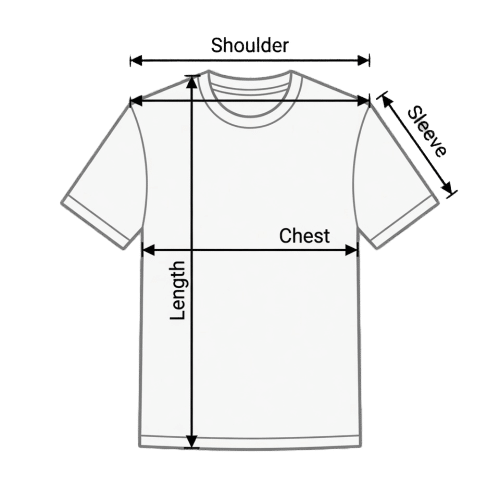
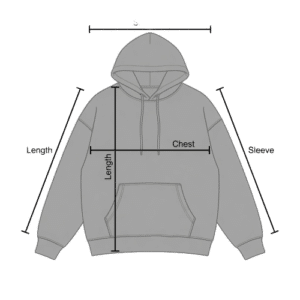
1. 1/2 Chest (Pit to Pit) — Most Important Measurement
How to Measure:
- Lay the garment face up and flat.
- Measure straight across from armpit seam to armpit seam, approximately 2–3cm below the underarm.
- Record the measurement. (This is the half chest width. Full chest circumference is roughly double this number.)
Image Suggestion: Show a flat-laid T-shirt or hoodie with a horizontal measurement line across the chest, clearly marked at the armpit area with an arrow and label “Measure 2–3cm below armpit seam.”
Note: This is the key width measurement. Oversized styles will naturally have a larger 1/2 chest reading.
2. Body Length
How to Measure:
- Locate the highest point of the shoulder (where the shoulder seam meets the neckline).
- Measure straight down from this point to the bottom hem of the garment (do not include any ribbed hem fold).
- Record the measurement.
Image Suggestion: Show a side or front view of the garment laid flat, with a vertical line from the top of the shoulder down to the hem, with clear start and end points labeled.
Note: Oversized versions are intentionally longer than Standard fits (usually by 3–6cm). This is by design.
3. Sleeve Length
How to Measure:
- Find the outer shoulder seam (where the sleeve attaches to the body).
- Measure from the shoulder seam along the outer edge of the sleeve down to the very end of the cuff (including the ribbed cuff).
- Record the measurement.
Image Suggestion: Flat-laid garment with the sleeve extended. Show a measurement line starting from the shoulder seam and running along the outer sleeve to the cuff edge.
Note: Hoodies generally have longer sleeves than T-shirts. This is normal.
4. Shoulder Width (Recommended)
How to Measure:
- Lay the garment flat (preferably back side up for easier viewing).
- Measure straight across from the left shoulder seam to the right shoulder seam.
- Record the measurement.
Image Suggestion: Back view of the garment laid flat, with a horizontal line connecting both shoulder seams.
Why we recommend measuring shoulder width: Oversized styles often feature a dropped shoulder construction, which makes the shoulder width noticeably wider than Standard fits. This helps you better understand the silhouette.
TEE vs HOODIE Measurement Notes
| Measurement | T-Shirt (TEE) | Hoodie | Notes |
|---|---|---|---|
| 1/2 Chest | Measure normally | Measure normally (will read wider) | Hoodies are generally roomier |
| Body Length | Measure normally | Measure normally | Oversized hoodies are longer |
| Sleeve Length | From shoulder seam to cuff | From shoulder seam to cuff | Hoodie sleeves are usually longer |
| Shoulder Width | Highly recommended | Highly recommended | Best way to see dropped shoulder effect |
Notes: Slightly fitted compared to Oversized. Good everyday streetwear fit.
T-Shirt – Standard Fit (Base / Regular)
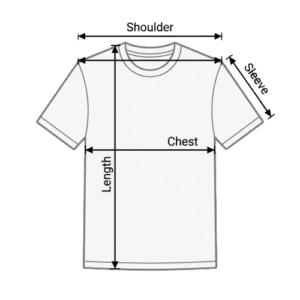
| Size | 1/2 Chest | Body Length | Sleeve Length | Shoulder Width | Recommended For |
|---|---|---|---|---|---|
| S | 51 | 69 | 22 | 42 | Slimmer / Regular fit |
| M | 54 | 71 | 23 | 44 | Most common |
| L | 57 | 73 | 24 | 46 | Standard streetwear |
| XL | 60 | 75 | 25 | 48 | – |
| XXL | 63 | 77 | 26 | 50 | – |
| 3XL | 66 | 79 | 27 | 52 | Extended sizing |
T-Shirt – Oversized Fit
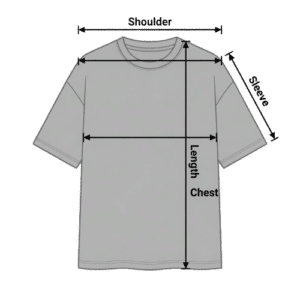
| Size | 1/2 Chest | Body Length | Sleeve Length | Shoulder Width | Recommended For |
|---|---|---|---|---|---|
| S | 56 | 72 | 24 | 46 | Already relaxed |
| M | 59 | 74 | 25 | 48 | Most popular |
| L | 62 | 76 | 26 | 50 | Classic Oversized |
| XL | 65 | 78 | 27 | 52 | – |
| XXL | 68 | 80 | 28 | 54 | Very relaxed |
| 3XL | 71 | 82 | 29 | 56 | Extended Oversized |
Notes: Wider body, longer length, and wider shoulders (dropped shoulder effect). True-to-size for intended oversized look.
Hoodie Size Charts
Hoodie – Standard Fit (Base)
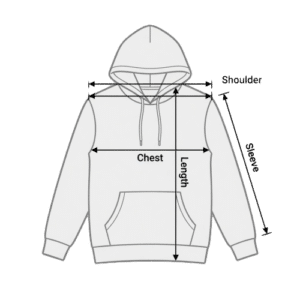
| Size | 1/2 Chest | Body Length | Sleeve Length | Shoulder Width | Recommended For |
|---|---|---|---|---|---|
| S | 54 | 68 | 62 | 45 | Regular / Layering |
| M | 57 | 70 | 63 | 47 | Most common |
| L | 60 | 72 | 64 | 49 | Standard streetwear |
| XL | 63 | 74 | 65 | 51 | – |
| XXL | 66 | 76 | 66 | 53 | – |
| 3XL | 69 | 78 | 67 | 55 | Extended sizing |
Notes: Slightly roomier than T-Shirt Standard due to hoodie construction.
Hoodie – Oversized Fit
| Size | 1/2 Chest | Body Length | Sleeve Length | Shoulder Width | Recommended For |
|---|---|---|---|---|---|
| S | 60 | 70 | 63 | 49 | Already relaxed |
| M | 63 | 72 | 64 | 51 | Most popular |
| L | 66 | 74 | 65 | 53 | Classic Oversized |
| XL | 69 | 76 | 66 | 55 | – |
| XXL | 72 | 78 | 67 | 57 | Very relaxed |
| 3XL | 75 | 80 | 68 | 59 | Extended Oversized |
Notes: Significantly wider and longer than Standard Hoodie. Strong dropped shoulder silhouette.
Recommendations for Website Use
- Create two tabs on your Size Guide page:
- Standard Fit
- Oversized Fit
- Or show separate charts for T-Shirt and Hoodie.
- Always add this note below the charts:
Important: These are garment measurements (laid flat). For the best fit, compare with a similar garment you already own. Oversized styles are designed to be worn true to size for a relaxed look. Allow ±2cm tolerance.