

Introduction to Advanced Crafts in Streetwear Manufacturing
As a streetwear manufacturing expert and fashion designer entrenched in the urban apparel landscape, I’ve pioneered techniques that push boundaries in design and production. For independent brand owners in Europe and the US driving DTC e-commerce growth, mature mid-tier labels hunting for innovative collaborations, or cross-boundary newcomers seeking full-process hosting for custom collabs and corporate merch, advanced crafts are the game-changer. In 2026, with tech integrations and sustainability pressures reshaping the industry, these processes enable precision, efficiency, and standout aesthetics.
This sub-article builds upon our primary guide, 7 Proven Strategies for Streetwear Manufacturing Success in 2026, by spotlighting five revolutionary crafts. We’ll solve practical dilemmas like choosing durable prints for high-volume runs, integrating eco-friendly methods without hiking costs, and streamlining workflows for quick drops. Rooted in OEM/ODM know-how, these insights bolster reliable supply chains. For core techniques, explore our Craft Selection Guide.
Mastering these crafts elevates your streetwear from standard to iconic, but overlooking compatibility can lead to production snags. Let’s explore how they address real-world challenges.
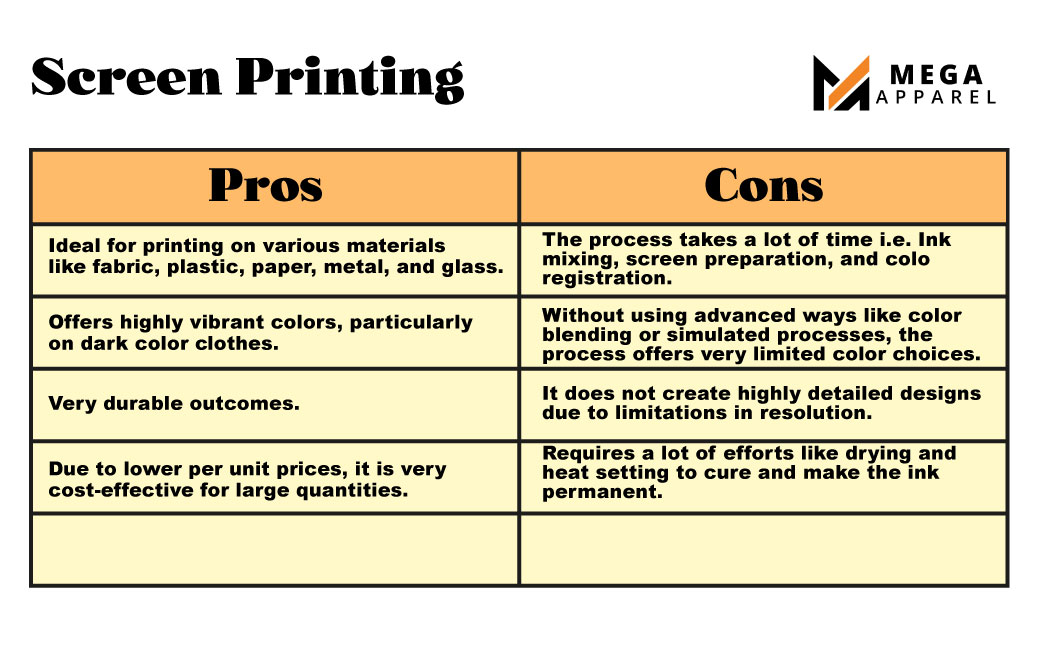
Sublimation vs Screen Printing: Which is Better?
Screen Printing Evolution: Bold Graphics for Mass Appeal
Screen printing has evolved into a staple for streetwear manufacturing, delivering vibrant, durable graphics on tees and hoodies. For indie DTC brands, its cost-effectiveness shines in large runs, tackling the challenge of affordable customization. Advanced multi-color setups now incorporate eco-inks, reducing environmental impact while maintaining opacity on dark fabrics.
Key considerations include mesh count for detail—higher for intricate designs. Common pitfall: Setup fees for small batches; counter by bundling orders. Mature brands use it for collab exclusives with metallic accents. Newbies leverage ODM expertise for seamless integration.
Contrast with alternatives:
| Process | Cost per Unit (USD) | Durability | Best Scenarios |
|---|---|---|---|
| Screen Printing | 2-5 | High | Mass tees, bold logos |
| Heat Transfer | 3-6 | Medium | Small runs, full color |

A Simplified Guide to Clothing Production – The Rosenrot | A Collection of Fashion Essays
Digital Printing: Flexibility for Custom Drops
Digital printing revolutionizes streetwear manufacturing with on-demand capabilities, ideal for DTC e-commerce brands needing low MOQs. It solves variability issues by allowing photorealistic designs without screens, perfect for limited-edition drops amid fast fashion cycles.
Focus on DTG (Direct-to-Garment) for cotton blends, ensuring pre-treatment for vibrancy. Challenge: Fading on synthetics; opt for hybrid inks. For collabs, it enables personalized merch. Crossovers benefit from quick prototyping in enterprise customizations.
Comparison table:
| Aspect | Digital Printing | Traditional Screen | Savings Potential |
|---|---|---|---|
| Setup Cost | Low | High | 50-70% for small batches |
| Color Range | Unlimited | Limited | High customization |
Embroidery Techniques: Premium Texture and Detail
Embroidery adds tactile luxury to streetwear manufacturing, elevating logos on caps and jackets. Indie brands address durability needs with 3D puff styles, while sustainability comes via recycled threads certified by Global Recycled Standard (GRS).
Digitizing designs minimizes errors; avoid dense patterns on lightweight fabrics. For mature collab partners, combine with appliqué for hybrid effects. Newbies get full hosting to handle complex setups.
Table:
| Technique | Cost per Unit (USD) | Speed | Applications |
|---|---|---|---|
| Standard Embroidery | 3-6 | Medium | Logos, basics |
| 3D Puff | 5-8 | Slow | Premium accents |
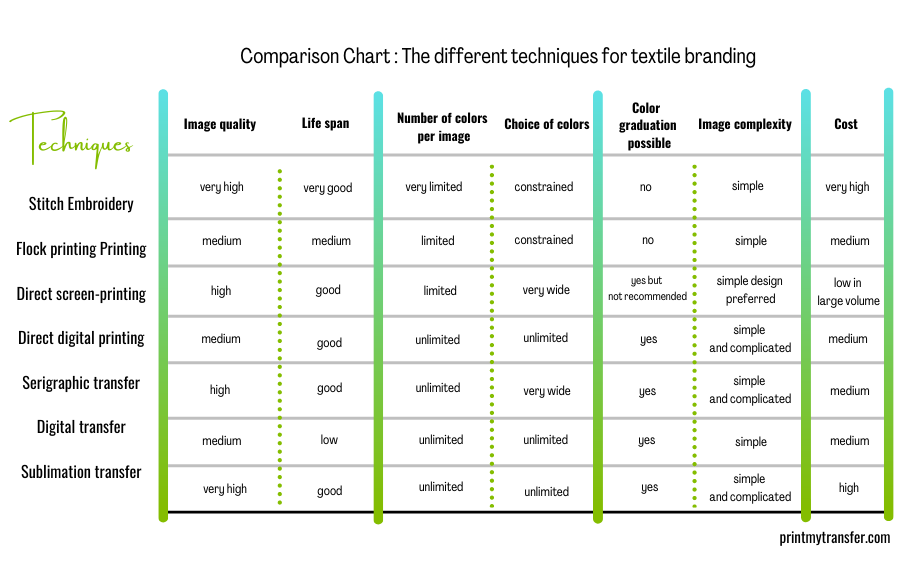
Comparison Chart 2020: The different techniques for textile branding – PrintMyTransfer
Laser Cutting: Precision for Innovative Cuts
Laser cutting transforms streetwear manufacturing with exact patterns, reducing waste in activewear seams. It tackles efficiency for DTC brands facing tight margins, using CO2 lasers for clean edges on synthetics.
Integration with CAD software streamlines designs; watch for scorch marks on naturals. Innovative collabs experiment with perforated details. Enterprise customizers appreciate scalability.
Comparison:
| Feature | Laser Cutting | Traditional Die | Efficiency |
|---|---|---|---|
| Precision | High | Medium | 30% faster |
| Waste Reduction | 20-40% | Low | Eco-friendly |
Waterless Dyeing: Sustainable Color Innovation
Waterless dyeing is a breakthrough in streetwear manufacturing, slashing water use by 90% for eco-lines. Mature brands solve regulatory pressures with supercritical CO2 methods, maintaining vivid hues on polyesters.
Implementation via closed-loop systems; initial costs offset by grants. For custom collabs, it enables unique shades. Newbies rely on OEM partners for tech access.
Table:
| Method | Water Savings | Color Fastness | Use Cases |
|---|---|---|---|
| Waterless Dyeing | 90%+ | High | Sustainable hoodies |
| Traditional Dyeing | Baseline | Medium | Budget basics |

Can Denim Jeans Be Eco-Friendly? Infographic & Guide
FAQ: Common Questions About Streetwear Crafts and Processes
What’s the best printing method for small-batch custom tees?
People frequently ask this for DTC launches: Digital printing offers flexibility and low setup costs, ideal for 50-200 units.
How does embroidery hold up in wash cycles compared to prints?
A common durability query: Embroidery lasts 50+ washes without fading, outperforming basic screen prints on textured items.
Is laser cutting suitable for all fabrics?
Often wondered by newbies: Best for synthetics; test on cottons to avoid burns, with OEM guidance.
Can waterless dyeing match traditional color vibrancy?
Yes, as many inquire amid sustainability shifts: It achieves comparable results with less environmental harm.
How to integrate these crafts into existing supply chains?
Frequent concern for mature brands: Partner with versatile ODMs for seamless upgrades without disruptions.
Conclusion: Pioneering Crafts with Hezi Apparel’s OEM/ODM Mastery
From Hezi Apparel’s production expertise, honed over a decade in OEM/ODM, the ultimate perspective is that AI-assisted crafts will surge by 40% by 2027, blending automation with eco-innovations to combat volatility. Professional manufacturers like Hezi Apparel can deploy these advanced processes, offering comprehensive solutions to your supply chain demands. Delve into our Advanced Craft Innovations to redefine your collections.