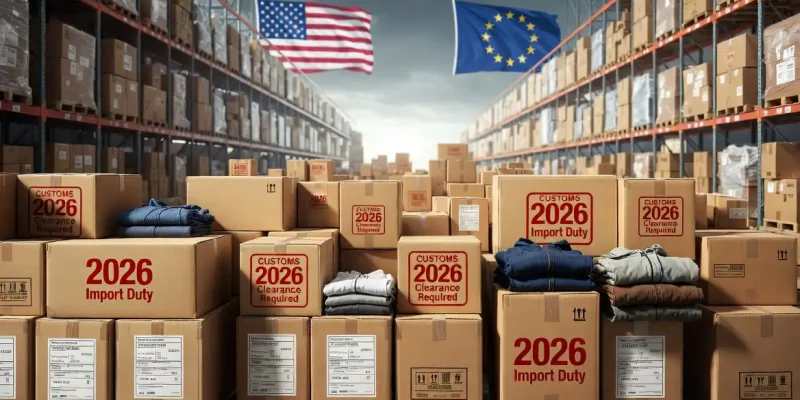
The 2026 tariff impact on clothing is no longer just a customs issue. For apparel brands, it now affects product pricing, MOQ planning, fabric selection, supplier choice, shipment structure, and final retail margin.
If your brand imports custom T-shirts, hoodies, sweatshirts, streetwear, or private label apparel into the United States or the European Union, tariff planning should happen before sampling, not after production. A garment that looks profitable at FOB cost can become difficult to scale once import duties, customs classification, freight, VAT, inspection fees, and compliance documents are added.
For startup brands and growing fashion labels, the practical question is not “How do we avoid tariffs?” The better question is: how do we design, source, classify, produce, and ship clothing in a way that keeps landed cost predictable?
Hezi Apparel works with brands on custom garment development, low MOQ production, sampling, fabric sourcing, printing, embroidery, packaging, and quality control. This guide explains the key 2026 tariff impact areas clothing brands should review before placing their next production order.
Quick Answer: What Is the 2026 Tariff Impact on Clothing?
The 2026 tariff impact on clothing depends on the destination market, product type, fiber content, HS or HTS classification, country of origin, order value, and shipment method.
For the US market, apparel importers should check the official Harmonized Tariff Schedule from the USITC and monitor China-related tariff actions through the Office of the United States Trade Representative. For the EU market, brands should pay close attention to the EU Customs Reform, including the removal of the low-value customs duty exemption and the temporary EUR 3 duty measure for certain e-commerce parcels from July 1, 2026, as explained by the European Commission.
In simple terms: clothing brands need better landed-cost planning, cleaner documentation, smarter MOQ structures, and stronger supplier communication.
1. Start With Correct HS and HTS Classification
The first step in tariff planning is accurate product classification. Clothing is usually classified by garment type, fabric composition, gender category, knit or woven construction, and intended use. For example, a cotton knit T-shirt, polyester hoodie, woven jacket, or fleece sweatshirt may fall under different tariff lines.
US importers should check apparel classifications in the USITC HTS database before confirming production. Incorrect classification can lead to customs delays, unexpected duty adjustments, or compliance risk.
For apparel brands, this means your product development file should include:
- Garment type
- Fabric composition
- GSM or fabric weight
- Knit or woven construction
- Gender or unisex positioning
- Decoration method
- Country of origin
- Packaging method
- Intended import market
If you are still developing the product, Hezi Apparel’s fabric and printing options page can help you compare materials and decoration methods before finalizing your tech pack.
2. Understand US Apparel Tariffs Before You Confirm Fabric
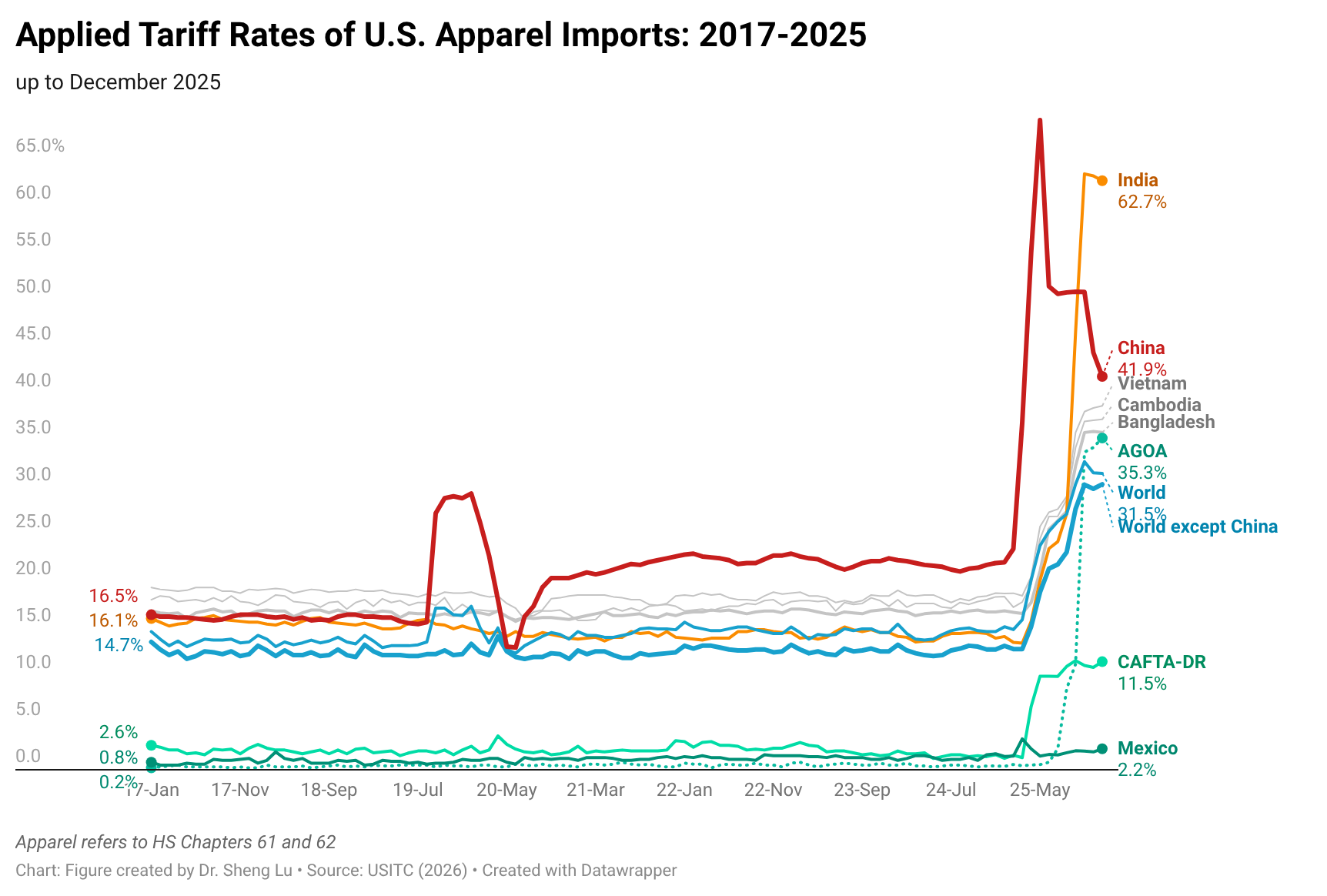
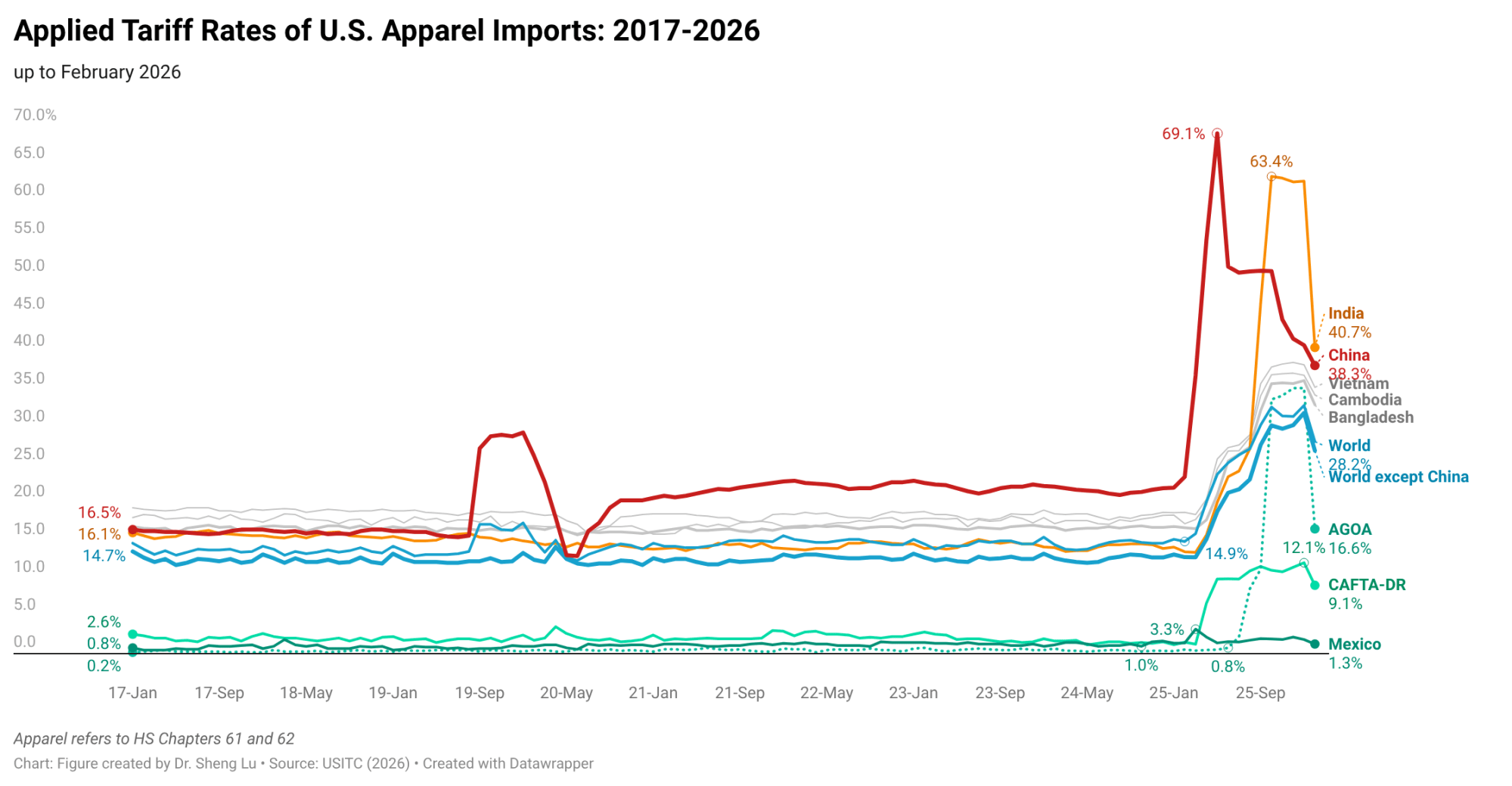
For the US market, tariff impact can vary heavily by fiber content and apparel category. Cotton, polyester, nylon, spandex blends, fleece, and woven fabrics may not receive the same treatment. This is why tariff planning should begin during design and sampling.
The US also maintains China-related tariff actions under Section 301. Importers should monitor the official USTR page for China Section 301 tariff actions, because these measures may affect landed cost beyond the base HTS duty.
For brands sourcing from China, the goal is not to choose the cheapest fabric automatically. The goal is to compare total landed cost:
| Decision Point | Why It Matters |
|---|---|
| Cotton vs polyester blend | Fiber content may affect classification and duty rate |
| Heavyweight vs midweight GSM | Higher fabric weight can increase FOB and freight cost |
| Simple print vs complex embroidery | Decoration affects labor, lead time, and unit cost |
| Stock fabric vs custom dyed fabric | Custom development may raise MOQ and production time |
| Air freight vs sea freight | Freight choice can change total landed cost quickly |
If your product line includes custom tees, review Hezi Apparel’s custom T-shirt manufacturer service page before production planning. For hoodies and fleece products, the custom hoodies manufacturer page is more relevant because heavyweight garments require closer fabric, shrinkage, and freight-cost control.
3. EU Customs Reform Changes Small-Parcel Economics
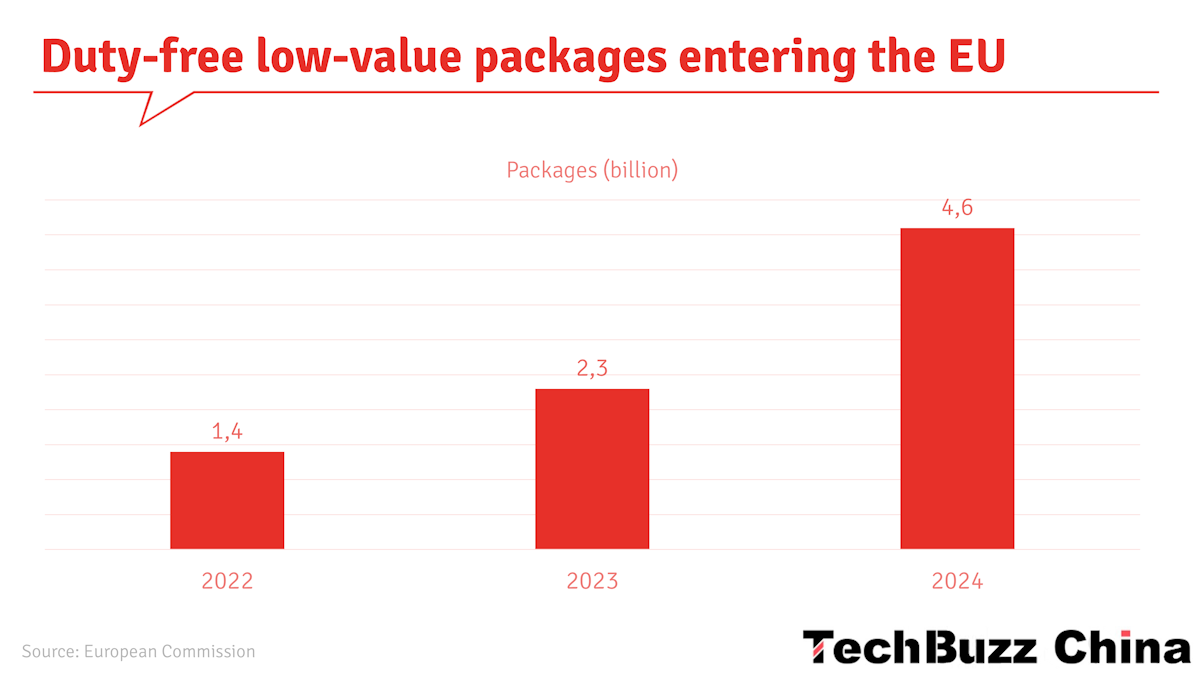
For apparel brands selling into Europe, the EU Customs Reform is especially important. The European Commission states that the EU agreed to remove the de minimis customs duty exemption and impose a temporary EUR 3 customs duty per item from July 1, 2026 until July 1, 2028. The reform also aims to make online platforms more responsible for customs duties and VAT at purchase.
This matters most for low-value parcels and direct-to-consumer apparel shipments. A brand shipping many small clothing orders into the EU may face different economics from a brand importing consolidated wholesale cartons.
For apparel brands, the operational response is clear:
- Avoid unnecessary parcel splitting.
- Consolidate shipments when possible.
- Keep product categories and documentation clean.
- Confirm VAT and customs responsibility before shipping.
- Build duty assumptions into retail pricing.
If your brand is testing the market with small production runs, Hezi Apparel’s low MOQ clothing manufacturer service can help structure trial production without overcommitting inventory.
4. MOQ Planning Needs to Include Landed Cost
MOQ is no longer only a factory number. In 2026, MOQ should be calculated together with duty, freight, customs clearance, packaging, inspection, and warehousing.
A 100-piece test order may look flexible, but the per-unit landed cost can be high if the shipment is split, the packaging is inefficient, or the product requires special handling. A 300-piece or 500-piece order may sometimes reduce per-unit cost, but it also increases inventory risk.
A practical MOQ decision should compare:
- Sample cost
- Bulk unit cost
- Duty and taxes
- Freight method
- Packaging volume
- Inspection cost
- Expected sell-through speed
- Reorder timeline
For startup apparel brands, the best approach is often to launch fewer styles and fewer colorways first. Instead of producing five designs in three colors each, begin with the strongest two or three products and build a cleaner reorder plan.
5. Tariff Pressure Makes Quality Control More Important
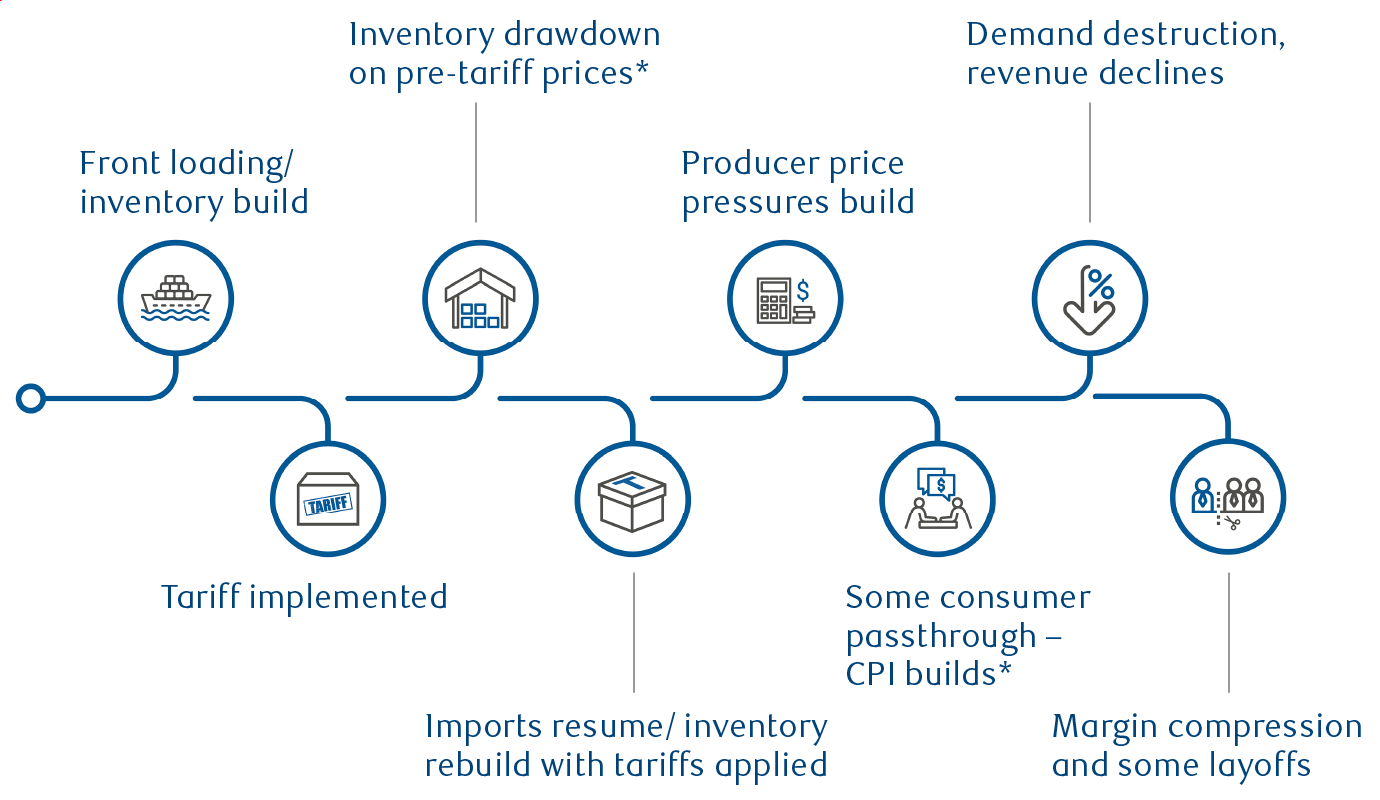
When tariffs increase landed cost, product defects become more expensive. A rejected hoodie, wrong size label, unstable print, or shrinkage problem does not only waste FOB cost. It also wastes duty, freight, inspection, and time.
That is why 2026 apparel sourcing should include quality control before shipment. A proper QC process should check:
- Fabric defects
- Color consistency
- Measurement tolerance
- Stitching quality
- Print or embroidery placement
- Label accuracy
- Packaging accuracy
- Carton marks and shipping documents
Hezi Apparel’s apparel quality control page is a useful internal link for readers who want to understand inspection steps before bulk shipment.
For external validation, brands can also review third-party testing providers such as SGS softlines testing or Intertek textile testing when fabric testing, colorfastness, shrinkage, or product performance checks are required.
6. Documentation Is Now a Sourcing Advantage
Clean documentation can reduce customs friction. Poor documentation can delay goods, trigger questions, and create unexpected costs.
Before shipment, apparel brands should prepare:
- Commercial invoice
- Packing list
- HS or HTS code
- Country of origin
- Fabric composition
- Product description
- Unit value
- Carton details
- Label information
- Any required test reports or certificates
For US-bound goods, importers can review official guidance from US customs and trade agencies, including CBP resources and the International Trade Administration’s import guidance when available. For textiles, labeling rules are also important. The FTC provides guidance on textile and wool labeling requirements, which is especially useful for brands selling apparel in the US market.
7. Build a China + Market Strategy, Not a Panic Strategy
Tariff pressure often pushes brands to consider sourcing diversification. That can be smart, but moving production too quickly can create new problems: longer sampling time, weaker fabric options, limited decoration capability, higher MOQ, or inconsistent fit.
China still offers strong advantages for many apparel categories, especially custom streetwear, heavyweight hoodies, printed T-shirts, washed garments, embroidery, private label packaging, and small-batch product development. The better strategy is not always leaving China. For many brands, the better strategy is using China more intelligently.
A practical 2026 sourcing model may look like this:
| Brand Stage | Recommended Strategy |
|---|---|
| Startup brand | Use low MOQ, stock fabrics, focused SKUs, and clean documentation |
| Growing DTC brand | Combine China production speed with better landed-cost forecasting |
| Established brand | Use dual sourcing, compliance planning, QC systems, and reorder forecasting |
If you are building a custom apparel line, Hezi Apparel can support custom clothing manufacturing, sampling, fabric sourcing, printing, embroidery, labels, packaging, and production QC.

Practical Checklist Before Your Next Clothing Order
Before confirming bulk production, review this checklist:
- Confirm the target market: US, EU, UK, Canada, Australia, or mixed.
- Check the product’s HS or HTS classification.
- Confirm fabric composition and GSM.
- Compare FOB cost with estimated landed cost.
- Decide whether low MOQ or consolidated shipping is better.
- Confirm labeling rules for your selling market.
- Approve a pre-production sample.
- Request QC photos or inspection reports before shipment.
- Keep commercial invoice and packing list consistent.
- Build duties and taxes into retail pricing before launch.
FAQ
What is the 2026 tariff impact on clothing brands?
The 2026 tariff impact on clothing brands includes higher landed-cost pressure, more careful customs classification, stricter documentation needs, and greater importance of MOQ planning. The exact impact depends on garment type, destination market, fiber content, origin, and shipment structure.
How do I check US import duty for clothing?
Use the official USITC Harmonized Tariff Schedule to search by product classification. Importers should also monitor the USTR Section 301 tariff actions page for China-related tariff measures.
What changed for EU clothing imports in 2026?
The European Commission states that the EU agreed to remove the de minimis customs duty exemption and apply a temporary EUR 3 customs duty per item from July 1, 2026 until July 1, 2028. This mainly affects low-value e-commerce parcels and small cross-border shipments.
Can low MOQ clothing production still work under tariff pressure?
Yes, but brands need better planning. Low MOQ works best when the product uses available fabric, simple packaging, accurate documentation, and consolidated shipping where possible. Hezi Apparel’s low MOQ clothing manufacturing service is designed for brands that want to test products before scaling.
Should apparel brands leave China because of tariffs?
Not always. China remains strong for sampling speed, fabric variety, decoration techniques, low MOQ flexibility, and custom garment development. Many brands will benefit more from better classification, smarter shipment planning, and stronger QC than from moving production too quickly.
Conclusion
The 2026 tariff impact on clothing is a real cost issue, but it is also a planning issue. Brands that wait until goods are ready to ship will have fewer options. Brands that plan tariffs during design, sampling, MOQ selection, and documentation can protect margin more effectively.
For apparel brands importing into the US or EU, the strongest approach is to combine accurate classification, realistic landed-cost estimates, reliable quality control, and a manufacturer that understands custom production.
Hezi Apparel helps brands develop and produce custom T-shirts, hoodies, sweatshirts, streetwear, private label apparel, and low MOQ collections with fabric sourcing, sampling, printing, embroidery, packaging, and QC support. To plan your next production run, visit the Contact Us page and share your product type, quantity, target market, and customization details.