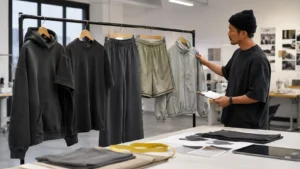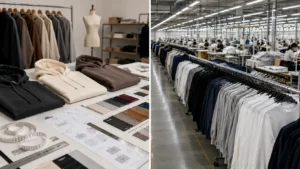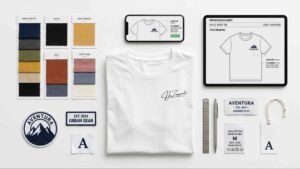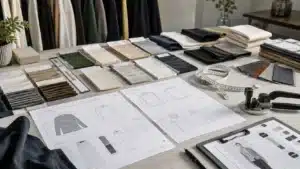
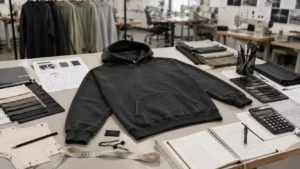
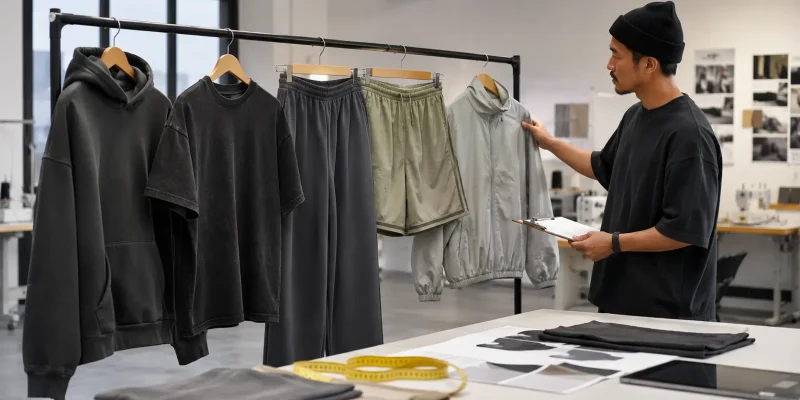
A clothing sample is not just a preview of your design. It is the production standard your manufacturer will use when the order moves into bulk.
That is why a sample review should be more disciplined than “it looks good” or “the logo is a little off.” For a startup clothing brand, this is the last practical moment to catch fit problems, fabric mistakes, label issues, print placement errors, and packaging details before those problems become 100 or 500 finished pieces.
The safer move is to prove the fit and fabric before you scale the quantity.
Below is a practical clothing sample review checklist you can use before approving bulk production.
Start With the Approved Requirements, Not Your Memory
Pull the original brief back onto the table
Before you inspect the sample, put the original requirements next to it.
You should review the sample against:
- Tech pack or product specification sheet
- Size chart and measurement tolerance
- Fabric name, composition, GSM, and color
- Logo artwork and placement file
- Print, embroidery, wash, or decoration instructions
- Label, hang tag, and packaging requirements
- Reference images or approved mockups
Do not rely on memory. A hoodie that feels “close enough” may still be wrong if the body length is short, the sleeve drop changed, or the embroidery shifted 2 cm from the approved placement.
For streetwear products, small differences are not always small. A boxy T-shirt can lose its shape if the shoulder width is reduced. A heavyweight hoodie can feel cheaper if the fleece weight or hand feel changes. A puff print can look flat if the technique does not match the artwork.
The sample should be judged against the brief, not against a vague idea of what you hoped to receive.
Check Fabric First: Weight, Hand Feel, Color, and Shrinkage Risk
Treat fabric as the base standard
Fabric is the base of the product. If the fabric is wrong, the rest of the sample can look acceptable and still fail in bulk.
Start with four checks.
First, confirm the fabric weight and hand feel. If you requested a heavyweight hoodie, the sample should feel structured enough for that positioning. If you requested a soft casual T-shirt, the fabric should not feel stiff or papery.
Second, check color under natural light. Indoor lighting can hide shade differences. If the product uses a custom dyed fabric or washed effect, compare the sample to the approved color reference.
Third, inspect the surface. Look for uneven dyeing, fabric holes, yarn defects, pilling, stains, shade bands, or inconsistent washing.
Fourth, ask about shrinkage. You may not run a lab test on every early sample, but you should know whether the fabric has been pre-shrunk, garment washed, or tested for expected shrinkage. This matters especially for cotton T-shirts, fleece hoodies, washed sweatshirts, and streetwear sets.
If the fabric is not right, do not approve the sample just because the logo looks good.
Measure the Garment Like a Production Piece
Verify the sample with a tape, not a glance
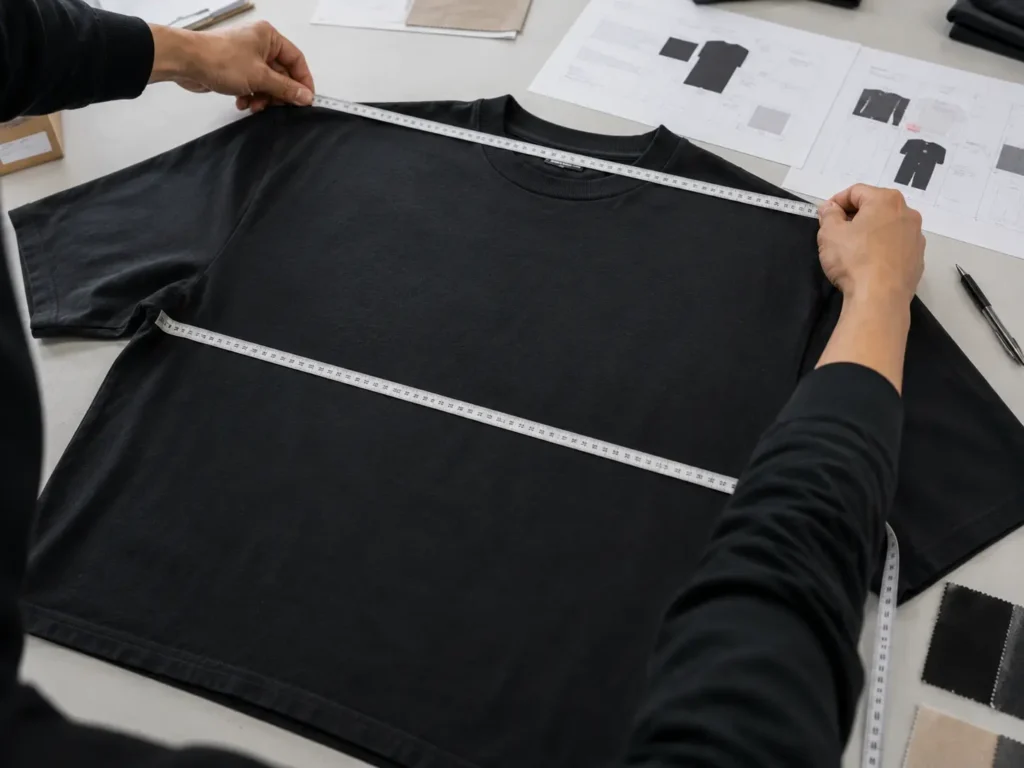
Fit is where many brands get surprised. A sample can look fine on a table but fail when measured.
Lay the garment flat and measure the key points:
- Chest or half chest
- Body length
- Shoulder width
- Sleeve length
- Armhole
- Hem width
- Waistband or rib opening
- Hood size, if applicable
- Inseam, outseam, waist, and leg opening for bottoms
Compare each measurement to the size chart and tolerance. For many apparel categories, small tolerances are normal, but the acceptable range should be agreed before production.
Do not only check the sample size you received. Ask how the measurements will be graded across the full size range. A medium sample may look good, but if the XL becomes too long or the small becomes too narrow, the bulk order can still create returns.
For oversized streetwear, pay special attention to shoulder drop, body width, sleeve volume, and length balance. Oversized fit is not just “make everything bigger.” The proportion has to feel intentional.
Try It On, Then Review Movement
A clothing sample should be worn, not only photographed.
If possible, try it on a fit model close to your target customer. Check how the garment behaves when the person moves, sits, raises their arms, bends, or layers it with another piece.
For hoodies, check whether the hood pulls the neckline backward. For T-shirts, check whether the collar sits flat. For sweatpants, check whether the waistband rolls or the crotch feels too tight. For jerseys, check whether the fabric moves comfortably and does not feel heavy when worn.
This is where the founder needs to be picky. If the garment only looks good from one front-facing photo, it is not ready.
Inspect Construction: Seams, Stitching, Rib, and Symmetry
Construction quality decides whether the product feels retail-ready.
Look closely at:
- Stitch density and stitch consistency
- Loose threads
- Twisted seams
- Uneven rib cuffs or hem
- Collar shape
- Hood attachment
- Pocket shape and alignment
- Zipper smoothness
- Side seam symmetry
- Inside finishing
One loose thread is easy to fix. Repeated seam twisting, uneven rib, or poor collar shape is a pattern problem. That kind of issue should be corrected before bulk production.
If a detail affects the sample, it will affect the bulk order.
Review Logo Technique and Placement Separately
Many brands approve a sample because the garment body looks good, then later notice that the logo execution is wrong.
Review the logo as its own category.
For screen printing or DTG, check color, opacity, edge sharpness, cracking risk, and whether the print sits correctly on the fabric. For puff print, check height, texture, coverage, and whether fine details have become muddy. For embroidery, check thread color, density, backing, puckering, and whether small letters are readable. For rhinestone or applique, check alignment, attachment strength, and whether the finish matches the brand mood.
Placement is just as important. Measure the distance from collar, shoulder seam, side seam, center front, or pocket edge. Do not approve based only on what “looks centered.”
For a custom streetwear order, logo placement should be treated like a measurement, not a guess.
Check Labels, Tags, and Packaging Before They Become Bulk Mistakes
Private label details are easy to overlook in a sample review, but customers notice them.
Check:
- Neck label material and size
- Label orientation
- Size label accuracy
- Care label content
- Hang tag design and string placement
- Barcode or SKU sticker, if used
- Poly bag size and warning text, if required
- Folding method
- Carton mark requirements
Private label is not just a neck label. It is the whole product presentation.
If you plan to sell through Shopify, Amazon, a retail buyer, or an influencer merch drop, packaging details can affect fulfillment, photography, and customer perception. Do not leave them vague until after bulk production starts.
Separate “Must Fix” From “Nice to Improve”
A good sample review should not become a messy list of opinions. Separate your feedback into clear categories.
Use this structure:
| Category | Meaning | Example |
|---|---|---|
| Must fix before approval | Blocks bulk production | Chest width is outside tolerance; logo placement is wrong; fabric color is not approved |
| Revise if possible | Important but not fatal | Hood opening could be slightly smaller; drawstring color should match rib |
| Approved | Ready to lock | Fabric hand feel, embroidery thread color, woven label quality |
| Confirm in bulk | Needs production control | Color consistency, print curing, size grading, packaging count |
This helps your manufacturer understand what must change and what is already approved. It also prevents the next sample from drifting away from the parts you liked.
Give Feedback With Photos, Measurements, and Markups
“Make it better” is not usable feedback.
Better feedback looks like this:
- “Increase body length by 2 cm from current sample.”
- “Move chest embroidery 1.5 cm higher and keep it centered on body panel.”
- “Change rib cuff to tighter recovery; current cuff opens too easily.”
- “Use the approved black woven neck label from the previous reference.”
- “Keep fabric weight and color unchanged.”
Use photos with arrows, circles, and measurement notes. If you are changing fit, provide exact numbers. If you are changing artwork, send the corrected file. If you are approving a detail, say clearly that it is approved.
A good tech pack does not need to be fancy; it needs to remove guesswork.
Approve Bulk Only When the Sample Can Become the Standard
Lock the reference before production starts
The final approved sample should become the production reference. That means it must be good enough for the factory to match during bulk production.
Before approving, ask:
- Are the measurements inside tolerance?
- Is the fabric approved?
- Is the color approved?
- Is the logo technique approved?
- Are labels and packaging approved?
- Are remaining revisions documented clearly?
- Is the size grading confirmed?
- Is the bulk order quantity, size ratio, and color breakdown final?
- Has the production team confirmed the timeline?
If the answer is unclear, do not rush approval. Sampling is not a delay; it is the control point that protects the bulk order.
For brands working with a sample-first manufacturer, this is where the value shows up. Hezi Apparel’s workflow, for example, uses sampling to confirm fabric, fit, construction, logo technique, labels, and overall product quality before mass production. That kind of process only works when the buyer reviews the sample with enough detail to lock a clear production standard.
Final Takeaway
Approving a clothing sample is not about liking the sample. It is about deciding whether this exact standard can be repeated in bulk.
Review the sample in layers: requirements, fabric, measurements, fit, construction, logo execution, labels, packaging, and final production details. Give feedback that a factory can act on. Approve only when the garment is strong enough to become the reference for every piece that follows.
That is how a small test order becomes a controlled production run instead of an expensive lesson.
References
Internal Hezi Apparel Sources
- https://heziapparel.com/clothing-sampling-service/
- https://heziapparel.com/apparel-quality-control/
- https://heziapparel.com/custom-hoodies-manufacturer/
- https://heziapparel.com/low-moq-clothing-manufacturer/
External Reference Sources