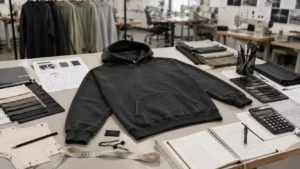
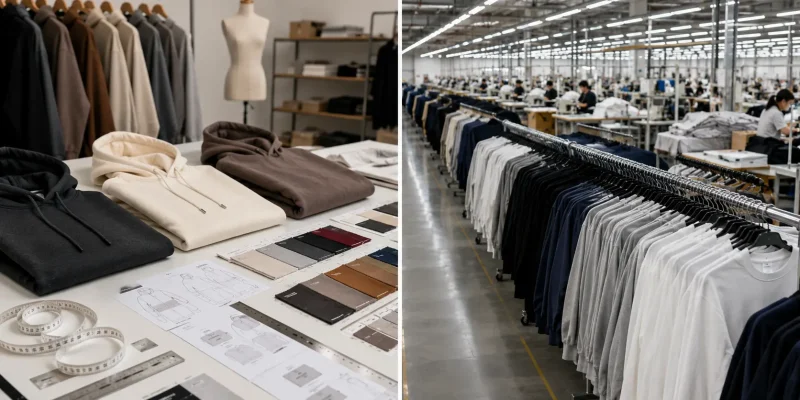
Custom streetwear manufacturing and fast fashion production are built for different business goals. One model helps a brand create a controlled product with its own fit, fabric, labels, trims, and production story. The other model is built for speed, low price, high volume, and quick trend turnover.
For a new streetwear brand, copying the fast fashion model usually creates the wrong kind of pressure: too many styles, weak product identity, lower quality control, and inventory risk before demand is proven. Custom production is slower, but it gives the founder more control over what the garment becomes.
The real question is not which model is cheaper. The better question is which model protects the brand while it is still learning what customers will buy twice.
Quick comparison
| Factor | Custom streetwear manufacturing | Fast fashion production |
|---|---|---|
| Main goal | Build original products and brand identity | Move trends quickly at low unit cost |
| MOQ logic | Smaller, more focused production runs | Large-volume production for broad retail |
| Fit control | Custom measurements, patterns, grading | Standardized bodies and size blocks |
| Product depth | Fabric, trims, labels, wash, decoration | Speed and assortment width |
| Best for | Streetwear startups, premium drops, private label brands | Mass retailers and trend chains |
| Main risk | Higher sample cost and longer development | Overproduction, weak differentiation, quality drift |
| Brand value | Stronger product ownership | Faster trend reaction, weaker uniqueness |
1. Custom production starts with identity, fast fashion starts with volume
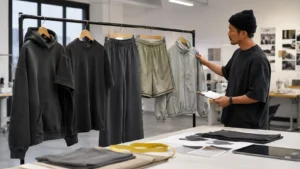
Custom production begins with a product idea: a boxy T-shirt, heavyweight hoodie, washed sweatshirt, flared sweatpant, tracksuit, shorts, jersey, or capsule set. The factory discussion starts with fit, fabric, GSM, trims, decoration, labels, packaging, and MOQ.
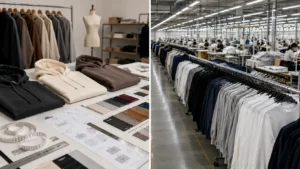
Fast fashion production usually starts with volume and speed. The goal is to move a trend from concept to shelf quickly, often with broad size runs, low cost, and many SKUs. That can work for large retailers with strong forecasting, huge traffic, and aggressive markdown systems.
A streetwear startup does not have that safety net. If a founder launches too many trend-driven products at once, the brand learns less from each style and carries more inventory risk. A focused custom drop gives clearer feedback: which fit sold, which fabric felt right, which graphic worked, and which size range needs adjustment.
For streetwear brands, fewer better products usually beat a wide catalog of average pieces.
2. MOQ pressure changes the whole business model
MOQ is one of the biggest differences between the two models. Fast fashion production depends on scale. The more units a retailer makes, the easier it is to push down unit cost, fill stores, and support a low retail price.
Made-to-order streetwear production can work with a narrower product plan. A brand may start with one hoodie body in two colors, one boxy tee with two graphics, or one tracksuit set. The MOQ still depends on fabric, color, printing, washing, trims, and size range, but the planning logic is different: prove demand before scaling.
Low MOQ does not mean careless production. It means the brand makes fewer decisions and checks each one harder.
For Hezi Apparel-style startup production, low MOQ support is useful when the buyer wants to test a real product without ordering a fast-fashion-sized inventory run. The brand can learn from sample feedback, customer reviews, and reorder demand before committing more capital.
3. Fit control is stronger in custom manufacturing
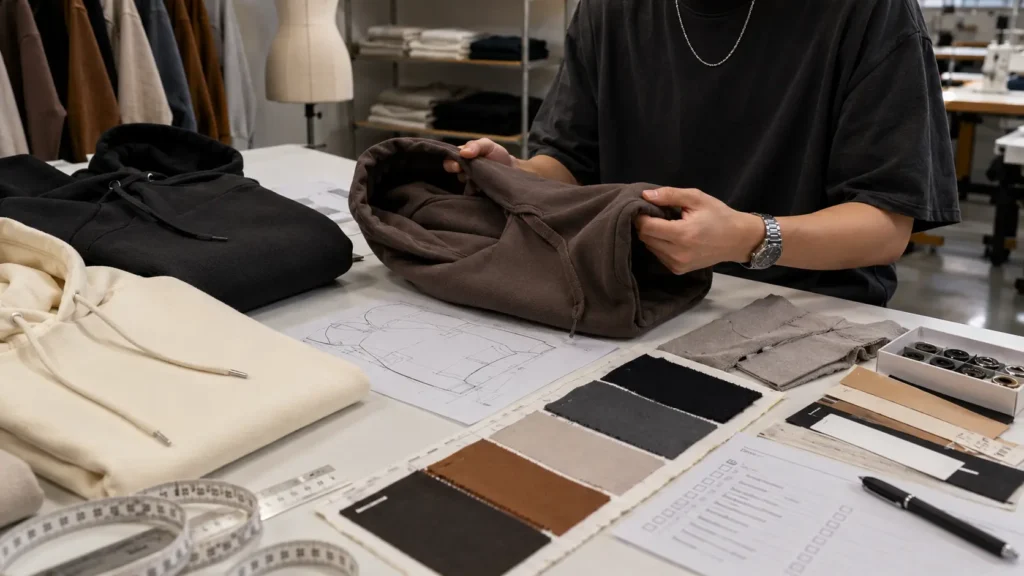
Streetwear fit is not standard casualwear fit. A boxy tee needs width without random length. An oversized hoodie needs shoulder drop, sleeve volume, hood balance, rib recovery, and body structure. A cropped sweatshirt needs tight length control because a small shrinkage change can make the garment feel wrong.
Custom production lets the brand define these measurements. The factory can build a pattern, revise the sample, test grading, and check how the garment behaves after washing. That process creates a fit block the brand can reuse in future drops.
Fast fashion production often relies on standardized fit blocks designed for broad sales and quick approval. That can be efficient, but it rarely gives a new streetwear brand a distinctive product language. The garment may look familiar because the fit was built for mass retail, not brand identity.
For streetwear, fit becomes part of the logo. Customers may forget a hang tag, but they remember how a hoodie sits on the shoulder.
4. Fabric decisions are more visible in streetwear
Fast fashion production often focuses on cost efficiency and quick sourcing. Fabric may be chosen because it hits a price point, supports a trend, and can be produced at scale.
Custom apparel development gives the brand more room to choose fabric by role. A premium hoodie may need 380-450 GSM fleece. A lighter streetwear layer may need 260-320 GSM French terry. A washed tee may need cotton that can handle garment dye, vintage wash, or acid wash without twisting badly.
The buyer should ask for:
- Fabric composition
- GSM range
- Shrinkage after wash
- Handfeel and drape
- Colorfastness expectations
- Rib quality
- Decoration compatibility
This is where fast fashion logic can hurt a streetwear brand. Cheap fabric may make the first quote look attractive, but poor handfeel creates returns, weak reviews, and a product customers do not wear often.
5. Speed works differently in both models
Fast fashion production wins on trend speed. Large brands can identify a trend, move through development quickly, and push it into a large sales system. Speed is the product advantage.
Custom production uses a different kind of speed: decision speed. It may take longer to develop a custom hoodie or T-shirt, but the process can be efficient if the founder gives clear references, target measurements, fabric direction, artwork files, label needs, and launch timing.
The slowest custom projects are usually not slow because the factory cannot sew. They are slow because the buyer has not defined the garment.
For a first streetwear drop, a better timeline is:
- One to two focused product types
- One approved fabric direction
- One clear fit target
- One decoration method per style
- One sample revision plan
- One bulk approval standard
Custom production rewards clarity. Fast fashion rewards volume systems. A new brand needs the first one more than the second.
6. Quality control is easier when the product is narrower
Fast fashion production handles quality control at scale. The system needs to inspect large quantities, many styles, and quick cycles. It can be powerful, but the model accepts more assortment turnover and shorter product life.
Made-to-order production gives a smaller brand the chance to inspect fewer products more carefully. The brand can approve one sample, one fit block, one fabric, one wash, and one decoration standard before bulk.
For streetwear, QC should focus on:
- Measurements and tolerance
- Shrinkage after washing
- Neck rib and cuff recovery
- Print or embroidery durability
- Color and shade consistency
- Seam strength
- Label and packing accuracy
This type of control helps the brand protect the customer experience. A smaller order with better QC often creates more long-term value than a large order that arrives with inconsistent sizing or weak fabric.
7. Brand value grows from repeatable product ownership
Fast fashion production can produce many styles quickly, but it rarely helps a small brand own a signature product. A product may sell because it follows a trend, not because the brand created a recognizable fit, fabric, or construction.
Custom product development helps build ownership. A brand can create a boxy tee block, a heavyweight hoodie block, a washed sweat set, or a shorts pattern that becomes part of the label’s identity. Once the product works, the brand can repeat it in new colors, graphics, washes, and capsules.
That repeatability changes the business. The founder no longer starts from zero every season. The best-selling hoodie can become a core product. The best T-shirt block can carry new artwork. The best sweatpant fit can become part of a tracksuit.
Fast fashion looks efficient when the goal is trend turnover. Custom production looks stronger when the goal is brand memory.
When fast fashion production still makes sense
Fast fashion production is not useless. It makes sense for large retailers, trend-led sellers, high-volume marketplaces, and brands that have strong data, large marketing channels, and the ability to manage markdowns.
It may also work when the product is intentionally simple: basic promotional apparel, generic seasonal items, price-first retail, or very broad casualwear.
The problem starts when a new streetwear brand copies the speed and assortment of fast fashion without having the audience, cash flow, or operations to support it. Fast movement can hide weak product thinking for a short time, but it cannot replace fit, fabric, and brand trust.
When custom streetwear manufacturing is the better choice
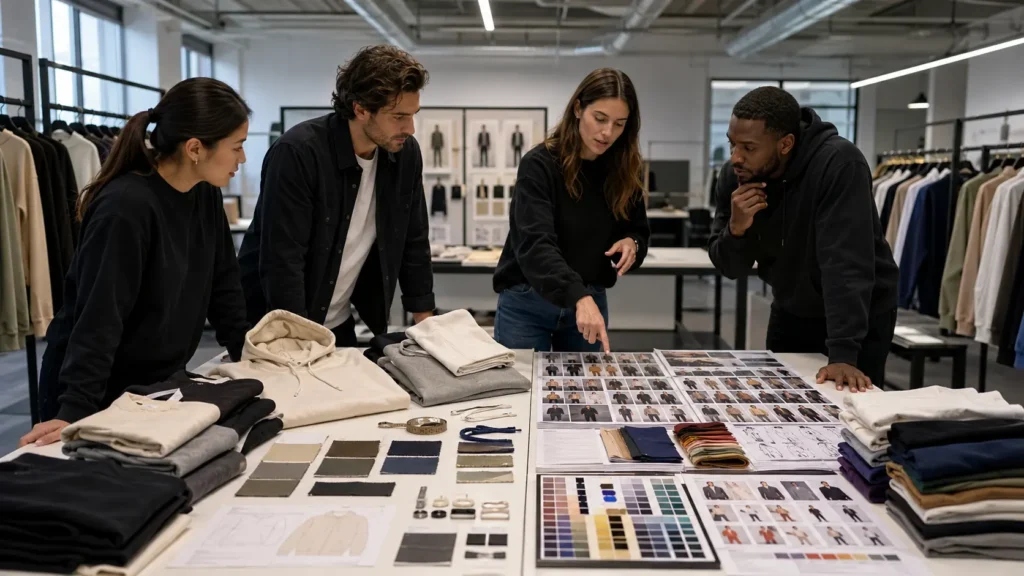
This model is better when the brand wants product ownership. It is the right fit for brands that care about oversized fit, heavyweight fleece, custom labels, garment dye, puff print, embroidery, acid wash, private label packaging, and repeatable quality.
It also suits founders who want to start smaller and learn from the first drop. Instead of ordering many cheap styles, the brand can build one strong product lane and improve it through sampling, customer feedback, and reorders.
Custom production is the stronger choice when:
- Fit is part of the brand identity
- Fabric handfeel affects the retail price
- The product needs private label details
- The brand wants repeat orders
- The founder wants lower inventory risk
- Quality is more important than trend speed
Decision checklist
| Question | Choose custom manufacturing if… | Choose fast fashion if… |
|---|---|---|
| Do you need original fit? | Yes, fit drives the product | No, standard fit is enough |
| Is MOQ a concern? | You want to test demand first | You can support large volume |
| Is the brand premium? | Fabric and finishing matter | Price is the main driver |
| Is speed the main goal? | You can accept sample development | You need trend turnover first |
| Do you need reorders? | You want stable core products | Styles are disposable trends |
| Do you need labels and packaging? | Private label details matter | Generic packaging is acceptable |
FAQ
What is custom streetwear manufacturing?
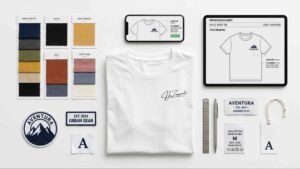
Custom streetwear manufacturing means producing garments with brand-specific fit, fabric, trims, labels, decoration, washing, packaging, and measurements. It is used when a brand wants original products instead of standard blanks with a logo.
How is fast fashion production different?
Fast fashion production is built for speed, low unit cost, broad assortment, and trend turnover. It works best for large retailers with strong sales systems, but it can create inventory and quality risk for small streetwear brands.
Is custom manufacturing more expensive?
The sample and development cost can be higher, but the brand gets more control over fit, fabric, and quality. For a startup, a smaller custom order can be less risky than buying a large fast-fashion-style inventory run.
Which model is better for a new streetwear brand?
Most new streetwear brands should start with a focused custom MOQ. One strong hoodie, T-shirt, or set can teach more than a large catalog of generic pieces.
Can a brand combine both models?
Yes. A brand can use faster blank-based products for simple tests and custom production for hero items. The key is to avoid confusing low-effort speed with long-term product value.
Conclusion
Custom streetwear manufacturing is the better model when a brand wants fit control, fabric quality, private label identity, and repeatable products. Fast fashion production is better for high-volume trend retailers that can move inventory quickly and absorb markdown risk.
For a new or growing streetwear brand, the smarter path is usually slower and narrower: build one product lane, approve the sample, test the fabric, control the fit, and reorder what customers actually want. Hezi Apparel’s low MOQ and custom apparel positioning fit that kind of disciplined brand-building approach.
References
Brand / Website Context
- Hezi Apparel home page: https://heziapparel.com/
- Hezi Apparel low MOQ streetwear manufacturing article: https://heziapparel.com/start-a-streetwear-brand-low-moq-manufacturing/
- Hezi Apparel clothing brand cost article: https://heziapparel.com/cost-to-start-a-clothing-brand-2026/
- Hezi Apparel fabric composition article: https://heziapparel.com/clothing-fabric-composition-types/
Same-Industry / Upstream / Sustainability References
- Vogue explainer on fast fashion: https://www.vogue.com/article/what-is-fast-fashion
- Vogue article on Ellen MacArthur and circular fashion: https://www.vogue.com/article/ellen-macarthur-circular-economy-sustainability-fashion
- Ellen MacArthur Foundation, A New Textiles Economy: https://www.ellenmacarthurfoundation.org/a-new-textiles-economy
- McKinsey Fashion on Climate report: https://www.mckinsey.com/industries/retail/our-insights/fashion-on-climate
- European Environment Agency textile and circular economy materials: https://www.eea.europa.eu/
- Sewport tech pack guide: https://sewport.com/learn/tech-pack
- Techpacker guide to fashion tech packs: https://techpacker.com/blog/design/what-is-a-tech-pack/
- AATCC TM135 dimensional changes of fabrics after home laundering: https://members.aatcc.org/store/tm135/543/