
Clothing fabric composition tells a buyer what a fabric is made from. For a brand founder or procurement manager, it is one of the first specifications that decides cost, comfort, shrinkage, print performance, durability, sustainability, and whether the final garment fits the target customer.
A hoodie described as “heavyweight fleece” is not specific enough. A T-shirt described as “soft cotton” is not specific enough either. Clothing fabric composition gives the real starting point: 100% cotton, cotton-polyester blend, cotton-spandex jersey, linen-viscose woven fabric, recycled polyester fleece, or another fiber mix.
For streetwear brands, clothing fabric composition is not a technical detail hidden inside the care label. It is part of product positioning. A premium oversized tee, an economical merch hoodie, a breathable summer shirt, and a stretch cargo pant should not use the same fiber logic.
Quick answer: which clothing fabric composition should brands choose?
Use this first filter before sourcing swatches.
| Composition Type | Best Use | Cost Position | Sustainability Position | Main Risk |
|---|---|---|---|---|
| 100% cotton | T-shirts, hoodies, sweatshirts | Medium | Better if organic or responsibly sourced | Shrinkage, longer drying |
| Cotton-polyester | Hoodies, fleece, basics | Economical | Mixed; recycled polyester helps | Less premium handfeel if too synthetic |
| 100% polyester | Sportswear, quick-dry items | Economical to mid | Recycled option available | Can feel less natural |
| Linen | Shirts, resort streetwear, summer pants | Medium to high | Strong if responsibly sourced | Wrinkles, higher cost |
| Viscose | Draped shirts, soft pants, fashion tops | Medium | Depends on pulp sourcing and process | Weak wet strength, shrinkage |
| Cotton-spandex | Fitted tees, rib tanks, stretch pants | Medium | Harder to recycle as a blend | Recovery and heat sensitivity |
| Polyester-spandex | Sportswear, stretch shorts, performance pieces | Economical to mid | Recycled polyester possible | Heat and pilling risk |
| Tri-blends | Soft tees, fashion basics | Medium | Mixed impact | Inconsistent handfeel if poorly sourced |
The best clothing fabric composition depends on the job of the garment. Cotton is best for natural comfort. Polyester is best for economy, durability, and quick drying. Linen is best for breathable summer texture. Viscose is best for soft drape. Spandex is best when stretch and recovery are required.
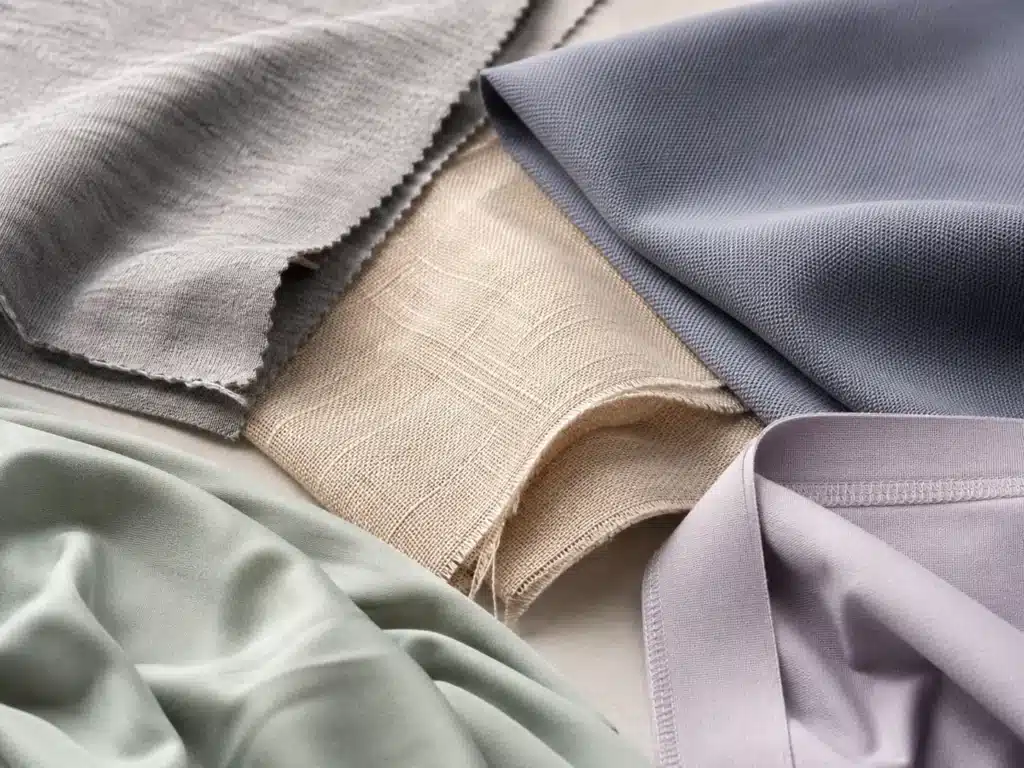
1. Clothing fabric composition rule: cotton for comfort and streetwear basics
Cotton is one of the most common fibers in custom clothing because it feels familiar, breathable, printable, and comfortable against the skin. For streetwear brands, cotton works well in T-shirts, heavyweight tees, hoodies, sweatshirts, jerseys, and casual pants.
The strength of cotton is handfeel. A 100% cotton jersey tee can feel more natural than a synthetic blend. Cotton fleece can support premium hoodies when the yarn, knitting, GSM, brushing, and finishing are controlled. Cotton also works well with screen printing, embroidery, garment dye, acid wash, pigment wash, and vintage wash when the process is planned correctly.
The risk is shrinkage and drying time. Cotton absorbs moisture, so it can shrink if the fabric is not compacted, pre-shrunk, or wash-tested. It may also take longer to dry than polyester. White and light cotton garments can stain more easily, while dark cotton may need colorfastness control.
For clothing fabric composition planning, 100% cotton is best when the brand wants a natural handfeel, premium basic identity, good print surface, and stronger streetwear credibility. It is not always the cheapest route, but it usually gives a stronger product story than a very synthetic handfeel.
2. Clothing fabric composition rule: polyester for economy and performance
Polyester is common because it is durable, quick-drying, stable, and often more economical than many natural fibers. It appears in sportswear, mesh shorts, track pants, jackets, performance tees, linings, fleece blends, and sublimation-printed garments.
For procurement, polyester can help control cost and improve functional performance. It dries faster than cotton, resists wrinkles, and holds shape well. It is useful for active streetwear, teamwear-inspired products, basketball shorts, track jackets, and lightweight outerwear.
The weakness is perception and handfeel. Many fashion customers associate too much polyester with cheaper apparel unless the fabric is well developed. Polyester can also pill, hold odor more than natural fibers, and feel less breathable if the construction is poor.
For clothing fabric composition decisions, polyester is best when the product needs durability, fast drying, lower cost, color stability, or performance styling. A recycled polyester option can improve the environmental story, but brands should still test handfeel, pilling, and heat sensitivity before bulk.
3. Clothing fabric composition rule: cotton-polyester blends for balanced basics
Cotton-polyester is one of the most practical clothing fabric composition choices for streetwear basics. It combines cotton comfort with polyester durability and cost control. Common examples include 80/20 cotton-polyester fleece, 70/30 fleece, 65/35 jersey, or 50/50 basics.
The advantage is balance. Cotton brings natural feel and print compatibility. Polyester can reduce cost, improve dimensional stability, speed up drying, and help the garment resist wrinkles. For hoodies and sweatshirts, a cotton-polyester fleece can be easier to manage than 100% cotton fleece if the brand needs more stable bulk production.
The main risk is positioning. A 50/50 blend may work for affordable merch, but it may not feel premium enough for a high-end streetwear hoodie. A higher cotton ratio, such as 80/20, can often feel more natural while still gaining some stability from polyester.
For clothing fabric composition planning, cotton-polyester blends are best for hoodies, sweatshirts, everyday tees, and merch programs where the brand needs a practical mix of cost, comfort, durability, and repeatable production.
4. Clothing fabric composition rule: linen for breathable and eco-conscious summer pieces
Linen is made from flax fiber and is known for breathability, dry handfeel, texture, and strong warm-weather appeal. It works well for summer shirts, relaxed pants, resort-inspired streetwear, lightweight jackets, and natural-looking capsule collections.
From an environmental angle, linen can be a strong option when flax sourcing, processing, dyeing, and garment durability are managed responsibly. Linen often needs less irrigation than many water-intensive crops, and the fiber can create long-lasting garments. For brands that want a more eco-conscious story, linen is more credible than pretending a cheap synthetic is sustainable.
The weakness is cost and wrinkling. Linen creases easily, and that is part of its look. If the customer expects a crisp, smooth garment all day, linen may disappoint. It can also be more expensive and less familiar to streetwear buyers than cotton fleece or jersey.
For clothing fabric composition decisions, linen is best when the brand wants breathable texture, summer styling, and a natural material story. It is less suitable for heavy logo hoodies or low-cost basics.
5. Clothing fabric composition rule: viscose for drape and soft fashion handfeel
Viscose is a regenerated cellulose fiber, often made from wood pulp through a chemical process. It is not the same as cotton or linen, but it can feel soft, breathable, smooth, and fluid. It is common in shirts, wide-leg pants, draped tops, fashion jerseys, resort pieces, and soft woven garments.
The strength of viscose is drape. If a brand wants a shirt or pant to fall softly instead of standing stiffly, viscose can help. It can also be blended with linen, cotton, polyester, or spandex to change handfeel, cost, stability, and stretch.
The risk is wet strength, shrinkage, and sourcing quality. Viscose can lose strength when wet, shrink if not tested, and vary widely depending on the supplier and process. Sustainability also depends heavily on pulp sourcing and chemical management.
For clothing fabric composition planning, viscose is best when the product needs softness and flow. It should be tested carefully for washing, seam strength, shrinkage, and pilling before a brand uses it in bulk streetwear production.
6. Clothing fabric composition rule: spandex for stretch, not as the main fabric
Spandex, also called elastane, is usually used in small percentages to add stretch and recovery. It is common in rib fabrics, fitted T-shirts, stretch denim, leggings, compression garments, cuffs, waistbands, and performance streetwear.
A fabric with 2-5% spandex can stretch more comfortably and return closer to its original shape. In rib tanks, fitted tees, body-hugging tops, and stretch pants, spandex can make the garment more wearable. In waistbands and cuffs, it can improve recovery.
The risk is heat, recovery loss, and recycling difficulty. Too much spandex can make the fabric feel rubbery or unstable. Poor-quality spandex can lose recovery after washing, drying, or long wear. Blends with spandex can also be harder to recycle than single-fiber fabrics.
For clothing fabric composition decisions, spandex is best as a support fiber. Use it when stretch is part of the product function. Do not add it automatically to every garment.
7. Clothing fabric composition rule: choose blends by garment function
Most commercial fabrics are blends because brands need multiple properties in one garment. The right clothing fabric composition is rarely about one fiber being “best.” It is about matching the fiber mix to the product goal.
For example, a 100% cotton heavyweight tee may be best for a premium streetwear blank. An 80/20 cotton-polyester fleece may be better for a hoodie that needs shape stability and lower shrinkage. A 95/5 cotton-spandex jersey may work for fitted tops. A polyester-spandex fabric may be better for athletic shorts. A linen-viscose blend may be better for a relaxed summer shirt than pure linen because it can improve drape and reduce harshness.
The buyer should ask what the composition is meant to solve. Is the garment supposed to feel natural, stretch, dry fast, hang softly, cost less, last longer, or carry an environmental claim? If the composition does not support the purpose, it is the wrong fabric.
For streetwear brands, clothing fabric composition should always be reviewed with GSM, knit or weave structure, finishing, wash test, decoration method, and target retail price.
8. Clothing fabric composition rule: verify claims before bulk production
Fabric composition should be confirmed before bulk production, especially when a brand is making environmental, performance, or premium claims. A care label that says 100% cotton, 80% cotton 20% polyester, or 95% cotton 5% spandex must match the actual fabric.
The factory should provide fabric swatches, composition information, GSM, color approval, shrinkage data, and bulk fabric confirmation. If the brand needs certified organic cotton, recycled polyester, responsible viscose, or European flax linen, the relevant certification or supplier documentation should be requested before production.
Do not rely only on a handfeel description. “Soft,” “eco,” “premium,” and “breathable” are not enough. Clothing fabric composition should be written into the tech pack, purchase order, care label, and QC checklist.
Hezi Apparel’s custom clothing manufacturing context is relevant here because fabric sourcing, sample development, printing options, washing, and bulk quality control all connect to composition. A fabric choice should be confirmed before the brand commits to fit, decoration, and bulk pricing.
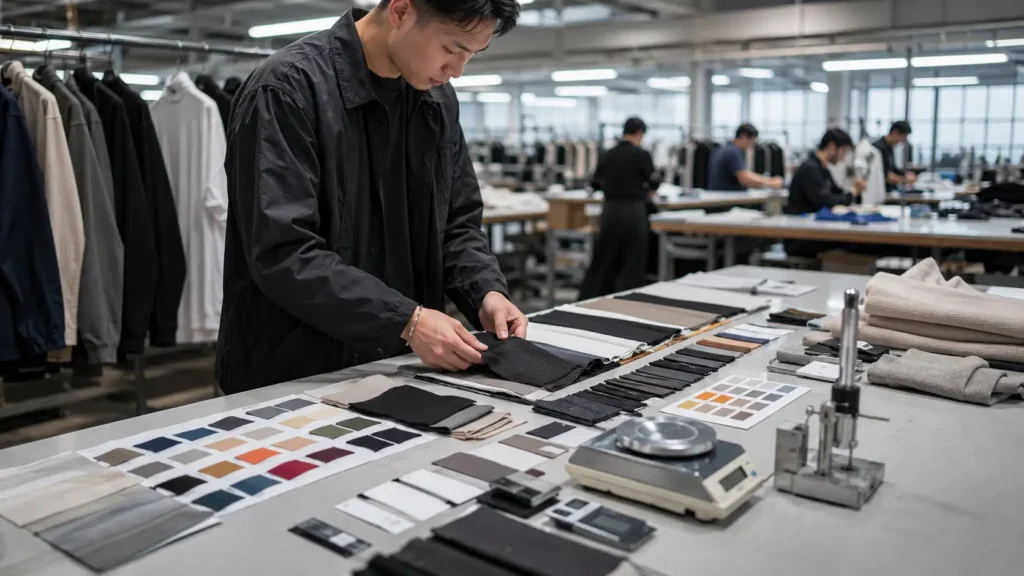
Eco-friendly vs economical vs streetwear-ready fabric choices
Use this decision map when comparing cotton, polyester, linen, viscose, and spandex.
| Goal | Stronger Options | Watch Out For |
|---|---|---|
| Eco-conscious positioning | Organic cotton, responsibly sourced linen, recycled polyester, better-managed viscose | Unsupported green claims |
| Lowest cost | Polyester, cotton-polyester blends, stock cotton jersey | Cheap handfeel, pilling, weak brand positioning |
| Premium streetwear | Heavy cotton jersey, cotton-rich fleece, garment-dyed cotton, structured blends | Shrinkage and higher cost |
| Summer comfort | Linen, cotton, viscose, linen-viscose blends | Wrinkling and shrinkage |
| Stretch fit | Cotton-spandex, polyester-spandex, rib with elastane | Recovery loss and heat damage |
| Sportswear | Polyester, recycled polyester, polyester-spandex | Breathability, odor, pilling |
The best clothing fabric composition for a streetwear brand is the one that gives the customer the expected feel at the target price while staying stable in bulk production.
Fabric composition checklist for procurement
Before approving fabric, ask these questions:
- What is the exact fiber percentage?
- Is the fabric knitted or woven?
- What is the GSM?
- Is the fabric stock, custom-dyed, or custom-knitted?
- What shrinkage is expected after washing?
- Does the fabric support the planned print, embroidery, wash, or finish?
- Is the handfeel suitable for the target customer?
- Does the composition support the brand’s environmental claim?
- Are there certificates or supplier documents if needed?
- Will the care label match the tested bulk fabric?
This checklist keeps clothing fabric composition decisions practical instead of vague.
FAQ
What does clothing fabric composition mean?
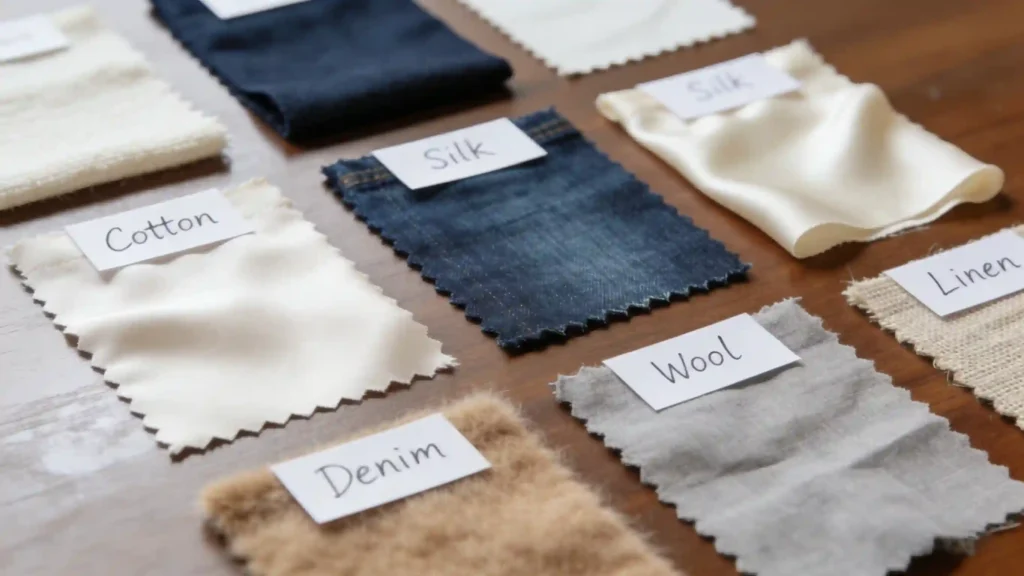
Clothing fabric composition means the fiber content of a fabric, such as 100% cotton, 80% cotton 20% polyester, 95% cotton 5% spandex, linen-viscose blend, or recycled polyester. It tells buyers what the fabric is made from.
Which clothing fabric composition is best for streetwear hoodies?
For streetwear hoodies, cotton-rich fleece is usually the safest choice. 100% cotton gives a natural premium feel, while cotton-polyester blends can improve stability, cost, and durability. The right clothing fabric composition depends on GSM, fit, wash process, and price.
Is polyester bad for streetwear brands?
No. Polyester is useful for sportswear, quick-dry items, mesh shorts, jackets, and cost-controlled basics. It becomes a problem when the handfeel does not match the brand’s premium positioning or when the fabric pills, traps odor, or feels cheap.
Is linen more environmentally friendly than cotton?
Linen can be a strong eco-conscious choice, especially when responsibly sourced and made into long-lasting garments. It is breathable and durable, but it wrinkles easily and often costs more. Brands should verify sourcing instead of using broad sustainability claims.
Why is spandex added to clothing fabric composition?
Spandex is added for stretch and recovery. It helps fitted tees, rib fabrics, stretch pants, waistbands, cuffs, and performance garments move with the body. Most products use only a small percentage because too much spandex can affect handfeel and durability.
Conclusion
Clothing fabric composition is one of the most important decisions in apparel procurement. Cotton gives comfort and streetwear credibility. Polyester gives durability, economy, and quick-dry performance. Linen gives breathable natural texture. Viscose gives soft drape. Spandex gives stretch and recovery.
For streetwear brands, the smartest fabric choice is not always the most expensive or the most natural. It is the composition that matches the garment’s function, retail price, customer expectation, production method, and environmental claim. Before bulk production, confirm the exact clothing fabric composition, test the fabric, approve the swatch, and make sure the label matches the real material.
References
Brand / Website Context
- Hezi Apparel home page: https://heziapparel.com/
- Hezi Apparel about page: https://heziapparel.com/about-us/
- Hezi Apparel custom fabric and printing options: https://heziapparel.com/fabric-printing-options/
- Hezi Apparel types of fabric for streetwear clothing guide: https://heziapparel.com/types-of-fabric-streetwear-clothing/
- Hezi Apparel OEM private label clothing manufacturer page: https://heziapparel.com/oem-private-label-clothing-manufacturer/
- Hezi Apparel custom oversized blank hoodies product page: https://heziapparel.com/product/custom-oversized-blank-hoodies-streetwear/
- Hezi Apparel custom T-shirt manufacturer page: https://heziapparel.com/custom-t-shirt-manufacturer/
- 10 Essential Types of Fabric for Streetwear Clothing: A Manufacturing Expert’s Guide
Same-Industry / Upstream / Production / Fiber References
- CottonWorks overview of cotton performance and breathability context: https://cottonworks.com/performance-technologies/transdry-technology/
- CottonWorks cotton solutions brochure: https://cottonworks.com/wp-content/uploads/2022/08/By-Nature-By-Design-Brochure-Flyer-Final.pdf
- Apex Mills guide to polyester properties and uses: https://www.apexmills.com/media_post/what-is-polyester/
- ScienceDirect overview of polyester fabric properties and limitations: https://www.sciencedirect.com/topics/engineering/polyester-fabric
- European Flax and Linen sustainability reference: https://linen.eu/en/all-about-linen/sustainability/
- Ecolife linen fabric sustainability overview: https://www.ecolife.com/learn/what-is-linen-fabric
- Fabric Atlas viscose fiber properties and uses: https://www.fabricatlas.com/fibers/viscose
- Tissura viscose fabric guide and application notes: https://tissura.com/articles/viscose-fabrics
- WJEC textile materials resource covering viscose and elastane properties: https://resource.download.wjec.co.uk/vtc/2016-17/16-17_1-3/website/pdf/_eng/_wjec/textiles-1/materials-resource-2.pdf
- AATCC TM135 dimensional changes of fabrics after home laundering: https://members.aatcc.org/store/tm135/543/