
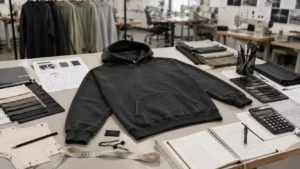

Choosing between a 300GSM vs 500GSM fleece hoodie is one of the most important product decisions for a streetwear brand. GSM affects how the hoodie feels, how it drapes, how warm it is, how much it costs, how it prints, and how customers judge quality when they touch the garment.
For startup brands, 300GSM fleece often feels easier to launch because it is lighter, more wearable across seasons, and usually more cost-efficient. For premium streetwear collections, 500GSM fleece can create a heavier, structured, luxury feel, but it also requires tighter control over fabric, shrinkage, cutting, sewing, freight, and MOQ.
This guide explains the real production differences between 300GSM and 500GSM fleece hoodies so your brand can choose the right fabric weight before sampling. If you are planning a custom hoodie project, Hezi Apparel’s custom hoodies manufacturer service can help with fabric sourcing, sampling, printing, embroidery, washing, labels, packaging, and quality control.
What Does GSM Mean in Hoodie Fabric?
GSM means grams per square meter. It measures fabric mass by area, so a higher GSM usually means the fabric is heavier, denser, and more substantial. Textile standards such as ASTM D3776/D3776M are used to measure fabric mass per unit area in professional testing contexts.
For hoodies, GSM does not tell the whole story by itself. A 400GSM French terry can feel very different from a 400GSM brushed fleece because knit structure, yarn count, fiber blend, finishing, brushing, compacting, and washing all change the final hand feel.
Still, GSM is a useful starting point for product planning:
| Hoodie Fabric Weight | General Feel | Common Use |
|---|---|---|
| 250-320GSM | Lightweight to midweight | Everyday hoodies, spring/fall collections |
| 320-420GSM | Midweight to heavyweight | Premium casualwear, streetwear basics |
| 420-550GSM | Heavyweight | Structured streetwear, winter hoodies |
| 550GSM+ | Extra heavyweight | Niche premium drops, oversized statement pieces |
For most streetwear brands, the main decision is not simply “light or heavy.” It is whether the hoodie should feel easy and wearable or dense and premium.
Quick Answer: 300GSM vs 500GSM Fleece Hoodie
A 300GSM fleece hoodie is lighter, softer, easier to layer, usually more affordable, and better for year-round wear. A 500GSM fleece hoodie is heavier, warmer, more structured, and better for premium streetwear drops, but it costs more and needs stronger production control.
If your brand is launching its first hoodie, 300-400GSM is often safer. If your brand wants a luxury streetwear feel, oversized silhouette, boxy shape, and high perceived value, 450-500GSM fleece may be the better choice.
300GSM Fleece Hoodie: Best for Everyday Streetwear
A 300GSM hoodie is usually considered midweight. It can still feel substantial, especially when made with good cotton or cotton-poly fleece, but it will not feel as dense or rigid as a 500GSM hoodie.
This weight is a practical choice for:
- Startup clothing brands
- Low MOQ hoodie production
- Spring and fall collections
- Everyday streetwear basics
- Layering pieces
- Lower shipping weight
- More accessible retail pricing
A 300GSM fleece hoodie is easier for customers to wear in different climates. It also works well for brands that sell across multiple regions, because not every customer wants an extremely heavy hoodie.
For brands testing their first hoodie collection, a 300GSM option can reduce production risk. If you are still validating fit, graphics, size range, and demand, Hezi Apparel’s low MOQ clothing manufacturer service can support smaller production runs before scaling.
500GSM Fleece Hoodie: Best for Premium Heavyweight Streetwear
A 500GSM fleece hoodie is a heavyweight product. It feels dense, structured, and premium. This makes it attractive for streetwear brands that want a luxury blank, oversized silhouette, or winter-focused hoodie.
A 500GSM hoodie is usually better for:
- Premium streetwear collections
- Oversized hoodies
- Boxy fits
- Winter drops
- Minimalist heavyweight blanks
- High retail price positioning
- Embroidery, appliqué, and premium trims
The main advantage of 500GSM fleece is perceived value. Customers often associate weight with quality, especially in streetwear. A heavy hoodie can feel more expensive even before the customer checks the label or stitching.
However, 500GSM fleece is less forgiving in production. Heavy fabric can affect cutting accuracy, seam bulk, hood shape, rib matching, shoulder balance, and carton weight. It may also increase sample cost, bulk cost, shipping cost, and production lead time.
If your brand wants a heavyweight custom hoodie, work with a manufacturer that understands fleece shrinkage, rib recovery, needle selection, seam strength, and finishing. Hezi Apparel’s custom clothing manufacturing service is suitable for brands that need development support beyond basic blank apparel.
300GSM vs 500GSM Fleece Hoodie Comparison
| Factor | 300GSM Fleece Hoodie | 500GSM Fleece Hoodie |
|---|---|---|
| Feel | Softer, lighter, easier to wear | Dense, heavy, premium |
| Warmth | Moderate | High |
| Drape | More relaxed and flexible | More structured and boxy |
| Best Season | Spring, fall, mild winter | Fall, winter, colder markets |
| Retail Positioning | Everyday streetwear | Premium streetwear |
| Production Cost | Lower | Higher |
| Shipping Cost | Lower | Higher |
| MOQ Flexibility | Usually easier | May require more planning |
| Printing | Works well for many methods | Needs print method testing |
| Embroidery | Suitable for small to medium embroidery | Good for premium embroidery and patches |
| Risk Level | Lower | Higher if fabric/QC is weak |
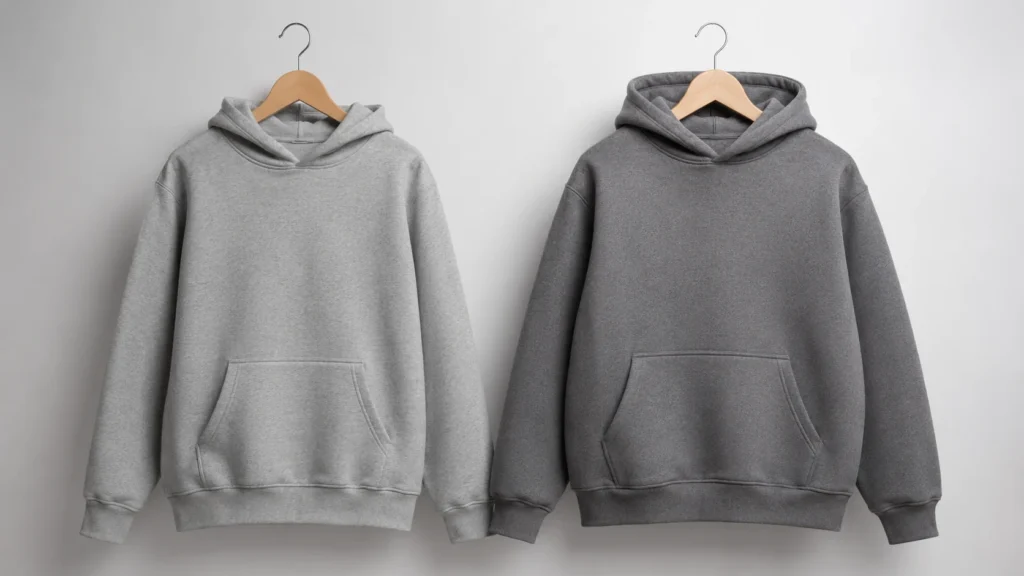
How Fabric Composition Changes Hoodie Performance
GSM is important, but composition matters just as much. A 300GSM 100% cotton fleece and a 300GSM cotton-poly blend may behave differently after washing, printing, and wearing.
Common fleece compositions include:
- 100% cotton fleece
- Cotton-polyester fleece
- Cotton-spandex blends
- Organic cotton fleece
- Recycled polyester blends
- French terry
- Brushed fleece
Cotton usually gives a natural hand feel and strong streetwear appeal. Polyester can improve durability, shape retention, and cost control. Spandex may add stretch, but too much stretch can change the silhouette of oversized hoodies.
If your brand cares about textile safety or chemical compliance, certifications such as OEKO-TEX STANDARD 100 can help buyers understand whether textiles have been tested for harmful substances. This is especially useful for brands selling internationally or positioning products as premium basics.
Shrinkage: The Hidden Risk in Heavyweight Hoodies

Shrinkage is one of the biggest risks in fleece hoodie production. A hoodie can look perfect before washing but become too short, too tight, or unbalanced after laundering.
Shrinkage risk depends on:
- Fiber content
- Yarn quality
- Knitting tension
- Fabric finishing
- Brushing process
- Washing method
- Rib quality
- Pattern allowance
For 300GSM fleece, shrinkage can still happen, but it is usually easier to manage. For 500GSM fleece, shrinkage and distortion can be more serious because the fabric is thicker and the garment has more weight.
Before bulk production, brands should request wash test results or test samples internally. Professional testing providers such as SGS textile testing and Intertek textile testing can support fabric and garment performance checks when third-party verification is needed.
Printing and Embroidery on 300GSM vs 500GSM Fleece
Decoration method should match hoodie weight. A design that works on a 300GSM hoodie may not behave the same way on a 500GSM hoodie.
For 300GSM fleece, common methods include:
- Screen printing
- DTG printing
- Heat transfer printing
- Puff printing
- Small embroidery
- Woven labels
- Neck labels
For 500GSM fleece, premium decoration methods often include:
- Heavy embroidery
- Appliqué
- Chenille patches
- Puff print
- Silicone print
- Woven patches
- Washed or vintage finishing
Heavy fleece can support bold decoration, but it needs testing. Large print areas may feel stiff. Thick embroidery can create puckering if the backing, thread tension, and fabric stability are not controlled.
Before bulk production, always approve a decorated sample, not only a blank sample. Hezi Apparel’s fabric and printing options page can help buyers compare decoration methods before finalizing artwork.
Fit and Silhouette: Why Weight Changes the Shape
A 300GSM hoodie usually creates a softer silhouette. It can work well for regular fit, relaxed fit, and everyday oversized styles. The fabric moves more easily, so the hoodie feels comfortable and less restrictive.
A 500GSM hoodie creates a more structured silhouette. It can hold a boxy shape, dropped shoulder, oversized sleeve, and premium hood structure better than lighter fleece. This is why many streetwear brands prefer heavyweight fleece for signature hoodie drops.
However, heavy fabric can make a poor pattern look worse. If the shoulder is too wide, the sleeve too long, or the hood too heavy, the garment may feel bulky instead of premium.
For streetwear hoodies, brands should pay attention to:
- Shoulder drop
- Chest width
- Body length
- Sleeve length
- Hood size
- Rib tension
- Hem shape
- Cuff recovery
- Neck opening
If you are developing a full streetwear collection, Hezi Apparel’s custom streetwear manufacturer service is a better fit than choosing a generic blank supplier.
Cost and MOQ: Why 500GSM Usually Costs More
A 500GSM hoodie normally costs more than a 300GSM hoodie because it uses more fabric and may require more careful production. The final price can also increase because of heavier shipping weight, larger carton volume, slower sewing speed, and higher defect risk.
Key cost drivers include:
- Fabric weight
- Cotton quality
- Yarn count
- Brushing or finishing
- Dyeing method
- Rib quality
- Hood lining
- Printing or embroidery
- Label and packaging
- Order quantity
- Shipping method
For new brands, the smartest approach is not always choosing the heaviest fabric. A well-made 350GSM hoodie may perform better commercially than an expensive 500GSM hoodie if your audience prefers daily wear and accessible pricing.
Quality Control Checklist for Fleece Hoodies
Before shipping a hoodie order, inspect more than the front design. Fleece hoodies have several production points that need careful checking.
Use this checklist:
- Confirm GSM and fabric composition.
- Check fabric hand feel and color consistency.
- Measure shrinkage after washing.
- Check shoulder, chest, sleeve, and body length tolerance.
- Inspect hood shape and drawcord placement.
- Check rib recovery at cuffs and hem.
- Inspect stitching density and seam strength.
- Review print placement and print durability.
- Check embroidery tension and backing.
- Confirm labels, hang tags, bags, and carton marks.
For brands producing overseas, Hezi Apparel’s apparel quality control service page can support buyers who want better production visibility before shipment.
Which Hoodie Weight Should Your Brand Choose?
Choose 300GSM fleece if your brand wants:
- Better year-round wearability
- Lower product cost
- Lower freight pressure
- Easier first production run
- A hoodie that feels comfortable and flexible
- A lower-risk product for testing the market
Choose 500GSM fleece if your brand wants:
- Premium streetwear positioning
- Heavier hand feel
- Stronger boxy silhouette
- Better cold-weather appeal
- Higher perceived value
- A statement hoodie for brand identity
For many brands, the best starting point is 350-420GSM. This range gives a more premium feel than lightweight fleece without creating all the production challenges of 500GSM.
FAQ
Is 300GSM good for a hoodie?
Yes. A 300GSM fleece hoodie is good for everyday streetwear, mild weather, layering, and startup brand collections. It is lighter than heavyweight fleece but can still feel premium if the cotton, finishing, fit, and stitching are well controlled.
Is 500GSM too heavy for a hoodie?
500GSM is not too heavy if your brand wants a premium heavyweight hoodie. It may be too heavy for warm climates, low-cost collections, or customers who prefer lightweight daily wear. It works best for winter drops, oversized streetwear, and high-end blanks.
What GSM is best for streetwear hoodies?
For streetwear hoodies, 350-500GSM is the most practical range. Around 350-420GSM works well for versatile premium hoodies, while 450-500GSM is better for heavyweight luxury streetwear.
Does higher GSM always mean better quality?
No. Higher GSM means heavier fabric, not automatically better quality. A good hoodie also depends on fiber quality, knitting, dyeing, finishing, pattern, stitching, shrinkage control, and quality inspection.
Can Hezi Apparel make 300GSM and 500GSM fleece hoodies?
Yes. Hezi Apparel can support custom fleece hoodie production, including fabric sourcing, sample development, printing, embroidery, labels, packaging, low MOQ production, and quality control. Buyers can contact Hezi Apparel through the contact page with their target GSM, quantity, size chart, artwork, and delivery market.
Conclusion
The choice between a 300GSM vs 500GSM fleece hoodie should match your brand position, customer climate, retail price, MOQ plan, and production budget.
A 300GSM hoodie is practical, wearable, and easier for first launches. A 500GSM hoodie feels heavier, warmer, and more premium, but it needs stronger control over fabric, shrinkage, sewing, decoration, and freight cost.
For most streetwear brands, the best decision is to sample before committing. Test the fabric, wash the garment, check the fit, review the print or embroidery, and confirm the landed cost. Hezi Apparel can help brands develop custom fleece hoodies from fabric selection to finished production, including low MOQ sampling, decoration, packaging, and QC.