How can we understand the custom T-shirt manufacturing? If you’re a startup brand owner or POD seller trying to carve out space in streetwear, you’ve probably felt the exact frustration: those cheap wholesale blanks look great in the mockup, but once they arrive, the fit is painfully generic. Your “oversized” design ends up looking just like every other drop on the market. Or maybe you’ve stared at quotes from a dozen factories, each demanding 300-piece minimums that would swallow your entire launch budget. And then there’s the price shock—custom suddenly costs double the blanks, leaving you wondering if you’ll ever see profit without scaring customers away.
From the factory floor of custom apparel manufacturers in China, the truth is simple: standard retail t-shirts were never built for today’s brands. They were designed for mass retail efficiency, not for creating signature silhouettes or scalable private label t-shirts. That’s exactly why custom t-shirt manufacturing has become the non-negotiable move for any founder serious about standing out in 2026. Let’s break it down with the hard numbers and production realities that actually matter when you’re placing your first orders.
The Fit Problem: Generic Cuts That Kill Your Brand Identity
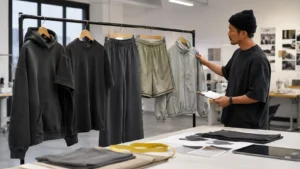
Standard retail blanks come from pattern blocks optimized for high-volume department-store sales—think basic set-in sleeves, standard armholes, and body lengths that top out around 28 inches for a large. Want that true oversized streetwear look with 10-inch drop shoulders, a 32-inch body length, and a boxy chest that drapes just right? You’re fighting the pattern.
In production terms, forcing an oversized look onto a standard block increases fabric tension, creates uneven hems, and raises the reject rate by 15–20 %. We see it every week: startups send us “blanks + print” samples only to discover the design warps after one wash because the original cut wasn’t graded for relaxed fits.
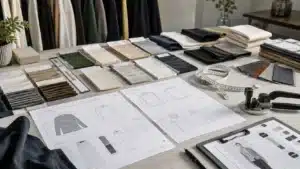
Custom t-shirt manufacturing changes the game because we start with your brand’s exact spec sheet. Drop-shoulder grading, extended sleeve caps, and reinforced neck tapes become standard, not add-ons. Fabric consumption jumps 10–12 % for the roomier silhouette, but the end result is a garment that holds its shape wash after wash. For private label t-shirts, this means your customers immediately recognize the piece as “yours” even before they see the tag.
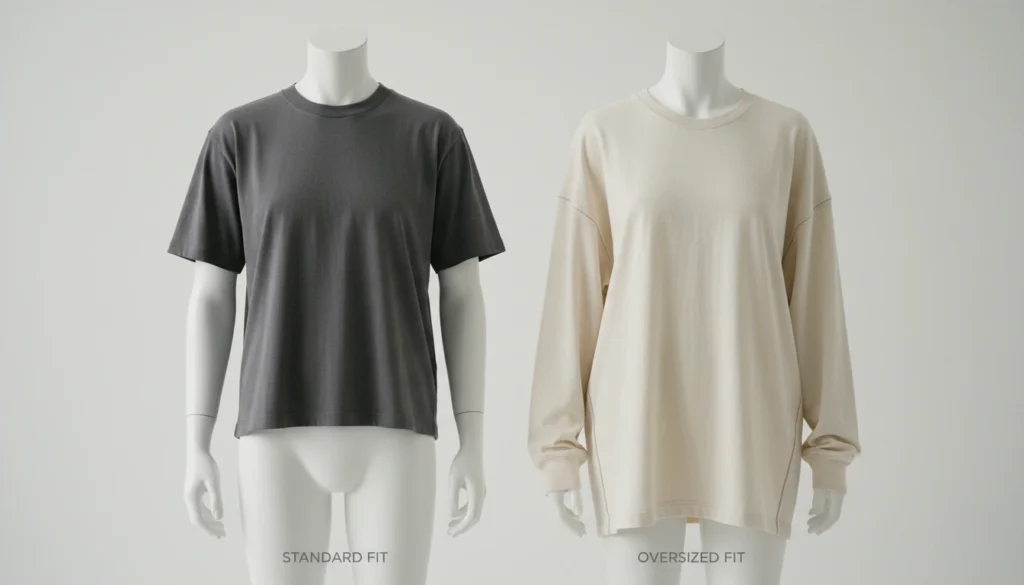
Heavyweight fabrics make the difference even clearer. Most retail blanks hover at 160–180 GSM single jersey. For modern streetwear that feels premium, we recommend 220–280 GSM combed cotton or French terry blends. The extra weight gives structure to oversized silhouettes without bagging out at the elbows—something standard blanks simply can’t deliver.
The MOQ Barrier: Why 300 Pieces Is a Startup Killer—and How to Beat It
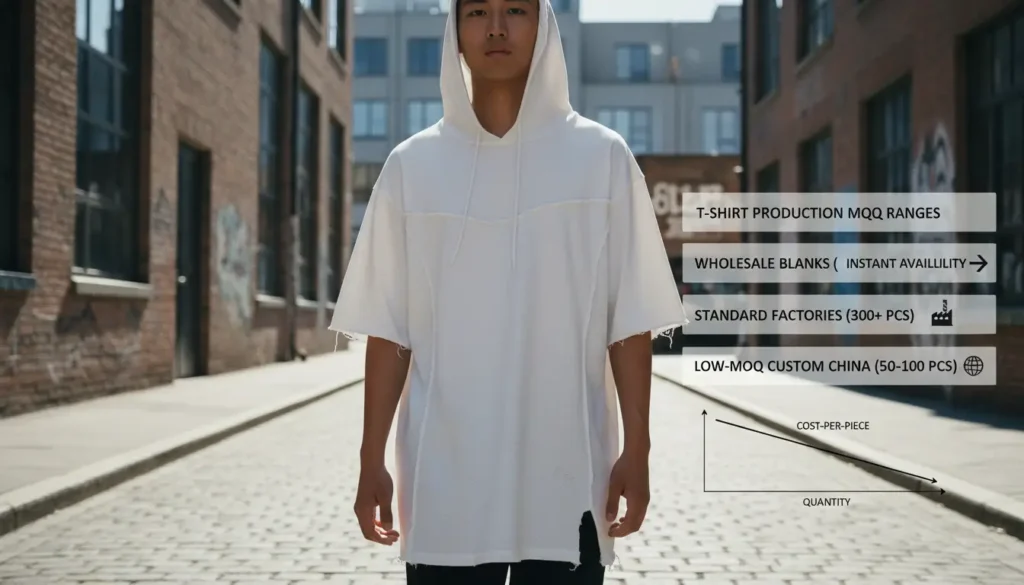
Here’s the number that stops most new brands cold: 300 pieces per color per size. That’s the floor many custom apparel manufacturers in China still quote because it covers pattern-making, sample sewing, and machine setup costs. For a fledgling brand with $5,000 total budget, that’s $2,400–$3,600 tied up in inventory before you’ve sold a single shirt. Terrifying.
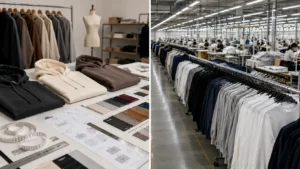
Yet low-volume production is absolutely possible. Leading custom t-shirt manufacturing facilities achieve 50–100 piece MOQs by keeping core fabrics (220 GSM organic cotton in 8 colors, for example) in continuous stock and running “group orders” where multiple clients share the same base pattern run. Setup costs drop from $800 to under $150 when we amortize across shared production days.
Real example from the floor: A POD seller who started with digital prints on blanks tested their hero oversized design with us at 80 pieces total (4 sizes × 2 colors). Production took 18 days, landed at $7.80 per unit including custom pattern and neck tape. They sold out in 9 days at $39 retail—then scaled to 500 pieces on the next run at $5.90 per unit. The flexibility let them validate the fit without betting the farm.
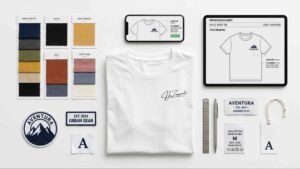
Private label t-shirts benefit most from this model. Your woven labels, size tags, and even custom hang tags go in at the same low MOQ because the sewing line is already running your pattern.
The Cost Myth: Higher Upfront, Dramatically Better Margins
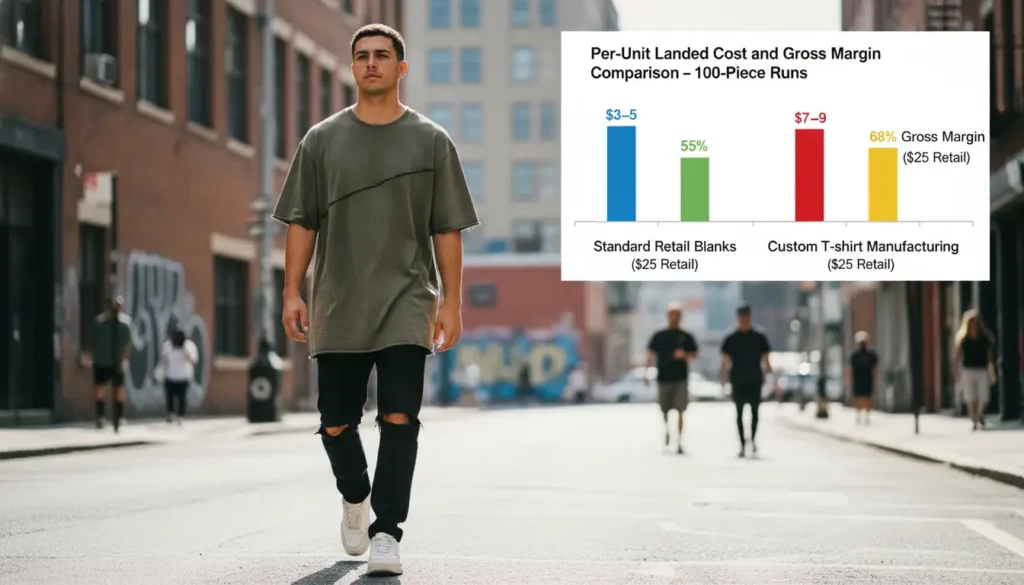
Yes, custom t-shirt manufacturing usually lands 50–100 % higher per piece than plain blanks. A decent 180 GSM blank might cost $3.20 landed; a 240 GSM custom-cut private label version with pre-shrunk fabric and reinforced seams comes in at $6.80–$8.90 for runs under 100 pieces. Double the sticker price feels painful—until you run the margin math.
Standard blank route: $3.20 blank + $2.50 DTG print + $1 shipping = $6.70 COGS. You sell at $24–$28 to stay competitive, netting 55–60 % gross margin after platform fees. But because the fit is generic, your sell-through rate often hovers around 40 %, with heavy discounting later.
Custom route: $7.50 COGS (including labels and pattern). You price at $39–$45 because the garment feels and fits like a $60 retail piece. Gross margin stays 65–70 %, and sell-through jumps to 75–85 % because customers perceive real value. Over a 500-piece run, the extra $4 per unit upfront is offset by $8–$12 higher retail and far fewer returns (our data shows custom-fit returns average 4 % vs 12 % for forced oversized blanks).
Factory wash tests back this up: 240 GSM pre-shrunk cotton loses only 1.8 % length after 30 cycles; standard 160 GSM blanks lose 5–7 %. That durability translates directly into brand reputation and repeat purchases.
When Standard Blanks Still Make Sense (and When They Absolutely Don’t)
Let’s be honest: if you’re a pure POD seller testing 20 designs with zero inventory risk, blanks plus direct-to-garment printing is still the smartest first step. No pattern costs, instant turnaround, and you can pivot on a dime.
But the moment a design validates—more than 50 sales in the first month—the math flips. Continuing with generic cuts means your brand DNA never fully forms. Customers remember the print, not the garment. Custom t-shirt manufacturing locks in that signature oversized look, private label t-shirts become your calling card, and you control the entire customer experience from fabric hand-feel to tag story.
Procurement Decision Guide for Startup Brands
- Week 1–8 (validation): Use blanks + POD for speed.
- Month 3+ (hero product): Switch to 50–100 piece custom t-shirt manufacturing runs for your top 2–3 SKUs.
- Scale (500+ pieces): Lock in 220+ GSM specs and private label details for consistent quality across seasons.
FAQ
Q: Can the MOQ for custom t-shirts really go below 300 pieces?
A: Absolutely. Reputable custom apparel manufacturers China can deliver at 50 pieces per style by using in-stock fabrics and shared production runs, keeping setup costs minimal while still allowing full pattern customization.
Q: Is custom t-shirt manufacturing always double the cost of blanks, and how do I protect margins?
A: Not double—typically 50–80 % more for small runs. The premium comes from heavier GSM fabric and custom grading, but you gain 30–50 % higher retail pricing and 10–15 % better net margins through stronger sell-through and lower returns.
Q: How do I actually get that oversized streetwear look without it looking sloppy?
A: Specify exact measurements: 8–12 inch drop shoulder, +4–6 inches to body length, 220–280 GSM fabric with spandex rib. Experienced factories grade the pattern specifically for relaxed fits so the garment drapes correctly without excess fabric bunching.
Q: What’s the realistic lead time for private label t-shirts at low MOQ?
A: 15–25 days production + 7–12 days shipping for sea freight. Digital sampling cuts the approval stage to 3–5 days, so you can go from approved sample to bulk in under six weeks.
Q: How much better is the quality compared to retail blanks?
A: Measurably. Pre-shrunk custom fabrics show 60–70 % less shrinkage, reinforced seams increase tensile strength by 25 %, and private label details (woven labels, custom neck tapes) elevate perceived value far beyond price point.
Why Custom Manufacturing Is the Only Path Forward for Modern Brands
Here’s the production-line truth no one says out loud: by 2026 the market is flooded with printed blanks. Brands that keep using standard retail t-shirts will compete on price alone and lose. The winners will be the ones whose garments feel instantly different—better drape, signature fit, zero guesswork on sizing. That difference is born in the pattern room and the fabric warehouse, not the print file.
The key to turning that vision into profitable reality is finding a manufacturing partner that doesn’t just sew shirts but understands brand value. This is exactly the core strength of professional OEM/ODM operations at heziapparel.com. We specialize in custom t-shirt manufacturing with low MOQ flexibility (starting at 30 pieces), premium fabric options from 160–280 GSM, precise pattern development for oversized silhouettes, and full private label services—all engineered to give startup brands and POD sellers the unique edge they need without the traditional capital risk.
Ready to move beyond generic blanks? Head to heziapparel.com and let’s build your signature collection together—your first custom run could be the piece that defines your entire brand.
Related Articles
Top 8 Essential Clothing Fabric Composition Types for Streetwear Brands