Finding reliable china garment manufacturers is one of the most important steps for any clothing brand that wants to launch custom apparel with stable quality, flexible minimum order quantities, and realistic production costs.
For startups, streetwear brands, private label sellers, and ecommerce fashion businesses, China remains a major sourcing destination because it offers broad fabric options, experienced sewing teams, decoration techniques, packaging support, and export-ready production systems. But choosing the wrong factory can lead to poor sizing, fabric issues, late delivery, inconsistent colors, weak stitching, or hidden costs.
The goal is not simply to find the cheapest supplier. The smarter goal is to find china garment manufacturers that understand your product category, can support your order size, communicate clearly, and control quality from sampling to final shipment.
This guide explains how to evaluate garment factories in China, especially when you need low MOQ custom clothing, private label production, OEM/ODM services, and reliable quality control.
1. Choose China Garment Manufacturers by Product Category
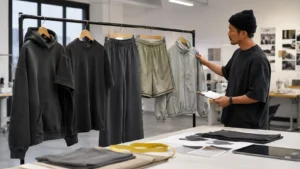
Not all china garment manufacturers make the same type of clothing. A factory that is strong in basic T-shirts may not be the best choice for heavyweight streetwear hoodies, activewear, denim, jackets, or cut-and-sew fashion pieces.

Before contacting suppliers, define your product category clearly:
- T-shirts
- Hoodies and sweatshirts
- Joggers and sweatpants
- Streetwear sets
- Activewear
- Casualwear
- Private label basics
- Custom cut-and-sew apparel
A reliable factory should be able to show experience with similar garments. For example, if you are producing oversized hoodies, the manufacturer should understand heavyweight fleece, shrinkage control, rib quality, shoulder drop, sleeve balance, and print placement. If you are producing T-shirts, the supplier should understand GSM, neckline stability, wash shrinkage, and fabric hand feel.
When comparing china garment manufacturers, ask for product examples, fabric options, decoration samples, and information about the production process. This helps you avoid factories that claim they can make everything but lack real category expertise.
2. Confirm Low MOQ Before You Start Sampling
MOQ is one of the biggest concerns for new clothing brands. Some factories are built for large-volume production and may require thousands of pieces per style or color. Others support smaller trial orders for startups and growing brands.
When asking about MOQ, be specific. Do not only ask, “What is your MOQ?” Instead, ask:
- What is the MOQ per style?
- What is the MOQ per color?
- Can sizes be mixed within one order?
- Is the MOQ different for blank garments and custom printed garments?
- Does custom fabric require a higher MOQ?
- Can I start with a sample order before bulk production?
Low MOQ can be useful, but it may also increase unit cost because fabric sourcing, pattern making, cutting, printing, and production setup are spread across fewer pieces. Good china garment manufacturers will explain this clearly rather than promising unrealistically low prices.
For a startup brand, a practical first order may focus on fewer styles, fewer colors, and core sizes. This reduces production risk and gives you cleaner market feedback.
3. Review Fabric, GSM, Shrinkage, and Colorfastness
Fabric is one of the biggest factors affecting garment quality. Two hoodies may look similar in photos but feel completely different depending on fabric composition, GSM, dyeing, finishing, and sewing quality.
When working with china garment manufacturers, ask about:
- Fabric composition, such as cotton, polyester, spandex, or blends
- GSM or fabric weight
- Shrinkage rate after washing
- Colorfastness
- Pilling resistance
- Hand feel
- Stretch and recovery
- Fabric availability for reorder production
For streetwear and casual clothing, common fabric options include cotton jersey, heavyweight cotton, French terry, fleece, rib fabric, polyester blends, and washed fabrics. A heavier GSM may create a more premium feel, but it can also increase cost and shipping weight.
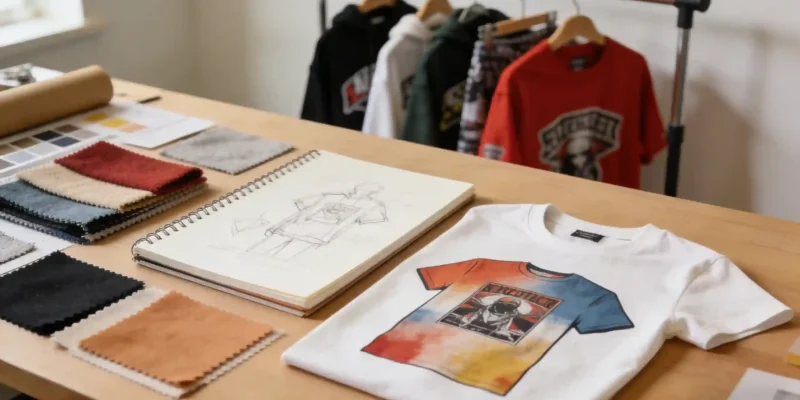
Always request fabric swatches or sample garments before bulk production. Check how the fabric feels, how it fits, how it prints, and how it performs after washing. Reliable china garment manufacturers should help match fabric quality with your target retail price and brand positioning.
4. Check Sampling Process Before Bulk Production
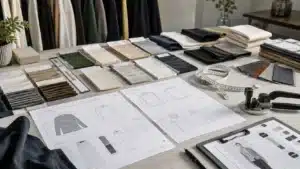
Sampling is where many production problems are discovered early. A professional sample process helps confirm fit, measurements, fabric, artwork, labels, stitching, and finishing before you approve bulk manufacturing.
A strong sampling process usually includes:
- Tech pack review
- Pattern development
- Fabric and trim confirmation
- First sample production
- Fit and measurement checking
- Revision if needed
- Pre-production sample approval
Before you start, ask the factory how long sampling usually takes and what files they need. Most custom clothing projects require a tech pack, size chart, artwork files, Pantone color references, label details, and packaging instructions.
The sample should not only look good in photos. You should check measurements, seams, neckline, cuffs, hems, print placement, embroidery density, washing result, and overall fit. If the sample is not correct, do not rush into bulk production.
Experienced china garment manufacturers will use the sample stage to reduce risk, not just to close the order quickly.
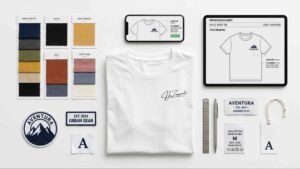
5. Compare Printing, Embroidery, Washing, and Label Options
Custom apparel often requires more than sewing. Your brand may need decoration and finishing services such as printing, embroidery, garment dyeing, washing, labels, hang tags, and packaging.
Common customization options include:
- Screen printing
- DTG printing
- Heat transfer printing
- Puff printing
- Rubber printing
- Embroidery
- Appliqué
- Woven labels
- Neck labels
- Care labels
- Hang tags
- Custom poly bags
- Garment washing or vintage finishing
Different methods work better for different fabrics and design styles. For example, heavyweight streetwear may use puff printing, embroidery, or washed finishing, while basic T-shirts may use screen printing or DTG depending on artwork complexity and order quantity.
Good china garment manufacturers should explain which method is suitable for your design, fabric, budget, and durability requirements. If your artwork has fine lines, gradients, large print areas, or special effects, confirm the decoration method before approving production.
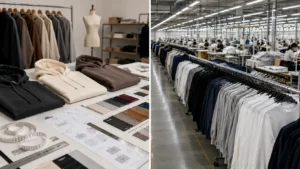
6. Ask About Quality Control at Every Stage
Quality control should not happen only at the end. By the time garments are packed, many problems are expensive or impossible to fix.
A reliable factory should check quality during:
- Fabric inspection
- Cutting
- Printing or embroidery
- Sewing
- Measurement checking
- Thread trimming
- Ironing or finishing
- Labeling and packing
- Final inspection
Important QC points include stitching consistency, measurement tolerance, fabric defects, color difference, print placement, embroidery quality, stains, loose threads, packaging accuracy, and size ratio.
When comparing china garment manufacturers, ask whether they provide production photos, measurement reports, inspection videos, or third-party inspection support. For overseas buyers, these checks are especially important because you may not be able to visit the factory in person.
A good manufacturer should be comfortable showing the production process and correcting problems before shipment.
7. Evaluate Communication, Lead Time, and Export Experience
Communication can decide whether your project runs smoothly or becomes stressful. Reliable china garment manufacturers should answer questions clearly, confirm details in writing, and explain risks before production starts.
Before placing an order, confirm:
- Sample lead time
- Bulk production lead time
- Payment terms
- Shipping method
- Packaging details
- Export documents
- Final inspection process
- Reorder process
Lead time depends on fabric availability, order size, decoration method, factory schedule, and shipping method. Custom fabric, washing, embroidery, and complex packaging may add extra time.
If your launch date is fixed, tell the factory early. A professional manufacturer will help you understand what timeline is realistic.

Why Hezi Apparel Is a Practical Option for Custom Clothing Production
Hezi Apparel works with brands that need custom garment production, private label support, low MOQ options, fabric sourcing, sampling, printing, embroidery, labeling, and quality control.
For buyers comparing china garment manufacturers, Hezi Apparel is positioned as a production partner for custom clothing projects rather than a basic blank apparel supplier. This is useful for brands that need help turning design ideas into finished products with controlled fit, fabric, decoration, and packaging.
The best results usually come when buyers prepare clear product details, including reference images, size charts, fabric preferences, artwork files, label requirements, quantity, target price, and delivery timeline. With clearer information, the manufacturer can provide more accurate suggestions and pricing.
FAQ
What is the best way to find reliable china garment manufacturers?
The best way is to compare manufacturers by product category, MOQ, sample quality, fabric knowledge, communication, quality control, lead time, and export experience. Do not choose only by the lowest unit price.
Do china garment manufacturers support low MOQ orders?
Some manufacturers support low MOQ orders, especially for startup brands and private label projects. MOQ depends on garment type, fabric, color, printing method, and customization requirements.
What should I prepare before contacting a garment manufacturer?
Prepare reference images, tech packs, size charts, fabric preferences, artwork files, label details, order quantity, target price, and expected delivery time. Clear information helps the factory quote and sample more accurately.
How can I check quality before bulk production?
Approve a sample first, check measurements and fabric quality, confirm decoration details, request production photos, and arrange final inspection before shipment.
Can Hezi Apparel help with private label clothing?
Yes. Hezi Apparel can support private label clothing production, including custom garments, fabric sourcing, printing, embroidery, labels, packaging, sampling, and bulk manufacturing.
Conclusion
Choosing reliable china garment manufacturers is not only about finding a low price. It is about finding a production partner that understands your product, supports your MOQ, controls fabric and workmanship, communicates clearly, and helps prevent costly mistakes before bulk production.
For startups and growing apparel brands, the best approach is to begin with a focused product range, confirm samples carefully, check fabric and decoration quality, and work with a manufacturer that can support both trial orders and future reorders.
Hezi Apparel can support custom clothing brands with low MOQ production, sampling, fabric sourcing, printing, embroidery, labels, packaging, and quality control. If you are planning a custom apparel project, prepare your design details, target quantity, and timeline before requesting a quote.
References and Useful Resources
- FTC Textile Labeling Requirements
https://www.ftc.gov/business-guidance/resources/threading-your-way-through-labeling-requirements-under-textile-wool-acts
Useful for understanding textile, wool, and apparel labeling requirements for the U.S. market. - OEKO-TEX Standard 100
https://www.oeko-tex.com/en/our-standards/oeko-tex-standard-100
Useful for buyers who want to understand textile safety standards and certified material testing. - ISO 2859-1 Sampling Procedures
https://www.iso.org/standard/1141.html
Useful for understanding sampling inspection systems often referenced in apparel quality control. - U.S. Customs Importer Guidance
https://www.cbp.gov/trade/basic-import-export/importer-exporter-tips
Useful for apparel buyers importing goods into the United States. - SGS Softlines and Textile Testing
https://www.sgs.com/en/services/softlines-testing
Useful for understanding third-party testing options for garments, fabrics, and accessories.