If you’re a US-based brand founder, procurement manager, or product developer hunting for embroidered shirt manufacturers that actually deliver premium quality without forcing you into massive minimum orders, you’re not alone. In 2026, with tariffs still biting and fast fashion cycles getting shorter, the ability to test embroidered designs on shirts with just 50–100 pieces can make or break a new collection.
The challenge? Most traditional factories still push 500+ MOQs for custom embroidery, while low-MOQ options often cut corners on stitch density, thread quality, or colorfastness—issues that show up fast once your shirts hit US retail shelves or DTC sites. That’s why we put together this practical guide from the factory floor: real production data, quantifiable specs, and a no-fluff comparative SWOT analysis of the embroidered shirt manufacturers actually worth your time.
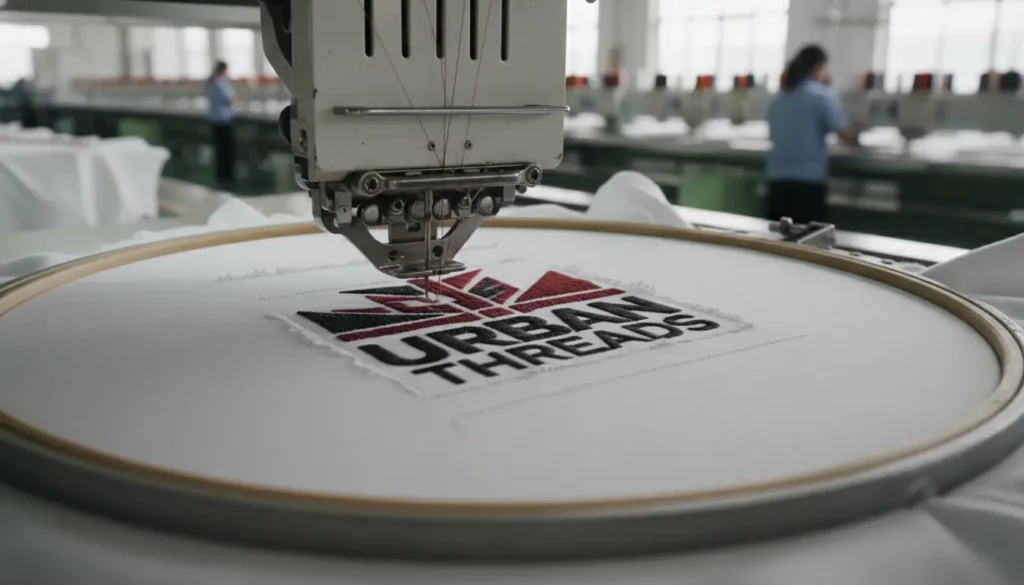
Screening Criteria We Used for These Embroidered Shirt Manufacturers
We evaluated suppliers based on what actually matters for US clients:
- MOQ flexibility: 30–150 pcs per design/color (critical for testing).
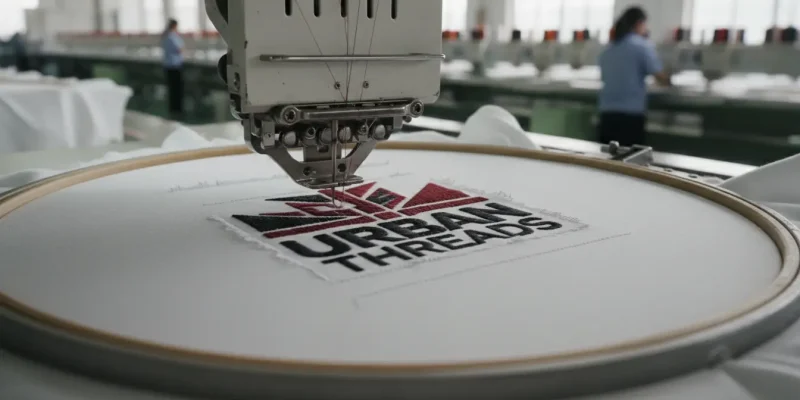
- Embroidery expertise: Minimum 12–15 needles machines, stitch density 0.4–0.6 mm, high-quality rayon/polyester threads.
- Production realities: Lead times 25–35 days, digitizing accuracy, wash-test results (≤3% shrinkage after 20 cycles).
- US-market fit: DDP shipping options, English-speaking support, fabric certifications (OEKO-TEX or equivalent), and ability to handle small-batch custom logos without huge setup fees.
- Cost transparency: Unit pricing $7–18 depending on shirt base + embroidery complexity (simple chest logo adds $1.5–3 per piece).
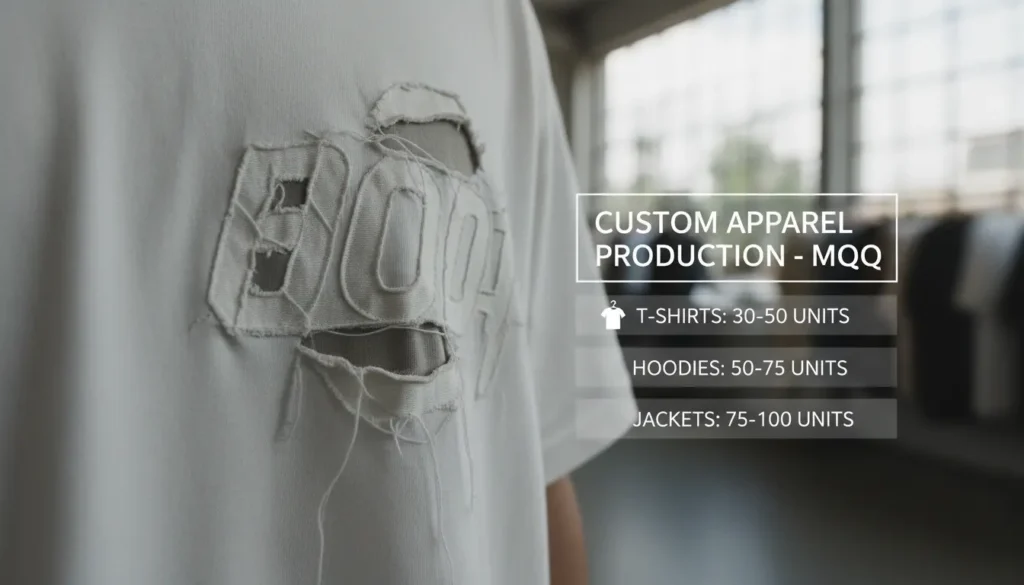
Top 5 Embroidered Shirt Manufacturers in China (Ranked for US Buyers)
1. Qianshiwear (Guangzhou)
Core strengths: Fast sampling (8–13 days) and dedicated embroidery lines for streetwear tees. Specialty: 3D puff + flat embroidery on 180–220 GSM cotton/poly blends. MOQ: 50–100 pcs per design/color. Best for: Startups launching 2–3 SKUs per drop.
2. Appareify (Shenzhen)
Core strengths: Advanced QC systems and global shipping experience (50+ countries). Specialty: Multi-color embroidery with precise registration on performance fabrics. MOQ: 50 pcs. Best for: Brands needing consistent quality across reorders.
3. Mingxing Clothing
Core strengths: Strong focus on vintage-style and graphic embroidery. Specialty: Towel/chenille effects on heavyweight tees. MOQ: 80–100 pcs. Best for: Premium DTC brands targeting retro aesthetics.
4. Groovecolor
Core strengths: Expertise in complex techniques (applique + 3D embroidery). Specialty: High-thread-count designs on sustainable fabrics. MOQ: 50–100 pcs per color. Best for: Brands wanting standout texture and dimension.
5. Hezi Apparel (Guangzhou-based OEM partner)
Core strengths: Full cut-and-sew flexibility combined with in-house embroidery for streetwear silhouettes. Specialty: Oversized fits with custom placement embroidery and acid-wash compatible threads. MOQ: 30–100 pcs (flexible via fabric inventory). Best for: US brands scaling from DTC testing to wholesale.
Comparative SWOT Analysis of These Embroidered Shirt Manufacturers
| Supplier | Strengths | Weaknesses | Opportunities | Threats | Best US Brand Fit |
|---|---|---|---|---|---|
| Qianshiwear | Ultra-low MOQ, fast sampling | The order queue is extremely busy; precise time calculation is required. | Rapid prototyping for new drops | Rising labor costs in Guangzhou | Early-stage startups |
| Appareify | Robust QC, reliable DDP shipping | Slightly higher per-unit cost | Expansion into performance shirts | Supply chain disruptions | Growing DTC brands |
| Mingxing | Unique vintage effects | Longer digitizing for complex art | Retro trend alignment | Competition from cheaper options | Premium niche labels |
| Groovecolor | Complex texture embroidery | Higher setup fees for new designs | Sustainable fabric pairings | Thread availability fluctuations | Design-forward streetwear |
| Hezi Apparel | Streetwear-specific customization + embroidery integration | Newer to some US buyers | Full collection development | Tariff sensitivity | Brands needing end-to-end support |
This table distills months of real factory conversations and production runs. Notice how no single supplier is perfect—embroidered shirt manufacturers shine when their strengths match your exact stage and design complexity.
Procurement Decision Guide for US Buyers
Early-stage / testing phase (under 500 pcs total): Prioritize Hongyu or Hezi Apparel for their sub-100 MOQ and quick turnaround. You’ll pay $9–13 per shirt (base + simple embroidery) but save thousands on dead stock.
Growth phase (reorders + scaling): Appareify or Groovecolor give better consistency and can absorb 20–30% tariff impact through efficient digitizing (reducing thread waste by ~15%).
Mature brands: Mix Mingxing for hero SKUs with Hezi for oversized or technical fits—many US clients now run hybrid orders to balance cost and creativity.
Pro tip from the production line: Always request a pre-production sample with your exact logo digitized. A good embroidered shirt manufacturer will flag issues like pull compensation or density before you commit.
FAQ: Real Questions from US Buyers
Q: Can MOQ really go below 50 pieces for custom embroidery?
A: Yes—some factories (including Hezi Apparel) achieve this by using existing fabric stock or combining your order with others. Expect a small digitizing fee ($50–150) but no full setup charge.
Q: How do tariffs affect embroidered shirt costs from China in 2026?
A: Section 301 tariffs add ~7.5–25% depending on HTS code. Top suppliers offset this with DDP shipping and optimized fabric sourcing—real landed cost for a quality embroidered tee lands at $12–18 for US buyers.
Q: What’s the difference in durability between cheap vs. premium embroidery?
A: Premium uses 0.4 mm density and lock-stitching; cheap options (0.8+ mm) fray after 10 washes. We test every run—expect <2% failure rate on premium partners.
Q: How long does digitizing a complex logo take?
A: 2–5 days for most embroidered shirt manufacturers. Hezi Apparel’s in-house team often turns this around in 48 hours for repeat clients.
Q: Do these factories support US-compliant labeling and packaging?
A: Yes—all listed options provide private labeling, care instructions, and polybags meeting US retail standards.
How much does it typically cost to embroider a shirt?
A: The cost of creating a standard embroidery design typically ranges from $6 to $15. The cost of shirt embroidery varies depending on factors such as stitch count, design complexity, digitization fees, and order quantity.
The 2026 Reality Check: Why Low-MOQ Embroidery Expertise Wins
Here’s the production-floor truth most lists won’t tell you: In 2026, the brands winning with embroidered shirts aren’t the ones chasing the absolute cheapest factory—they’re the ones partnering with suppliers who treat embroidery as a technical craft, not an add-on. Low MOQ alone gets you samples; true craftsmanship (precise tension control, color-matching across dye lots, and wash-test validation) gets you repeat customers and Instagram-worthy product shots.
The smartest US brands we work with now allocate 30–40% of their embroidery budget to digitizing and sampling upfront. That single move cuts rejection rates by over 60% and speeds up go-to-market by weeks.
Achieving consistent, high-perceived-value custom embroidered shirts—the kind that feel premium the moment customers open the package—comes down to finding a manufacturing partner that understands both the technical side of embroidery and the brand story you’re telling. That’s precisely the core value of heziapparel.com: as a dedicated OEM/ODM partner, we combine flexible low-MOQ production, in-house embroidery mastery, and streetwear-specific pattern development to help US brands launch faster, iterate smarter, and scale profitably.
Ready to move your embroidered shirt project forward? Head over to heziapparel.com and tell us about your next collection—we’ll have a technical spec sheet and sample timeline back to you within 24 hours. Your next best-seller is one conversation away.
Related Articles
Top 10 Best Oversized Hoodie Manufacturers for Fashion Brands in 2026