In the fast-evolving streetwear B2B market, types of embroidery are no longer just decorative—they directly determine production efficiency, per-unit costs, and shelf appeal. From heavyweight hoodies (320-420 GSM) to acid-washed denim jackets, the right embroidery technique can elevate perceived value by 30-50% while controlling stitch-count-driven expenses. As a China-based OEM/ODM factory specializing in custom streetwear, we see brands lose margins daily by mismatching design to process. This guide breaks down the 8 most relevant types of embroidery for 2026 streetwear production, focusing on manufacturing realities: compatible fabrics, complementary techniques, aesthetic outcomes, advantages/disadvantages, and quantifiable cost/MOQ implications.
Elevate Your Cap Game: Master Puff Embroidery With Our Top Commercial Embroidery Machines – ColDesi
1. Flat Embroidery (Standard Fill & Satin Stitch)
Flat embroidery remains the workhorse of streetwear manufacturing. It stitches thread directly onto the base fabric using fill or satin stitches for clean, 2D logos and text.
Suitable applications: Left-chest logos, sleeve scripts, or full-back typography on daily hoodies and tees—ideal for minimalist or graphic-heavy streetwear drops.
Compatible fabrics: Cotton fleece (280-420 GSM), French terry, denim, and stable polyester blends. Requires light stabilizer on knits to prevent puckering.
Complementary garment techniques: Pairs seamlessly with screen printing or DTG for hybrid designs; common on oversized silhouettes.
Aesthetic effects: Sharp, professional, matte finish that ages gracefully without cracking.
Advantages & disadvantages: Highly versatile and scalable on 12-head machines (run time 4-8 minutes per piece). Excellent colorfastness after 50+ washes. Limitation: lacks 3D impact; small fonts (<8mm) risk thread pull.
Cost implications: $1.00–$2.00 per 1,000 stitches + one-time digitizing ($50–150). Typical 8,000-stitch logo adds $0.08–$0.16 per garment at 100+ MOQ. Lowest entry cost among types of embroidery.

Ideas for Hoodie Design: From Graphics to Minimal
2. 3D Puff Embroidery
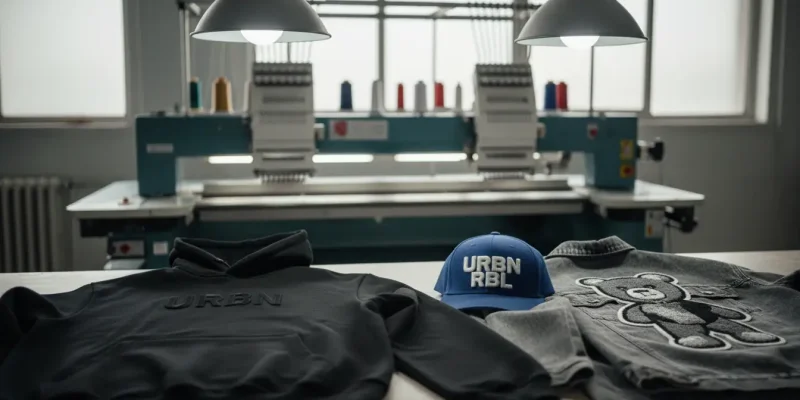
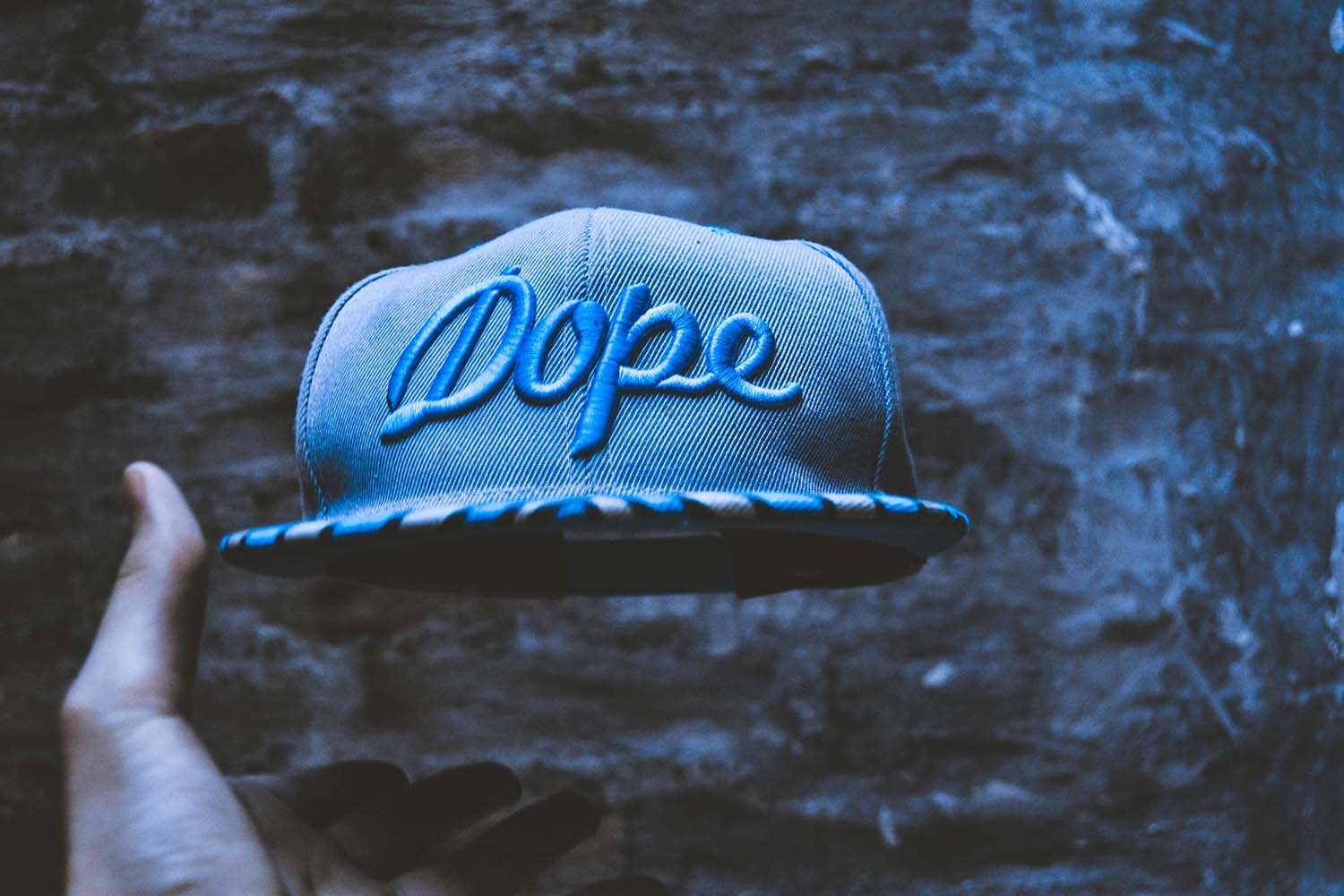
3D puff (or raised) embroidery inserts foam beneath satin stitches, creating bold, elevated texture—2026’s top trend for streetwear caps and hoodies.
Suitable applications: Oversized logos or wordmarks on caps, chest panels of hoodies, and varsity jackets where visual pop drives social media shareability.
Compatible fabrics: Heavier weights (350+ GSM fleece, canvas, twill). Avoid thin or highly stretch knits.
Complementary garment techniques: Hybrid with flat stitching for layered depth or acid-wash pre-treatment for vintage contrast.
Aesthetic effects: Dramatic 3D “puffed” height (2–5mm), giving premium, tactile luxury.
Advantages & disadvantages: Maximum brand visibility; foam adds structure. Drawback: foam compresses after repeated washing if not locked properly; higher thread tension risk on multi-head machines.
Cost implications: 20–50% premium over flat ($1.50–$3.00 per 1,000 stitches) due to extra foam and slower run time (8–12 minutes). MOQ 50–200 pcs viable with shared digitizing.
Elevate Your Cap Game: Master Puff Embroidery With Our Top Commercial Embroidery Machines – ColDesi
3. Chenille Embroidery
Chenille uses looped yarn to create a plush, caterpillar-like texture—perfect for varsity-inspired streetwear patches.
Suitable applications: Lettering or mascot designs on back panels of hoodies, crewnecks, or bomber jackets targeting retro-athleisure buyers.
Compatible fabrics: Fleece, wool blends, or heavy cotton twill. Best on non-stretch bases.
Complementary garment techniques: Often applied as pre-made patches then sewn; combines with rhinestones or screen print.
Aesthetic effects: Soft, velvety 3D plush that feels luxurious under hand.
Advantages & disadvantages: Unique tactile appeal commands 15–25% higher retail pricing. Higher yarn consumption and specialized machines increase complexity.
Cost implications: $2.50–$4.50 per 1,000 stitches + patch base cost. Typical run adds $1.20–$2.50 per garment. Minimum 100 pcs recommended for efficiency.
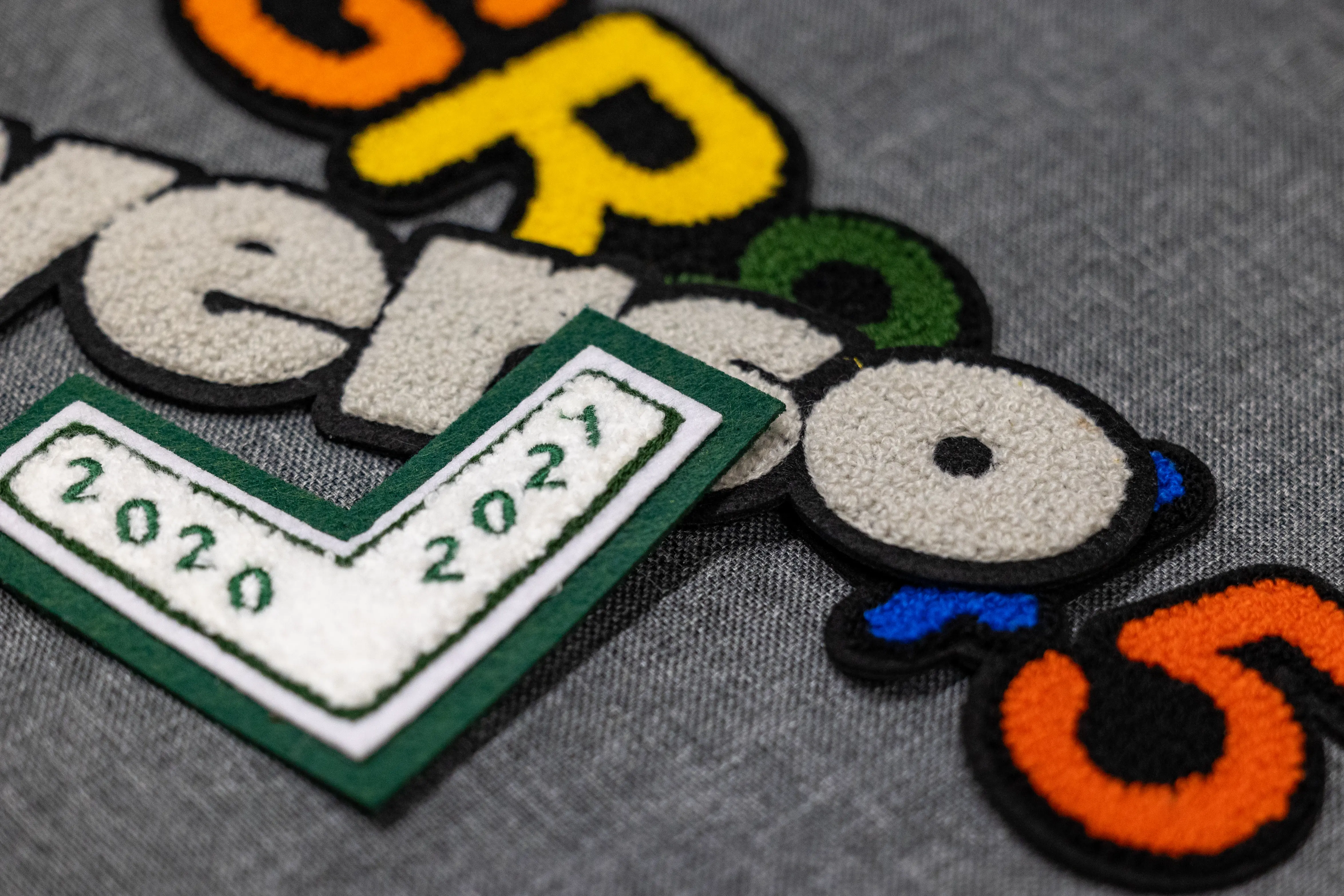
Custom Chenille Patches for Streetwear | NYCL
4. Appliqué Embroidery
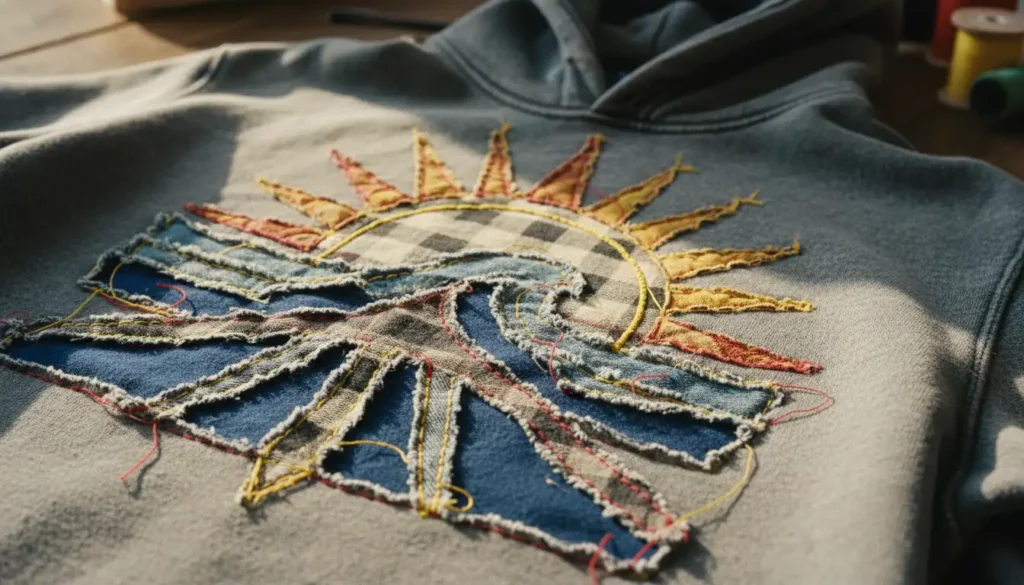
Appliqué attaches cut fabric shapes with embroidered outlines or satin borders for layered dimension.
Suitable applications: Large-scale graphics or color-block logos on streetwear jackets and pants where fabric contrast defines the look.
Compatible fabrics: Denim, canvas, or contrasting fleece panels. Pre-cut with laser for clean edges.
Complementary garment techniques: Acid wash or enzyme wash post-application; excellent with DTG underlays.
Aesthetic effects: Bold, textured depth with fabric-on-fabric contrast.
Advantages & disadvantages: Reduces stitch count (saves 40–60% time vs. full fill). Allows unlimited colors without thread changes. Extra cutting step raises setup time.
Cost implications: $1.20–$2.80 per 1,000 stitches + fabric cutting fee. Often 30% cheaper than dense flat for large designs. MOQ 50 pcs feasible.
5. Chain Stitch Embroidery
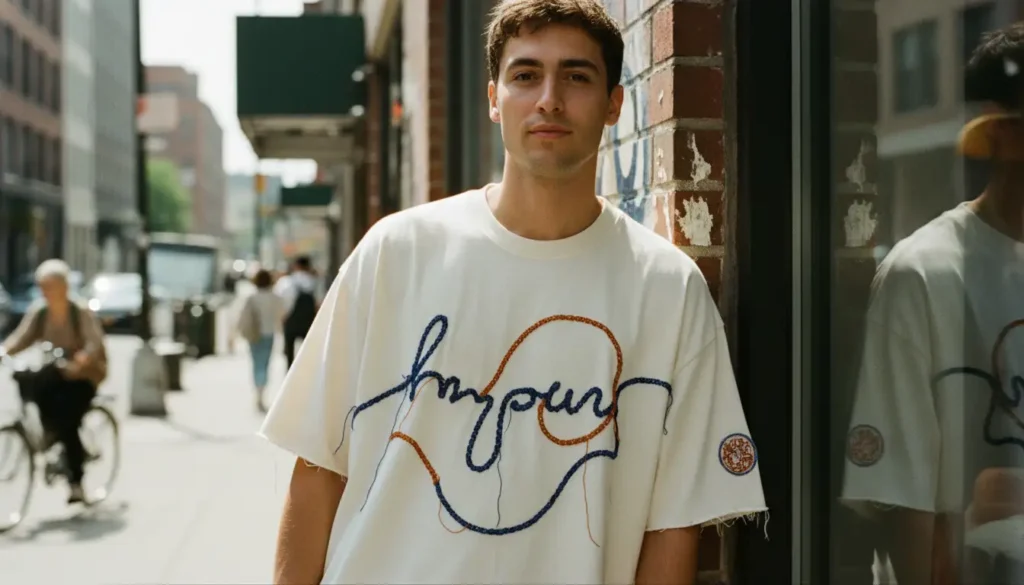
Chain stitch creates rope-like, linked outlines—evoking vintage hand-embroidery with modern precision.
Suitable applications: Outline scripts, borders, or artistic flourishes on premium streetwear tees and hoodies.
Compatible fabrics: Most stable knits and wovens; works on lighter 220 GSM fabrics with backing.
Complementary garment techniques: Layered with flat fill or distressed finishes for grunge aesthetics.
Aesthetic effects: Dynamic, rope-textured lines with slight 3D relief.
Advantages & disadvantages: Fast coverage for outlines; distinctive retro vibe. Less durable on high-abrasion areas.
Cost implications: $1.20–$2.50 per 1,000 stitches. Lower density than satin fill keeps costs competitive.
6. Sequin & Bead Embroidery
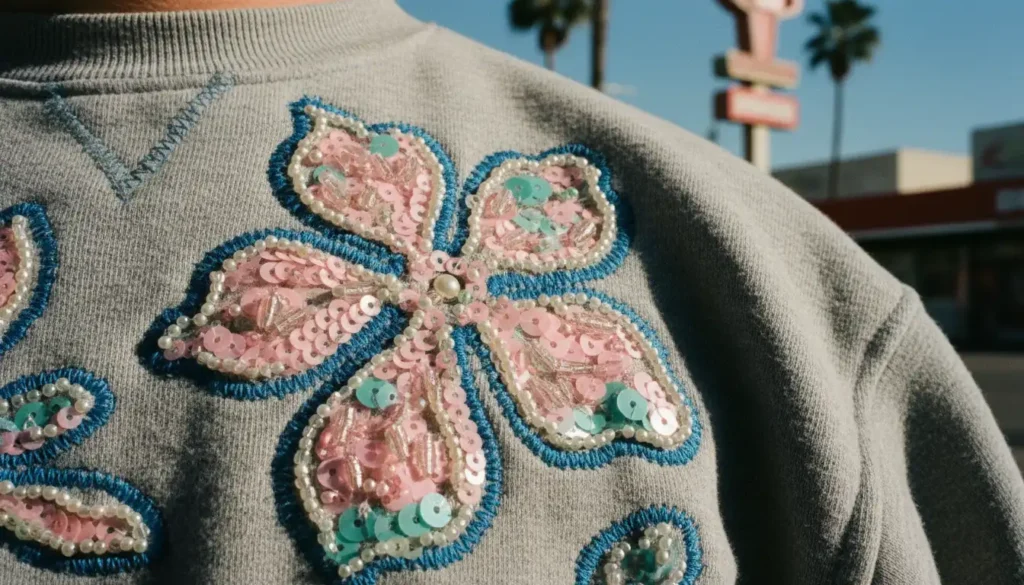
Sequin/bead embroidery adds metallic or iridescent accents via machine-secured elements.
Suitable applications: Statement details on sleeves, hems, or limited-edition drops for high-energy streetwear.
Compatible fabrics: Non-stretch synthetics or heavy cottons to support weight.
Complementary garment techniques: Mixed with flat embroidery or puff for hybrid sparkle.
Aesthetic effects: Eye-catching shimmer and movement under light.
Advantages & disadvantages: Instant premium differentiation. Higher snag risk; slower production.
Cost implications: $3.00–$6.00 per 1,000 stitches + element cost. Best for small accents (adds $2–5 per garment).
7. Embroidery Patches (Hybrid Application)
Pre-embroidered patches sewn or heat-bonded onto garments—scalable for complex designs.
Suitable applications: Interchangeable branding or collector drops on any streetwear base.
Compatible fabrics: Virtually all; patches handle any base.
Complementary garment techniques: Velcro or magnetic options for modularity.
Aesthetic effects: Raised, professional finish with easy placement flexibility.
Advantages & disadvantages: Offloads complex stitching from garment line; easy QC. Adds secondary sewing step.
Cost implications: $0.80–$2.50 per patch (including embroidery) + attachment. Lowest MOQ (25 pcs).
Comparison Table: Types of Embroidery at a Glance
| Type | Pros | Cons | Best Streetwear Scenario | Cost per Garment (est. 10k stitches) | Typical MOQ |
|---|---|---|---|---|---|
| Flat | Versatile, durable, low cost | Flat appearance | Everyday logos | $0.10–$0.20 | 50 pcs |
| 3D Puff | Bold 3D impact | Foam compression risk | Caps & hero hoodies | $0.15–$0.30 | 50–100 pcs |
| Chenille | Plush premium feel | High yarn use | Varsity/retro drops | $0.25–$0.45 | 100 pcs |
| Appliqué | Color variety, fast | Extra cutting | Large graphics | $0.12–$0.28 | 50 pcs |
| Chain Stitch | Retro texture | Less abrasion-resistant | Artistic outlines | $0.12–$0.25 | 50 pcs |
| Sequin/Bead | Sparkle & luxury | Snag-prone | Limited editions | $0.30–$0.60 | 100 pcs |
| Patches | Flexible, scalable | Secondary attachment | Collector items | $0.80–$2.50 (patch) | 25 pcs |
Procurement Decision Guide
Early-stage brands (startup): Prioritize flat or puff embroidery for quick market testing—low MOQ and fast digitizing keep cash flow healthy. Growth brands: Shift to chenille or appliqué for signature texture that supports 20–40% margin uplift. Mature brands: Invest in sequin/bead or hybrid patches for limited drops that command premium pricing while leveraging existing supply chain efficiencies.
FAQ
Q: Can MOQ for embroidery be lowered below 100 pcs?
A: Yes—through shared fabric inventory or combined production runs we routinely achieve 50 pcs or even 25 for patch styles.
Q: Which fabrics handle 3D puff best in streetwear?
A: 350+ GSM fleece or canvas; we pre-test stabilizer compatibility to guarantee zero puckering.
Q: How do embroidery costs compare to screen printing for 2026 collections?
A: Embroidery adds 2–3× the unit cost but delivers 5× durability and zero minimum color runs—ideal for small-batch streetwear.
Q: Are sustainable threads available across all types of embroidery?
A: Yes—recycled polyester and organic cotton threads are standard options with zero upcharge on orders over 200 pcs.
Q: What’s the lead time impact of complex embroidery?
A: Digitizing adds 3–5 days; production remains 7–14 days post-sample approval.
Conclusion: The 2026 Streetwear Edge Starts on the Production Floor
The future of streetwear doesn’t belong to the loudest print—it belongs to the smartest types of embroidery that balance tactile luxury with scalable manufacturing economics. Brands that master hybrid techniques (puff + flat, appliqué + sequin) will command 25–35% higher perceived value while keeping per-unit costs under control. Real differentiation comes from production partners who treat embroidery not as decoration but as engineered brand equity.
Achieving this level of precision and flexibility is exactly why forward-thinking streetwear founders choose heziapparel.com—your dedicated OEM/ODM partner. With in-house digitizing studios, multi-head machines optimized for heavyweight streetwear fabrics, flexible MOQ from 50 pcs, and proven expertise in embroidery + acid-wash/dye hybrids, we turn your vision into market-ready collections faster and more profitably. Visit heziapparel.com today to request a free embroidery sample kit and tech pack review. Let’s build the next drop that defines 2026.