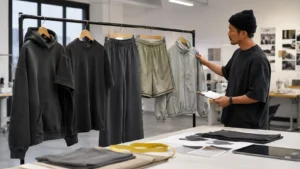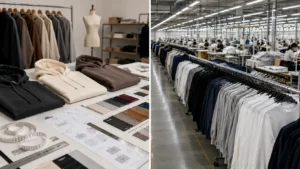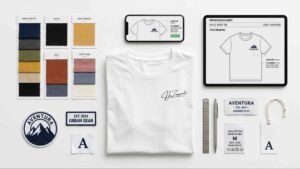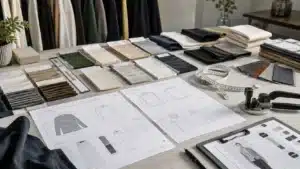
In the competitive B2B apparel market, types of printing directly determine production efficiency, unit costs, and end-product market performance for streetwear brands. As an OEM/ODM factory serving global custom clothing sellers, we see how choosing the right printing technique impacts everything from minimum order quantities (MOQ) to wash durability and design vibrancy. Whether you’re a startup testing designs on hoodies or a scaling brand producing tees in bulk, understanding types of printing—especially screen printing—provides clear procurement decision support.
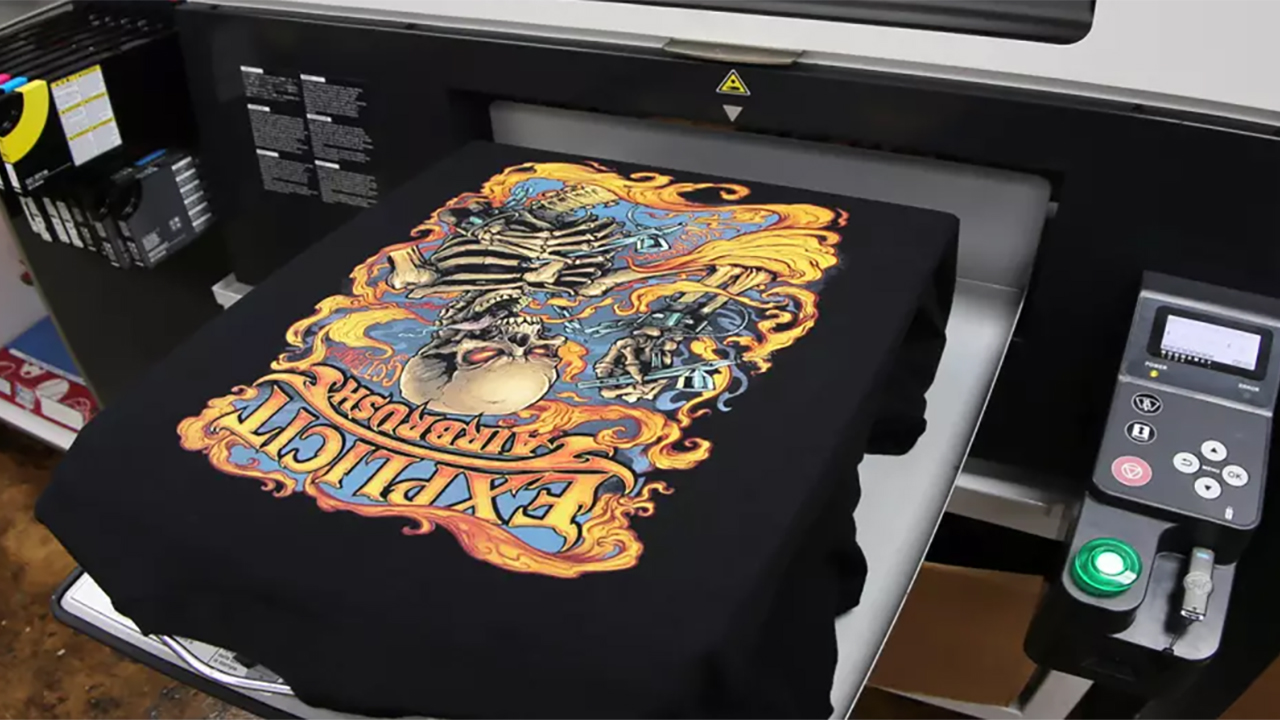
How to Tell the Difference Between DTG and Screen Printed Tees
Different types of printing excel on specific fabrics, pair with complementary techniques like embroidery or garment dyeing, and deliver distinct aesthetic effects. Below, we break down six core methods from a supply-chain perspective: definition, compatible fabrics, suitable applications, complementary garment techniques, aesthetic effects, advantages/disadvantages, and real-world cost implications (based on 2026 factory benchmarks for 100–500 piece runs).
1. Screen Printing: The Bulk-Production Standard
Screen printing remains the cornerstone for streetwear graphics. It involves creating a separate mesh screen per color, pushing ink through onto the garment.
- Compatible fabrics: Most cotton, cotton-poly blends, and some synthetics (with proper ink selection).
- Suitable applications: Bold logos, limited-color graphics on tees, hoodies, and crewnecks.
- Complementary garment techniques: Pairs perfectly with embroidery for premium logos or enzyme washing for vintage effects.
- Aesthetic effects: Opaque, vibrant colors with a soft-to-crisp hand feel depending on ink (plastisol vs. water-based).
- Advantages: Extremely durable (50+ washes with <5% fading); lowest per-unit cost at scale; excellent opacity on dark fabrics.
- Disadvantages: High setup time (2–4 days for multi-color screens); color limitations (typically 1–8 colors).
Cost implications (factory view): MOQ 50–100 pcs per design/color; screen setup $15–40 per color; per-unit cost $0.80–2.50 for 100+ pcs (drops to $0.50+ at 500+). High initial investment but minimal variable costs—ideal for streetwear drops with repeatable designs.

DTF Printing Process: Step-by-Step Guide for Quality Results
2. Direct-to-Garment (DTG) Printing: Digital Precision for Details
DTG uses modified inkjet technology to spray water-based inks directly onto fabric, enabling photo-realistic, full-color prints without screens.
- Compatible fabrics: Primarily 100% cotton or high-cotton blends (pre-treatment required for darks).
- Suitable applications: Complex illustrations, gradients, and photographic designs on limited runs of tees or hoodies.
- Complementary garment techniques: Works well with discharge pre-treat or light garment dyeing for softer vintage looks.
- Aesthetic effects: Soft hand feel (ink bonds into fibers); near-unlimited colors with sharp details.
- Advantages: No setup fees; excellent for small batches and on-demand reprints; eco-friendly water-based inks.
- Disadvantages: Slower production (5–10 pcs/hour per machine); lower durability on heavy abrasion (30–40 washes).
Cost implications: MOQ as low as 1 pc; no setup; per-unit $4–12 (depending on ink coverage and size). Perfect for streetwear startups testing 10–50 piece samples before scaling.
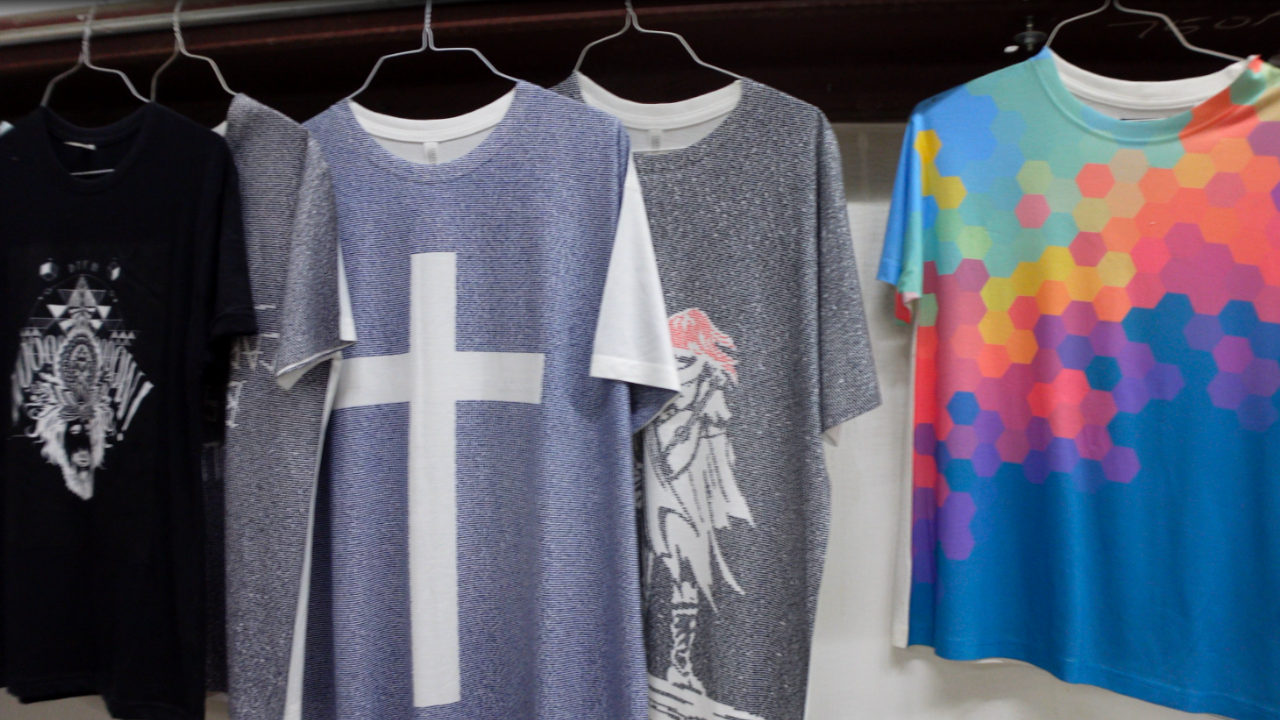
T-Shirt Dye Sublimation Printing With Rob Super | DecoNetwork
3. Direct-to-Film (DTF) Printing: Versatile Transfer Technology
DTF prints designs onto a special film, applies adhesive powder, then heat-presses the film onto the garment.
- Compatible fabrics: Almost any—cotton, polyester, blends, even nylon or leather-like materials.
- Suitable applications: Vibrant, multi-color streetwear graphics on hoodies, jackets, and performance blends.
- Complementary garment techniques: Excellent with puff or foil accents; seamless integration with all-over sublimation panels.
- Aesthetic effects: Bright, slightly raised but flexible print with strong opacity.
- Advantages: Works on dark and light fabrics equally; fast turnaround (24–48 hours); durable against cracking.
- Disadvantages: Slightly visible film edge on close inspection; higher material cost than pure digital.
Cost implications: MOQ 1–5 pcs; per-unit $2–5 (mid-volume); no screen setup. In 2026 factories, DTF has become the go-to hybrid bridge between DTG flexibility and screen durability.

Complete Guide to Custom Embroidery 2026: Cost, Process, Best Practices – Custom Print House
4. Dye Sublimation Printing: All-Over Vibrancy on Polyester
Dye sublimation transfers dye via heat from printed paper directly into polyester fibers, creating seamless prints.
- Compatible fabrics: 100% polyester or high-poly blends (not cotton).
- Suitable applications: Full-coverage patterns, athletic-inspired streetwear jackets, or performance hoodies.
- Complementary garment techniques: Often combined with cut-and-sew construction or reflective accents.
- Aesthetic effects: Permanent, vibrant, breathable prints that feel like part of the fabric—no hand feel.
- Advantages: Unlimited colors; no cracking or peeling; excellent for complex all-over designs.
- Disadvantages: Limited to polyester; higher energy use in production.
Cost implications: MOQ 20–50 pcs; per-unit $3–7 for full prints. Scalable for mid-volume streetwear lines targeting sport-luxury crossover.
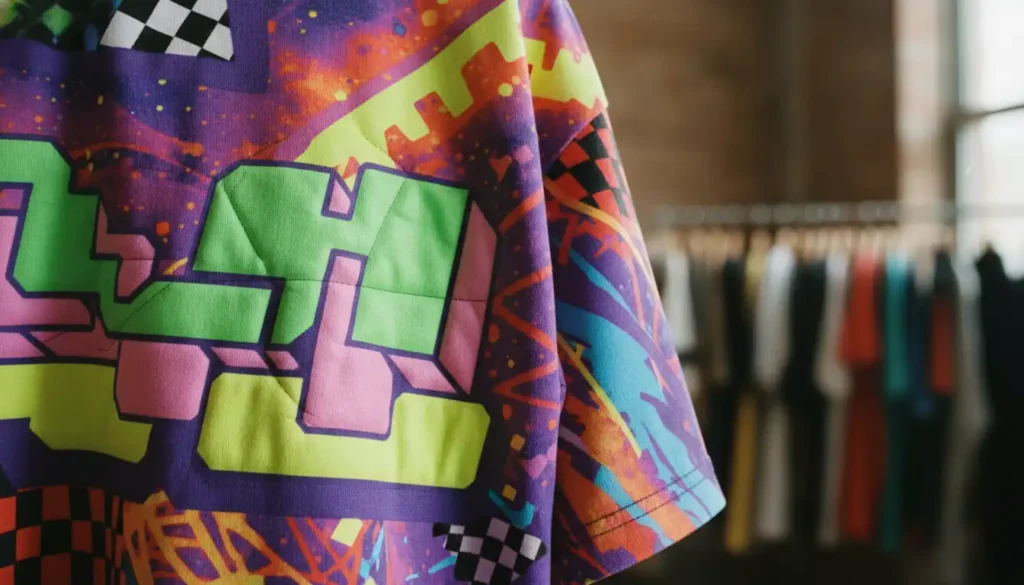
5. Heat Transfer / HTV Printing: Quick Custom Accents
Heat Transfer Vinyl (HTV) or plastisol transfers are pre-cut or printed designs applied via heat press.
- Compatible fabrics: Wide range including cotton, poly, and blends.
- Suitable applications: Small logos, numbers, or detailed patches on limited-edition drops.
- Complementary garment techniques: Ideal layered over screen prints or paired with embroidery.
- Aesthetic effects: Textured or glossy finishes; can achieve 3D/puff effects.
- Advantages: Low minimums; fast for personalization; easy color changes.
- Disadvantages: Can peel over time (20–30 washes); less breathable on large areas.
Cost implications: MOQ 1 pc; per-unit $1.50–4. Great for testing or small custom runs under 20 pcs.
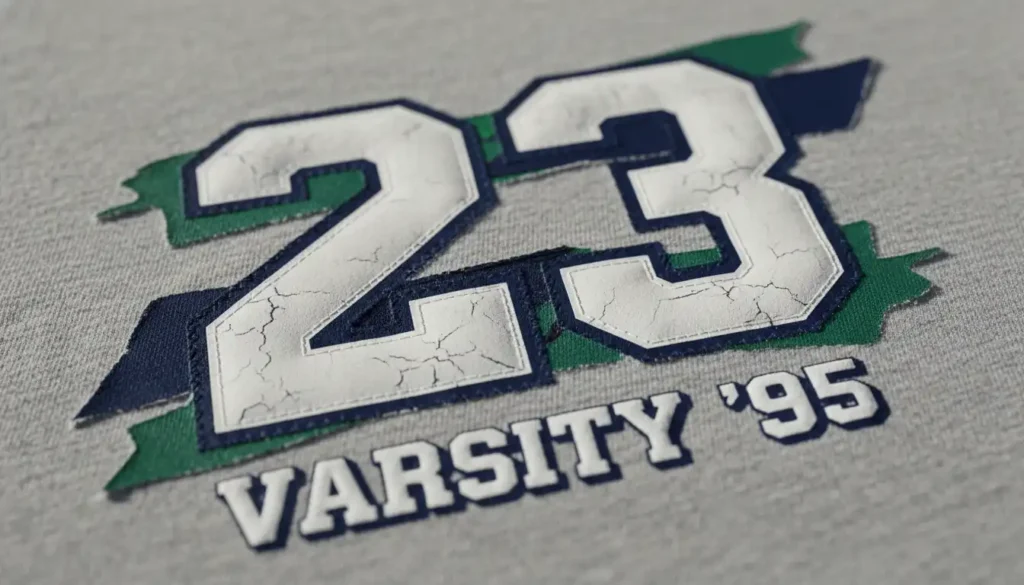
6. Hybrid & Specialty Printing: Factory-Floor Innovation
Combining methods (e.g., screen base + DTG accents or DTF overlays) for unique streetwear effects like puff + discharge.
- Compatible fabrics: Flexible based on base method.
- Suitable applications: High-end limited drops requiring texture and color depth.
- Complementary garment techniques: Enzyme wash + hybrid print for premium vintage streetwear.
- Aesthetic effects: Multi-dimensional, standout designs.
- Advantages: Maximizes strengths of multiple types of printing.
- Disadvantages: Higher coordination cost.
Cost implications: MOQ 30–80 pcs; per-unit $3–8. Factories like ours optimize hybrids to reduce overall waste by 15–20%.
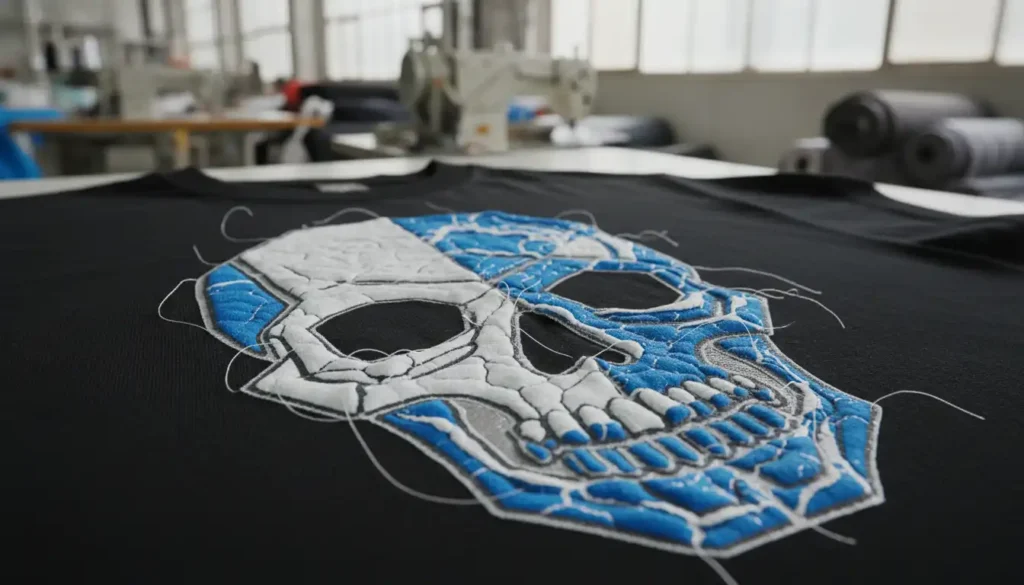
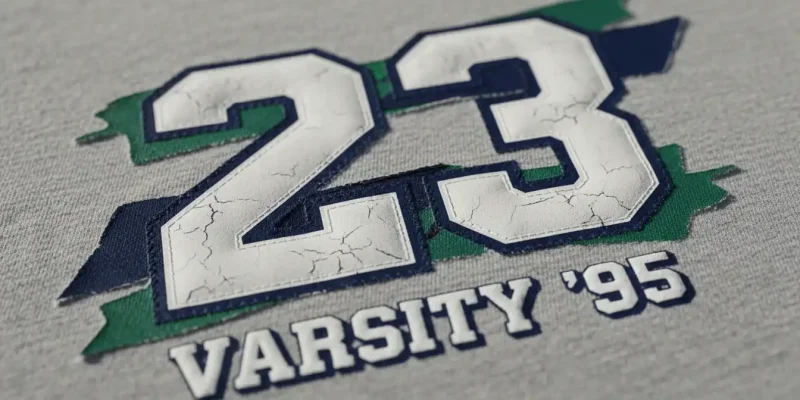
7. Foam Printing / Puff Printing: 3D Raised Texture for Premium Streetwear Impact
Foam Printing (also known as Puff Printing) is a high-end variant of screen printing. A foaming agent is added to the ink, which is applied through the mesh screen and then heat-cured at 160–180°C for 30–45 seconds. This causes the ink to expand, creating a controllable 3D raised effect (0.5–2 mm height). From a factory supply-chain perspective, this technique elevates streetwear’s tactile and visual hierarchy—perfect for custom clothing sellers seeking differentiated designs that command higher perceived value.
- Compatible fabrics: Best on 100% cotton or cotton-blend fabrics (250–380 GSM optimal); dark fabrics require a high-opacity underbase to prevent sinking.
- Suitable applications: Raised logos, numbers, or graphic elements on limited-edition tees, hoodies, and crewnecks—ideal for premium streetwear positioning.
- Complementary garment techniques: Layers beautifully over standard screen printing bases; combines seamlessly with embroidery or enzyme washing for vintage + 3D multi-dimensional effects. Test colorfastness when paired with garment dyeing.
- Aesthetic effects: Soft yet distinctly raised foam texture that gives designs a “touchable” depth, dramatically boosting end-consumer perceived value and brand recall.
- Advantages: Increases retail price potential by 15–25%; strong durability (factory wash tests show 75–85% puff retention after 30 machine washes); no extra molds required—more flexible than heat transfers.
- Disadvantages: Extremely sensitive to temperature and timing (±5°C deviation can cause collapsing or cracking); not suitable for large solid areas (impacts breathability); first-sample yield around 85%, requiring experienced factory control.
Cost implications (factory view): As an upgrade to screen printing, MOQ remains the same (50–100 pcs per design). The foaming agent and extra curing step add $0.80–1.80 per unit (100 pcs+); total unit cost $1.60–4.00 (40–60% higher than standard screen). At 500+ pcs, bulk mixing keeps the premium under 25%. 2026 supply-chain data shows puff printing adoption in mid-to-high-end streetwear rising 32% year-over-year—making it the smart choice for small-batch, high-margin orders.
Types of Printing Comparison Table: Procurement at a Glance
| Printing Type | Best MOQ Range | Per-Unit Cost (100 pcs) | Durability (Washes) | Fabric Compatibility | Best Streetwear Scenario | Pros | Cons |
|---|---|---|---|---|---|---|---|
| Screen Printing | 50–100+ | $0.80–2.50 | 50+ | Most | Bold bulk graphics | Lowest cost at scale | High setup, color limits |
| DTG | 1–50 | $4–12 | 30–40 | Cotton-rich | Detailed small runs | No setup, unlimited colors | Slower, cotton-only best |
| DTF | 1–50 | $2–5 | 40+ | Almost all | Versatile vibrant designs | Flexible fabrics | Slight film feel |
| Dye Sublimation | 20–100 | $3–7 | 50+ | Polyester | All-over performance looks | Seamless integration | Poly-only |
| Heat Transfer/HTV | 1–20 | $1.50–4 | 20–30 | Wide | Quick accents & personalization | Fast & cheap for tiny runs | Less durable on large areas |
| Hybrid/Specialty | 30–80 | $3–8 | 40+ | Flexible | Premium textured drops | Unique effects | Coordination complexity |
Procurement Decision Guide by Brand Stage
- Startup phase (under 100 pcs/run): Prioritize DTG or DTF for zero-risk testing. Focus on types of printing that match your design complexity without locking capital in screens.
- Growth phase (100–500 pcs): Shift to hybrid or screen printing for core SKUs while keeping DTG for drops. This balances cost and speed—factories report 25% margin uplift.
- Mature brands (500+ pcs): Lock in screen printing or sublimation for scale. Negotiate volume discounts and pre-treat inventory to drop MOQ further.
Every 150–200 words in real production, we evaluate these types of printing against your GSM fabric specs, target price point, and wash-test data to minimize returns (typically under 2% when matched correctly).
FAQ: Streetwear Printing Questions Answered from the Factory Floor
Q: Can MOQ for screen printing go below 50 pieces?
A: Yes—through shared production runs or existing screen inventory we maintain for repeat clients, many streetwear brands achieve effective MOQs of 30–40 pcs.
Q: Which type of printing holds up best on heavyweight hoodies (320+ GSM)?
A: Screen or hybrid DTF; our internal tests show <3% shrinkage and fading after 50 washes versus 12% for standard DTG on heavy fleece.
Q: How do costs compare for full-color vs. 2-color designs?
A: Full-color DTG/DTF adds $2–4 per unit; 2-color screen saves 40–60% at volume. We provide exact quotes within 24 hours based on artwork.
Q: Is there a sustainable option across all types of printing?
A: Water-based inks in screen and DTG, plus OEKO-TEX certified films in DTF—our supply chain achieves GRS certification on 70% of runs.
Q: How quickly can we get samples for different printing techniques?
A: 3–7 days depending on method; DTG/DTF samples ship fastest.
Conclusion: The 2026 Streetwear Production Edge
From the production line, the bold truth in 2026 is this: brands winning with types of printing—especially screen printing paired with digital flexibility—aren’t just choosing a technique; they’re engineering 20–35% higher perceived value and faster sell-through. Pure digital is convenient, but hybrid systems deliver the tactile premium streetwear demands without sacrificing scalability or margins.
Realizing this edge starts with a manufacturing partner that masters every type of printing while understanding your brand DNA. This is exactly the core value of heziapparel.com—a professional OEM/ODM factory delivering flexible MOQs (from 1 pc), full technical support across all techniques, sustainable fabric sourcing, and rapid sampling. Whether you need screen printing for your flagship hoodie drop or DTG for test runs, our team ensures consistent quality, on-time delivery, and cost efficiency that scales with your streetwear vision.
Ready to align your types of printing strategy with production reality? Visit heziapparel.com today and request a free tech pack review + quote tailored to your next collection. Let’s build apparel that prints profit.