Introduction
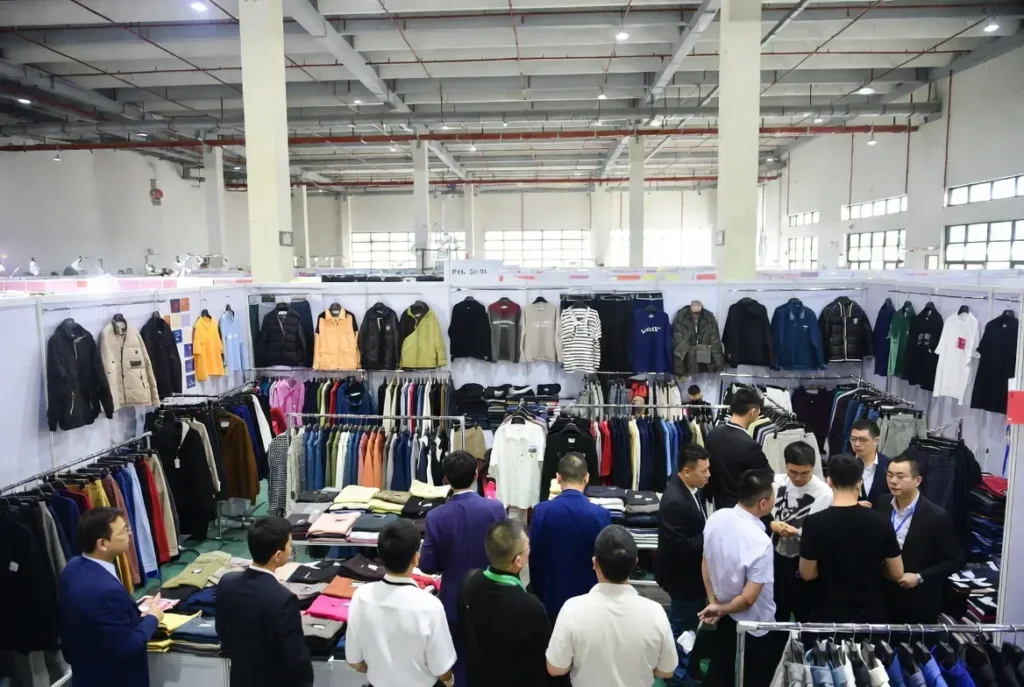
The Canton Fair is one of the most important trade shows for global buyers sourcing from China. For streetwear brands, it can be a powerful place to meet factories, compare products, check materials, and understand how suppliers communicate before placing an order.
But the best buyers do not treat the Canton Fair like a simple product catalog. They treat it as a supplier screening system.
If you are looking for Canton Fair clothing manufacturers, the goal is not to collect as many business cards as possible. The goal is to identify which suppliers understand your product category, your quality expectations, your MOQ range, your timeline, and your brand positioning.
This guide explains the evergreen sourcing rules that streetwear buyers can use at any Canton Fair, in any year.
Key Takeaways
- Do not judge a supplier only by booth appearance.
- Bring your tech pack, reference samples, size chart, and target price range.
- Ask about fabric, MOQ, sampling, production lead time, QC, and export experience.
- Separate trading companies, general factories, and category-specialized manufacturers.
- Follow up quickly after the fair while supplier memory is still fresh.
- Always verify claims with samples, documents, and production details.
Why the Canton Fair Still Matters for Clothing Buyers
The Canton Fair gives buyers something online sourcing cannot always provide: direct product inspection and face-to-face supplier communication.
For apparel buyers, this matters because clothing quality is physical. Fabric weight, hand feel, stitching, print quality, embroidery density, rib recovery, zipper smoothness, and garment fit are difficult to judge from photos alone.
When sourcing streetwear, the difference between an average supplier and a strong production partner often appears in the details:
- Can they explain fabric GSM clearly?
- Do they understand oversized, boxy, cropped, or relaxed fits?
- Can they handle custom labels, trims, packaging, and wash effects?
- Do they ask smart questions about your sample?
- Can they explain what affects price and lead time?
Strong Canton Fair clothing manufacturers will not only show products. They will discuss production logic.
Rule 1: Know What Type of Supplier You Need
Before visiting the fair, decide what supplier type fits your business stage.
| Supplier Type | Best For | Main Risk |
|---|---|---|
| Trading company | Wide product range, easy communication | Less control over production |
| General apparel factory | Basic garments and mixed categories | May lack streetwear specialization |
| Cut and sew manufacturer | Custom silhouettes and brand-level products | Higher sampling cost |
| Embroidery or print specialist | Decoration-heavy products | May not handle full garment production |
| Low MOQ manufacturer | Startup brands and small drops | Higher unit price |
For streetwear buyers, a specialized manufacturer is often better than a broad supplier if your products involve heavyweight hoodies, oversized T-shirts, puff print, embroidery, acid wash, rhinestones, or custom trims.
Rule 2: Prepare a Buyer Kit Before the Fair
Do not arrive with only product photos on your phone. A serious supplier needs clear production information.
Bring a simple buyer kit that includes:
- Brand introduction
- Product reference photos
- Fabric preference
- Target GSM
- Size chart
- Logo artwork
- Print or embroidery placement
- Estimated order quantity
- Target price range
- Packaging requirements
- Delivery country
- Expected launch timeline
Even if your tech pack is not perfect, this gives the supplier enough context to discuss realistic cost and feasibility.
Rule 3: Ask Production Questions, Not Just Price Questions
Many buyers ask, “How much is this hoodie?” too early. Price without specifications is not useful.
Instead, ask questions that reveal whether the supplier understands apparel production:
- What fabric is used for this sample?
- What is the GSM?
- Can this fit be made oversized or cropped?
- What is the MOQ for custom fabric color?
- What is the sampling time?
- What decoration methods do you support?
- How do you control shrinkage?
- Do you provide pre-production samples before bulk?
- What QC steps happen before packing?
- Which markets do you usually export to?
Good suppliers answer with detail. Weak suppliers give only broad promises.
Rule 4: Check Samples Like a Production Manager
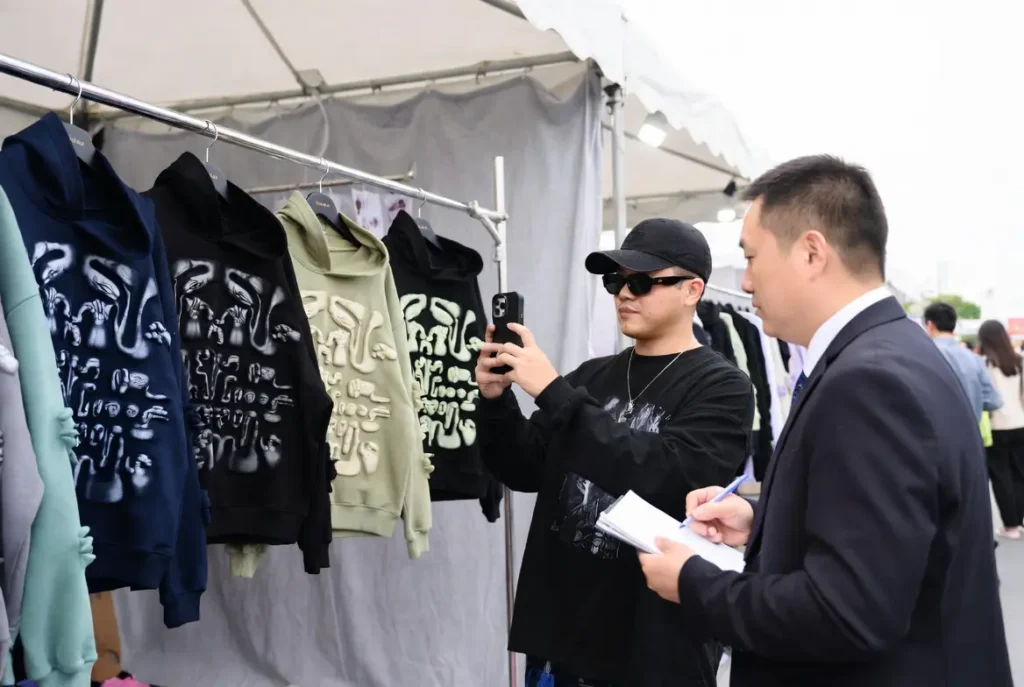
At the booth, inspect samples carefully. Streetwear buyers should check both style and construction.
Look at:
- Stitching consistency
- Shoulder shape
- Side seam twisting
- Rib recovery
- Collar shape
- Print hand feel
- Embroidery backing
- Fabric thickness
- Shrinkage control
- Label and packaging quality
If a sample looks good from far away but has poor stitching, weak fabric recovery, or uneven decoration, the supplier may struggle with bulk consistency.
Rule 5: Separate “Can Do” from “Have Done”
At trade shows, many suppliers say they can make your product. That does not mean they have real experience with it.
For streetwear, ask for proof:
- Similar product samples
- Previous bulk production examples
- Fabric swatch cards
- Decoration samples
- Wash test information
- Size grading examples
- Packing photos
- Export documents or market experience
A supplier who has already produced heavyweight hoodies, oversized tees, custom tracksuits, or embroidered shirts will usually understand your needs faster than a supplier starting from zero.
Rule 6: Compare Suppliers with the Same Specification
One common Canton Fair sourcing mistake is comparing prices from different specs.
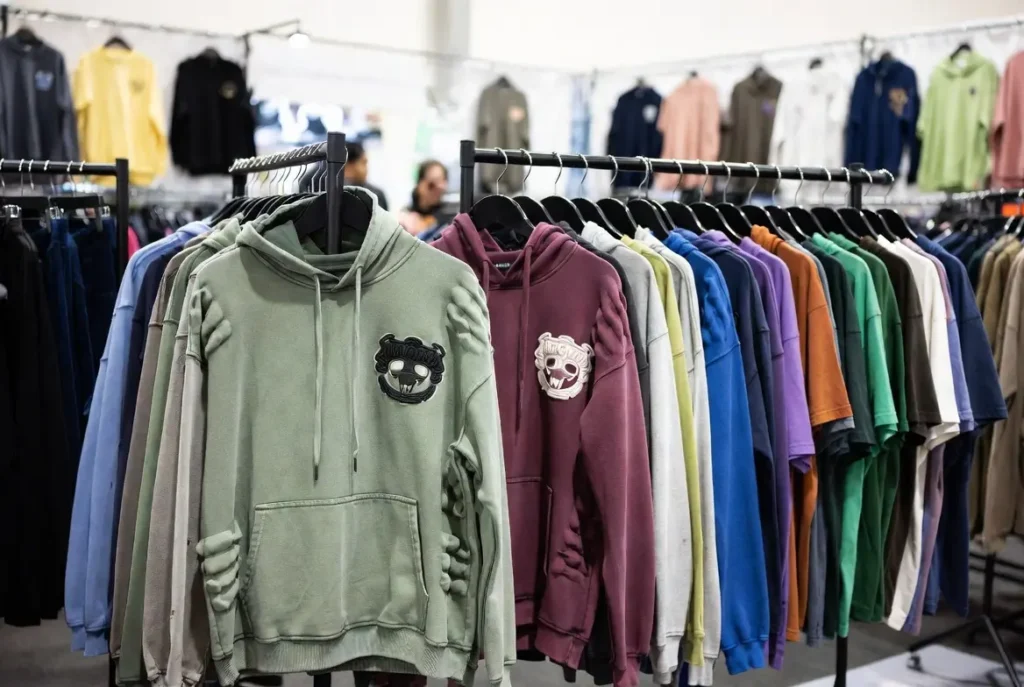
A 280gsm hoodie and a 420gsm hoodie are not the same product. A basic screen print and a dense embroidery design do not carry the same cost. A stock blank and a cut-and-sew custom garment should not be compared by unit price alone.
To compare Canton Fair clothing manufacturers fairly, give every supplier the same specification:
- Same fabric composition
- Same GSM
- Same size range
- Same quantity
- Same decoration method
- Same label and packaging request
- Same delivery terms
Only then can you compare price, lead time, MOQ, and service quality properly.
Rule 7: Follow Up Fast After the Fair
The real sourcing work starts after the Canton Fair.
Within 48 hours, organize your supplier notes and send follow-up messages to the best matches. Include product details, reference photos, estimated quantity, and questions about sampling.
Your follow-up should ask for:
- Quotation
- MOQ
- Sample cost
- Sample lead time
- Bulk lead time
- Fabric options
- Decoration options
- Payment terms
- Shipping method
- QC process
Fast follow-up helps suppliers remember your project and gives you a clearer view of who communicates professionally.
Canton Fair Supplier Evaluation Checklist
Use this simple checklist after meeting each supplier:
| Checkpoint | Score 1-5 |
|---|---|
| Understands your product category | |
| Has relevant streetwear samples | |
| Explains fabric and GSM clearly | |
| Provides realistic MOQ | |
| Can support sampling | |
| Communicates clearly in English | |
| Understands decoration methods | |
| Has export experience | |
| Offers QC process details | |
| Gives organized follow-up |
Suppliers with high scores across product knowledge, communication, and sample quality should move to the next stage.
Common Mistakes Streetwear Buyers Should Avoid
Avoid these mistakes when sourcing at the Canton Fair:
- Choosing the cheapest supplier too quickly
- Asking for price without full specifications
- Ignoring MOQ and sample cost
- Not checking fabric quality in person
- Forgetting to ask about shrinkage and colorfastness
- Assuming all clothing suppliers understand streetwear fits
- Not confirming whether the supplier is a factory or trading company
- Waiting too long to follow up after the fair
The Canton Fair can help you find strong suppliers, but only if you approach it with a system.
FAQ
Is the Canton Fair good for finding clothing manufacturers?
Yes. The Canton Fair can be useful for finding clothing manufacturers, especially if you want to meet suppliers directly, inspect samples, and compare communication quality. However, buyers still need to verify factory capability through samples, documents, and follow-up production details.
What should streetwear buyers bring to the Canton Fair?
Streetwear buyers should bring reference samples, product photos, logo files, size charts, fabric requirements, target quantities, packaging ideas, and a clear price range. A simple tech pack helps suppliers provide more accurate feedback.
How do I know if a Canton Fair supplier is reliable?
A reliable supplier should explain fabric, MOQ, sampling, lead time, quality control, and export experience clearly. You should also check their samples, ask for similar production examples, and request a pre-production sample before bulk orders.
Should I choose the cheapest clothing supplier?
Not always. The cheapest supplier may use lower-quality fabric, weaker trims, less stable sizing, or limited QC. For streetwear brands, supplier fit, product experience, and bulk consistency are often more important than the lowest quote.
Conclusion
Finding Canton Fair clothing manufacturers is not about luck. It is about preparation, clear specifications, supplier comparison, and disciplined follow-up.
For streetwear buyers, the best results come from treating the Canton Fair as a screening process. Bring your product details, ask production-level questions, inspect samples carefully, and compare suppliers based on the same specifications.
A good supplier should understand not only clothing production, but also the fit, fabric, decoration, and quality expectations behind your brand.
If you are a streetwear buyer, As a streetwear manufacturing expert and clothing trend designer who’s spent over a decade in OEM/ODM production for US and EU independent brands, I know the Canton Fair can feel like a chaotic maze. One wrong booth choice and your next drop risks delays, quality fails, or bloated inventory that kills cash flow for your e-commerce store. This guide cuts through the noise. It’s built for independent brand owners, DTC merchants needing quick stable supply chains, mature mid-tier labels seeking deep innovation partners, and cross-industry newbies who want full-process hosting for collabs or custom runs.
We’ll focus on what actually moves the needle: spotting streetwear manufacturers who deliver flexible MOQs, cutting-edge techniques, and compliant production—without the guesswork. You’ll leave Guangzhou (or skip the trip entirely) with actionable intel to launch faster and smarter.
References
Related Hezi Apparel Articles
- Hezi Apparel. How to Start a Streetwear Brand with Low MOQ Manufacturing
- Hezi Apparel. Top 10 Best Cut and Sew Clothing Manufacturer in China for Streetwear Brands
- Hezi Apparel. Custom Streetwear Manufacturing vs Fast Fashion Production Comparison
- Hezi Apparel. How Much Does It Cost to Start a Clothing Brand in 2026?
- Hezi Apparel. Why Clothing Samples Cost More Than Bulk Production: 7 Critical Factory Reasons
- Hezi Apparel. The Most Common Types of Clothing Fabric Composition
- Hezi Apparel. Top Embroidered Shirt Manufacturers in China for Low MOQ Orders
External Industry References
AATCC. Textile Testing Methods
Canton Fair. China Import and Export Fair Official Website
International Trade Administration. China Country Commercial Guide
OECD. Due Diligence Guidance for Responsible Supply Chains in the Garment and Footwear Sector
U.S. Customs and Border Protection. Importing Into the United States
European Commission. Access2Markets Trade Helpdesk