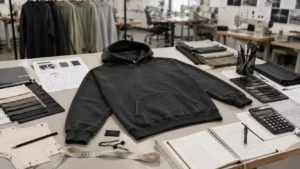
In the crowded apparel market, most new styles fail to become meaningful revenue drivers. Brands that treat product development as a creative gamble—chasing trends without grounding in real needs—face high sampling waste, markdowns, and diluted brand equity.
The alternative is clear: build hero products for clothing brands by solving genuine problems in your own wardrobe. This “Put yourself in others’ shoes” (empathy-first) approach, combined with disciplined apparel product iteration, turns uncertainty into a repeatable process that lowers risk and creates signature pieces customers return for.
From the factory floor, we see the difference daily. Brands that invest in structured iteration before committing to bulk consistently achieve stronger sell-through and fewer costly revisions later.
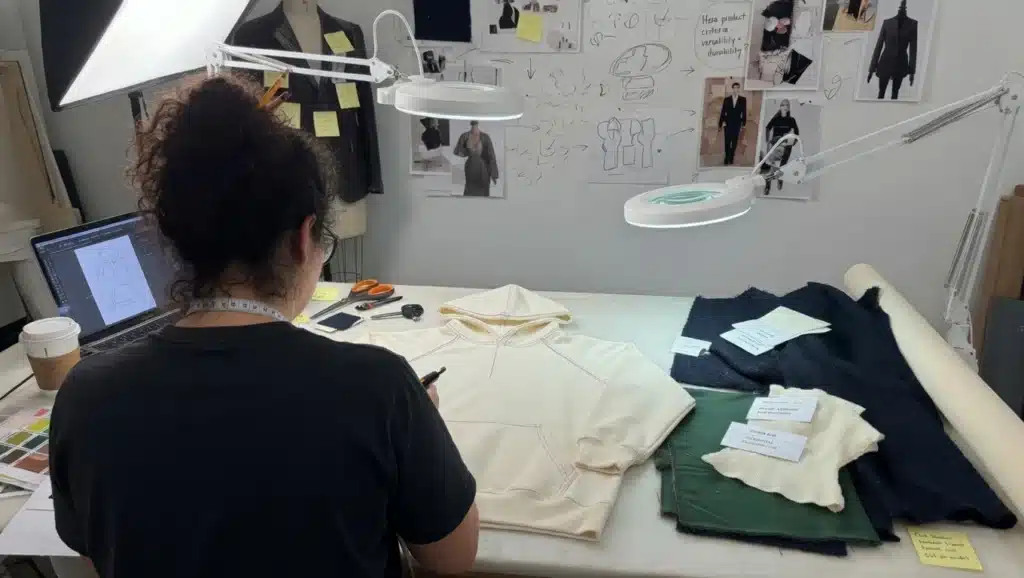
The Real Cost of Gambling vs. Solving Wardrobe Problems
Many emerging brands launch products based on mood boards or competitor copying. The result? High return rates, slow sell-through, and capital tied up in inventory that never becomes a true hero.
In contrast, starting with a personal wardrobe gap forces clarity. You identify friction points—poor fit in the thighs, lack of authentic hardware, fabric that pills after two washes—and design the solution. This creates products with built-in relevance and storytelling power.
Industry observations show that focused hero product clothing brand strategies can drive 30-50% of revenue when the item genuinely solves a recurring customer problem. The key is treating development as engineering, not inspiration alone.
Why Your First Sample Is Never the Final Product
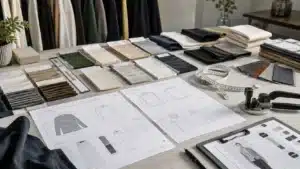
Tech packs and initial samples are hypotheses, not solutions. Real bodies, repeated wear, production scaling, and customer perception always reveal gaps invisible on paper.
Typical issues uncovered in early rounds include:
- Fit and drape inconsistencies across sizes
- Fabric performance (shrinkage 3-8% in knits, color migration, pilling)
- Construction details that look good flat but fail in movement
- Hardware and trim integration that affects cost or durability
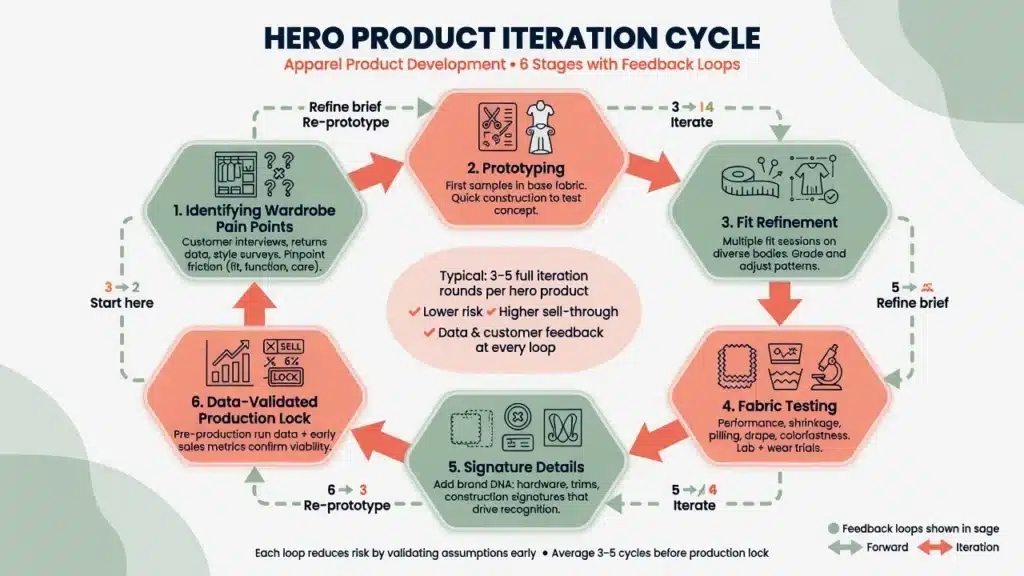
This is why apparel product iteration is non-negotiable. Brands that budget for 3-5 deliberate rounds before locking a hero product dramatically reduce downstream risk. Each round is cheaper than a failed production run or heavy discounting.
6 Iteration Strategies to Build Hero Products That Actually Sell
Here is the practical framework we recommend from a supply-chain perspective:
1. Identify the Specific Wardrobe Pain Point
Start with your own closet or target customer’s daily frustrations. Document what’s missing or broken. This single step prevents “me-too” products and gives the development process a clear north star.
2. Create the Initial Prototype Focused on the Core Solution
Build the first sample around the functional fix. Resist adding every trend detail at this stage. Keep it focused so feedback is actionable.
3. Refine Fit, Silhouette & Pattern
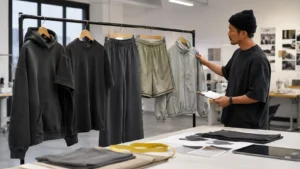
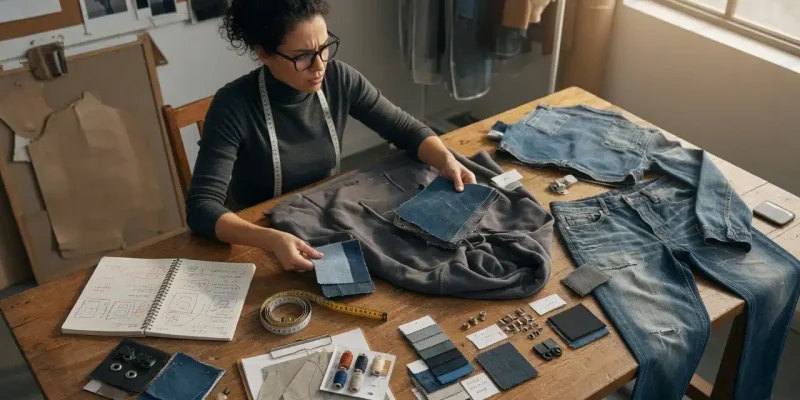
This is where most value is created or lost. Multiple fit sessions on real bodies (or professional fit models) reveal issues in rise, thigh, drape, and length. Pattern adjustments here are relatively low-cost compared to later changes.
4. Test Fabric Performance Under Real Conditions
Order swatches and sample yardage. Test wash cycles, abrasion, recovery, and hand-feel after wear. Link this stage directly to deep fabric selection and production process expertise—choosing the right GSM, composition, and finishing dramatically affects both cost and customer perception. Heavyweight options (350-500+ GSM) often deliver the premium hand and longevity that turn a good item into a hero.
5. Iterate on Signature Details That Build Brand Identity
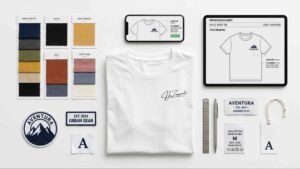
This is where differentiation happens. Elements like unique hardware (fireman’s clasps), custom labels, special stitching, or distinctive pocket shapes become recognizable signatures. These details survive iterations and create emotional ownership. They also justify higher price points and reduce price competition.
6. Validate with Controlled Variations & Data
Before full production, test 2-3 controlled versions (different distressing levels, hardware options, or color stories). Small pre-order or limited drops provide real sales data. Only then lock the final spec.
Procurement & Risk-Reduction Guide for Designers and Buyers
For startups / early-stage brands: Prioritize factories with flexible sampling programs and low MOQs (often 50-150 pieces for core hero items after validation). Focus iteration budget on 1-2 potential heroes rather than spreading thin across many styles.
For growing brands: Use data from previous iterations to accelerate future development. Lock winning patterns and details across colorways to improve efficiency and consistency.
For mature brands: Optimize cost through value engineering while protecting the signature details that customers recognize. Maintain strict quality gates even as volumes scale.
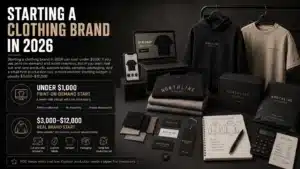
Typical investment: 3-5 sampling rounds at $100–250 per piece (depending on complexity) plus pattern work. This $1,000–3,000+ development cost is modest insurance against a $10k+ failed bulk order or damaged brand perception.
How Signature Details (Hardware, Labels, Construction) Define Brand Identity
From the production side, we see that the most successful hero products are rarely the most complicated—they are the most intentional. A well-placed fireman’s clasp or distinctive “snip tag” does more than decorate; it creates instant recognition and storytelling.
These elements:
- Survive multiple wash cycles and become part of the product’s patina and lore
- Allow brands to command premium pricing
- Become ownable assets that competitors struggle to copy exactly
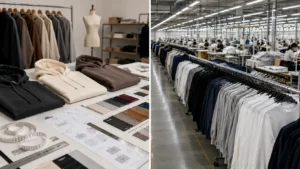
Factories experienced in apparel product iteration can source or develop custom trims efficiently and lock specifications for consistent quality across future productions.
FAQ: Practical Questions from Designers & Procurement Teams
Q: Why is your first sample never the final product?
A: Because 2D designs and initial samples cannot fully predict real 3D behavior on bodies, after multiple washes, or at scale. Iteration systematically closes these gaps in fit, fabric performance, and construction before you commit capital to bulk.
Q: How do details like fireman’s clasps or special labels define brand identity?
A: These signature elements create instant recognition and emotional connection. Once refined and locked, they become consistent brand assets that customers associate with quality and authenticity, supporting stronger pricing and loyalty.
Q: What is a realistic budget and timeline for hero product iteration?
A: Expect 3-5 rounds over 6-12 weeks for complex items. Sample costs typically range $100-250 per piece. The investment is small compared to the cost of launching a product that underperforms or requires expensive post-launch fixes.
Q: How can factories help reduce iteration risk for smaller brands?
A: Choose partners offering quick-turn sampling, digital pattern support, fabric performance data, and transparent feedback (photos, videos, fit comments). Flexible MOQ policies after validation also protect cash flow while you prove the hero product.
Q: When should we stop iterating and move to production?
A: When fit, fabric, and signature details consistently meet your quality standard, small-batch or pre-order data is positive, and further changes deliver diminishing returns. Usually this occurs after the 4th round for most hero items.
Conclusion: Engineer Heroes, Don’t Gamble on Them
In 2026 and beyond, the clothing brands that build lasting equity are those that treat hero product development as a rigorous, empathy-driven engineering process rather than a creative lottery. Starting with real wardrobe pain points and committing to disciplined iteration dramatically improves the odds of creating pieces that customers love, wear repeatedly, and recommend.
Achieving this level of precision and risk reduction requires more than good design intent. It demands a manufacturing partner who deeply understands both technical execution and brand-building strategy.
This is exactly the core value of professional OEM/ODM factories like heziapparel.com. We support your iteration journey with dedicated sampling teams, rapid pattern refinement, access to performance fabrics, and collaborative problem-solving—so your hero products don’t just launch, they endure and define your brand.
Stop gambling. Start solving.
Ready to develop your next hero product with confidence? Explore our fabric selection and production process capabilities or reach out to begin the conversation.
Reference ship: